From Firefighting to AI: A Founder’s Gold Mine
▼ Summary
– Sunny Sethi founded HEN Technologies, which creates high-efficiency fire nozzles that significantly increase suppression rates and conserve water.
– His diverse background in nanotechnology and materials science led him to tackle firefighting technology after personal experience with California wildfires.
– HEN’s core innovation is a smart hardware system that generates precise, real-time data on water usage and fireground conditions for firefighters.
– The company is building a predictive analytics platform for emergency response, viewing its collected physics data as highly valuable for future AI and robotics training.
– HEN has achieved rapid commercial traction, projecting $20 million in revenue this year, and recently secured a $20 million Series A funding round.
The journey from advanced materials science to revolutionizing firefighting equipment is a story of applied innovation. Sunny Sethi, founder of HEN Technologies, leveraged a PhD in surfaces and adhesion and experience across nanotechnology, solar, and automotive sectors to tackle a persistent problem: inefficient fire suppression. His company’s high-efficiency nozzles represent a significant leap, reportedly increasing fire suppression rates dramatically while conserving vast amounts of water. However, the hardware is merely the entry point for a much broader ambition to build an intelligent, data-driven ecosystem for emergency response.
Sethi’s path wasn’t linear. After academic research and roles developing new materials at companies like SunPower and TE Connectivity, a personal catalyst shifted his focus. Relocated to California, repeated catastrophic wildfires and a tense family moment during evacuation warnings prompted his wife to challenge him to find a solution. This personal connection to the problem, combined with his “bias free and flexible” technical background, led to the founding of HEN Technologies in 2020.
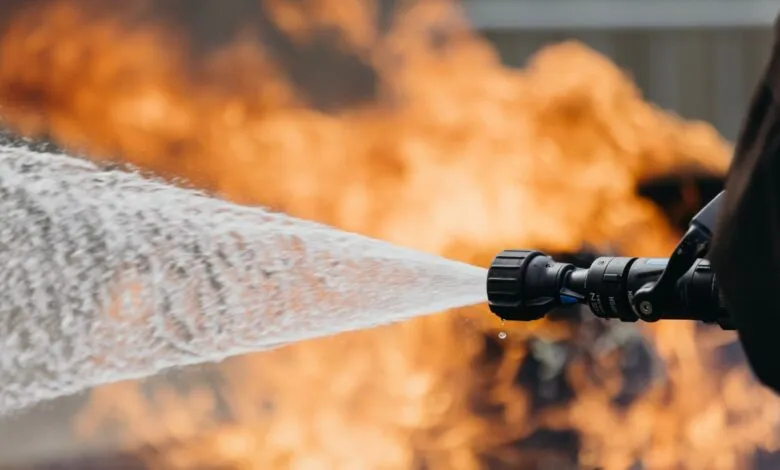
Initial research, supported by National Science Foundation funding, utilized computational fluid dynamics to understand fire suppression physics. The resulting nozzle technology precisely controls water droplet size and velocity, maintaining a coherent stream even in challenging wind conditions, a stark contrast to the dispersed spray from traditional equipment. This “muscle on the ground” has since expanded into a full suite of smart devices, including monitors, valves, and sprinkler systems. Each piece of hardware incorporates custom circuit boards and sensors, powered in some cases by processors like the Nvidia Orion Nano, transforming basic tools into connected, intelligent equipment.
The core innovation is the integrated system these devices create. HEN’s platform uses sensor data from the pump to function as a virtual sensor at the nozzle, capturing real-time information on water flow, pressure, and usage duration. It logs precisely how much water was used on a specific fire, which hydrant supplied it, and the prevailing weather conditions. This data addresses a critical, often dangerous gap in firefighting: the lack of communication between water suppliers and fire crews. Historical incidents, like the Palisades Fire, have shown how engines can suddenly lose water pressure, jeopardizing entire operations. For rural departments relying on water tenders, optimizing resource allocation through accurate data is transformative.
HEN built a cloud platform with application layers designed for different command roles, from fire captains to incident commanders. Integrating live weather data and GPS, the system can provide actionable warnings, such as alerting crews to an impending wind shift or a truck nearing empty. This capability aligns directly with initiatives like the Department of Homeland Security’s NERIS program, which seeks predictive analytics for emergency operations. Sethi emphasizes that predictive models are impossible without high-quality, real-world data, which in turn requires the right hardware to collect it, a synergy HEN is uniquely positioned to provide.
Currently, the company is focused on deploying its data nodes and building its data pipeline. Monetization of the application layer with its built-in intelligence is planned for the coming year. Sethi notes that commercial traction has been a significant hurdle and a point of pride. The market requires a product that resonates with end-users, the firefighters, while navigating lengthy government procurement cycles. HEN’s growth suggests they’ve managed this dual challenge. From launching products in 2023 with ten departments and $200,000 in revenue, the company has scaled rapidly, projecting $20 million in revenue this year from 1,500 fire department customers.
While competitors exist in both hardware and public safety software, Sethi believes no other company is executing the same integrated hardware-to-data platform vision. The current constraint is scaling manufacturing and distribution fast enough to meet demand. HEN’s client base now includes the U.S. Marine Corps, NASA, and international agencies, and recent qualification for the GSA schedule simplifies federal purchasing.
The long-term value, however, may extend far beyond firefighting. The highly specific, real-world data HEN collects on fluid dynamics, material interactions, and fire physics under extreme conditions is incredibly valuable for training advanced AI systems. Companies developing “world models” or predictive physics engines for robotics and simulation require precisely this type of multimodal data from physical systems. It is information that cannot be synthesized through simulation alone. Investors recognize this potential, contributing to a recent $20 million Series A funding round, bringing HEN’s total funding to over $30 million. With an eye on future growth, Sethi indicates the company will likely seek additional capital soon, underscoring the vast opportunity he sees in the data gold mine his firefighting technology is creating.
(Source: TechCrunch)