Tesla Launches Unsupervised Robotaxi Rides
▼ Summary
– Tesla has begun unsupervised robotaxi trips in Austin, Texas, a milestone Elon Musk congratulated the company’s AI team for achieving.
– Previously, Tesla’s robotaxi services in Austin and San Francisco required safety monitors with emergency kill switches, though these services are not yet fully public.
– Tesla plans to gradually increase the ratio of unsupervised vehicles within its monitored robotaxi fleet over time.
– Critics point to safety concerns, noting Tesla’s robotaxis have crashed several times recently, while the service remains limited to a waitlist and a small number of vehicles.
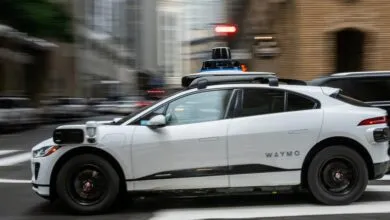
– Waymo maintains a significant lead with extensive driverless experience and expansion plans, whereas Tesla’s claims rely on a fleet mostly lacking the hardware for full autonomy.
Tesla has initiated its first unsupervised robotaxi rides in Austin, Texas, marking a significant step in its autonomous vehicle program. A video showcasing the milestone was shared on social media platform X, with CEO Elon Musk reposting it and commending the company’s AI team. This development follows months of operation where all Tesla robotaxis in Austin and San Francisco included a human safety monitor equipped with an emergency kill switch, a precaution not currently required by competitor Waymo for its commercial service. The transition to unsupervised operation represents a bold move for Tesla, though the service remains limited to a waitlist and is not yet publicly available.
For some time, these safety monitors have occupied the passenger seat in Austin and the driver’s seat in San Francisco. Musk has previously framed their presence as an abundance of caution rather than a reflection of technological shortcomings, stating the company was being “paranoid about safety.” He had projected the removal of these monitors by the end of 2025, a timeline the recent video suggests has been accelerated by a matter of weeks. Ashok Elluswamy, Tesla’s Vice President for Autonomy, clarified on X that the company is “starting with a few unsupervised vehicles mixed in with the broader robotaxi fleet with safety monitors, and the ratio will increase over time.”
The true measure of this advancement, whether it signifies genuine progress or potential risk, remains to be seen. The current scale of the operation is reportedly small, with rumors suggesting only a couple dozen vehicles are active in Texas. Safety records also present a point of scrutiny; reports indicate that even with monitors present, Tesla’s robotaxis have been involved in approximately eight crashes over a recent five-month period. Enthusiasts celebrate the development as a breakthrough, while skeptics view it as a promotional tactic for a capability they believe is not fully realized.
This phased approach of integrating unsupervised vehicles into a monitored fleet mirrors the strategy employed by Waymo during its own expansion. A critical distinction lies in the operational history of each company. Waymo has accumulated over 100 million miles of fully driverless, unsupervised travel, a benchmark built through its commercial robotaxi services. Tesla, in contrast, cites 7.4 billion miles driven by customers using its Full Self-Driving (FSD) system. However, FSD is a Level 2 driver-assistance feature that legally requires constant human supervision, making the two statistics fundamentally different.
While Tesla pursues this new phase, Waymo continues to extend its market lead. The company reported more than 14 million paid rides in 2025 alone and has announced plans to expand its service to 20 additional cities. Musk maintains that Tesla’s advantage stems from its massive existing fleet of customer-owned vehicles, which he asserts will soon be converted into a fully autonomous network. This claim overlooks a significant practical hurdle: most Tesla vehicles currently on the road lack the specialized hardware necessary for full autonomy without human oversight. The journey toward a truly driverless future appears to be on parallel but distinctly separate paths for these two industry leaders.
(Source: The Verge)