US-China AI Collaboration: More Extensive Than You Realize

▼ Summary
– Despite being AI rivals, the US and China collaborate significantly on cutting-edge research, as shown by an analysis of NeurIPS conference papers.
– The analysis found that roughly 3% of NeurIPS papers involved US-China author collaboration, a rate that remained consistent in 2024.
– Key AI models like Google’s transformer, Meta’s Llama, and Alibaba’s Qwen are widely shared and adapted in research papers from both countries.
– Experts note the AI ecosystems of the US and China are deeply interconnected and mutually beneficial, regardless of political tensions.
– The analysis was conducted using AI coding tools, highlighting their potential to automate research tasks while requiring careful human oversight.
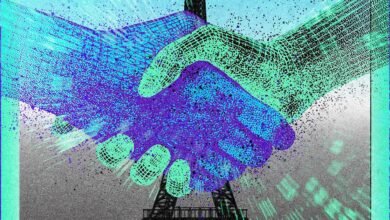
Despite the intense public rivalry between the United States and China in artificial intelligence, a deep and often overlooked level of scientific cooperation persists. An examination of research presented at the premier NeurIPS conference reveals that collaboration between US and Chinese institutions remains a constant and significant feature of cutting-edge AI development. This ongoing exchange of ideas and talent underscores a complex interdependence that continues to benefit both nations’ technological ecosystems.
A detailed review of over 5,000 papers from the latest NeurIPS event found that roughly 3 percent involved co-authors from institutions in both countries. This figure is consistent with previous years, indicating a stable pattern of cross-Pacific partnership. The flow of foundational technology is notably bidirectional. For instance, the transformer architecture pioneered by Google researchers is integral to hundreds of papers with Chinese authors. Similarly, models from Meta’s Llama family are frequently cited in this collaborative work. On the other side, Alibaba’s Qwen large language model has been adopted in dozens of studies involving US-based researchers.
Experts observing this dynamic are not surprised by the findings. The AI communities in both nations are deeply interconnected, with collaboration providing mutual scientific and economic advantages. This enmeshment is often fueled by personal and professional networks that transcend geopolitical tensions. Many researchers begin their careers studying abroad, forming lasting bonds with advisors and colleagues that lead to ongoing joint projects long after they return home.
The conference itself stands as a testament to the value of international cooperation in advancing the field. Organizers highlight that such partnerships, visible in co-authorship and professional networks, are a fundamental driver of innovation. This reality presents a stark contrast to the political rhetoric often surrounding technological competition. While national strategies may emphasize rivalry, the research community continues to operate through a lens of shared scientific pursuit.
This analysis also provided an opportunity to utilize AI in the research process itself. By employing a code-generating model to automate the collection and initial sorting of data from thousands of academic papers, the investigation showcased a practical application of the technology. The process involved writing and refining scripts to identify institutional affiliations, demonstrating how these tools can manage large-scale, tedious analytical tasks. However, it also required meticulous human oversight to correct errors and verify results, highlighting that AI currently serves best as an augmentation tool rather than a full replacement for human judgment.
The enduring collaboration between American and Chinese AI researchers serves as a crucial reminder. Even as strategic competition intensifies, the scientific communities in both countries continue to find common ground, sharing knowledge and building upon each other’s breakthroughs. This underlying cooperation suggests that policies aiming for complete technological decoupling may overlook a fundamental driver of progress that benefits all parties involved.
(Source: Wired)