RAM Shortage Now Hits GPUs, SSDs, and Hard Drives

▼ Summary
– Big Tech’s AI-driven memory shortage is the defining issue for the PC industry starting in 2026, causing standalone RAM kit prices to spike by 300-400% by late 2025.
– The key question for 2026 is how these price increases will affect finished computers and phones, where long-term contracts have so far mitigated noticeable surges.
– The RAM shortage is now impacting the GPU market, signaled by Asus’s initial announcement to discontinue its GeForce RTX 5070 Ti.
– GPU makers have an incentive to prioritize higher-end models like the RTX 5080, as it uses the same core chip and 16GB of RAM as the 5070 Ti but commands a much higher price.
– This shift in production is driven by profit maximization, as allocating scarce RAM to more expensive GPUs yields greater revenue per unit despite potential additional component costs.
The ongoing memory shortage driven by major technology companies and their artificial intelligence projects is poised to become the central narrative for the PC industry well into 2026 and beyond. This widespread scarcity of RAM and NAND flash chips is now extending its reach beyond standalone memory kits, beginning to significantly impact the availability and pricing of graphics cards, solid-state drives, and other essential computer components. While consumers initially felt the pinch through skyrocketing prices for RAM modules, the effects are cascading into finished products where supply contracts previously provided a buffer.
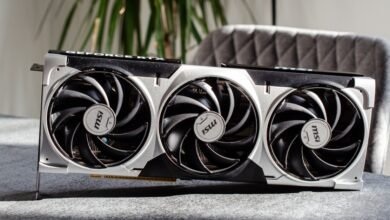
Recent developments indicate the tight supply of GDDR7 memory is starting to influence GPU manufacturing decisions. A notable example emerged when Asus appeared to announce the discontinuation of its GeForce RTX 5070 Ti model. Although the company later attempted to clarify the statement, the underlying logic for such a move is compelling from a business perspective. This particular graphics card utilizes 16GB of GDDR7 memory alongside a version of Nvidia’s GB203 GPU silicon. These are the identical core components found in the higher-end RTX 5080.
For a manufacturer, this presents a clear allocation dilemma. Why continue producing a card with a manufacturer’s suggested retail price of $749 when the same vital memory and silicon could be directed toward a model with a $999 MSRP? The profit potential per unit of constrained memory is substantially greater with the more expensive card. Current market prices underscore this point, with RTX 5070 Ti models often selling for over $1,000, while RTX 5080 cards command prices starting around $1,500. Even accounting for the potentially more robust cooling and board components in the 5080, the financial incentive to prioritize its production is strong when memory is the limiting factor.
This situation illustrates how component shortages can reshape product lineups. Manufacturers are forced to make strategic choices to maximize returns on scarce resources. The initial wave of price increases for consumer RAM and SSDs was just the beginning. As existing inventory depletes and long-term supply agreements expire, these pressures will flow downstream more forcefully. The coming months will reveal the full extent to which the AI-driven memory crunch reshapes the cost and availability of everything from gaming PCs to smartphones, as companies navigate the difficult balance between product segmentation and component scarcity.
(Source: Ars Technica)