The AI Talent War Is for Tradespeople, Not Coders
▼ Summary
– AI companies are competing for top researchers, but there is a less-discussed severe shortage of skilled tradespeople like electricians needed to build AI data centers.
– Official projections estimate an average annual shortage of 81,000 electricians in the US, with other studies suggesting a need for hundreds of thousands more construction workers.
– The rapid construction of AI data centers is a major driver of this demand, with some union locals reporting projects requiring multiple times their current membership.
– Tech companies like Google are funding training initiatives to help upgrade existing electricians and train new apprentices to address the shortage.
– The shortage is a long-term structural issue, worsened by an aging skilled workforce retiring and historical trends encouraging younger generations to pursue college degrees over trades.
While headlines focus on the fierce competition for AI researchers and software engineers, a more fundamental battle is unfolding on the ground. The true bottleneck for the artificial intelligence boom may not be in the code, but in the concrete and copper of the data centers that power it. A severe and growing shortage of skilled tradespeople, electricians, plumbers, and HVAC technicians, threatens to stall the rapid construction of the physical infrastructure AI demands.
Official projections underscore the scale of the challenge. The Bureau of Labor Statistics anticipates an average annual shortage of about 81,000 electricians in the U.S. through 2034, with employment in the field expected to grow much faster than the national average. Other analyses paint an even starker picture. One McKinsey study estimated that between 2023 and 2030, the U.S. would need an additional 130,000 trained electricians, 240,000 construction laborers, and 150,000 construction supervisors.
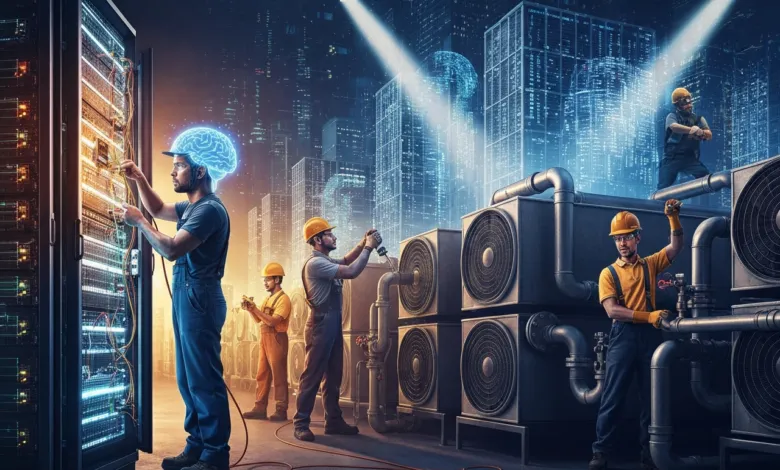
This demand is being supercharged by the nationwide sprint to build AI data centers. Labor unions report that local chapters are facing single projects that require two, three, or even four times their current membership to complete. Data center projects are now the single largest driver of demand for union plumbers and pipefitters, surpassing all other industries. The immense electricity required to run advanced AI models directly translates into a need for more manpower to install and maintain the complex cooling, power, and piping systems.
Recognizing the crisis, some technology giants are stepping in to help cultivate the workforce. Google, for instance, has committed funding to a national electrical training alliance. The goal is to help upskill 100,000 existing electricians and train 30,000 new apprentices by 2030, aiming to significantly expand the trade’s capacity.
The competition for these skilled workers is intense. Tech companies are not just bidding against each other, but against a surge in other construction sectors like housing, hospitals, and energy projects. The root of the shortage, however, is demographic. For years, the construction industry has warned of a “silver tsunami” of retirements among highly skilled baby boomers. That wave is now hitting, as seasoned tradespeople exit the workforce faster than new ones can be trained. A cultural shift, where trades were once passed down through families but are now often overlooked in favor of four-year degrees, has exacerbated the problem.
Industry groups acknowledge the long-term nature of the challenge. While associations for plumbing, heating, and cooling contractors are actively working to recruit and train, they stress that solutions will take time and sustained effort. The situation also varies by region and trade; in some data center hotspots, there may be a healthy pipeline of new apprentices, while other areas struggle to find any applicants at all. The race to build the future of AI is increasingly dependent on reviving and expanding these essential, hands-on professions.
(Source: Wired)