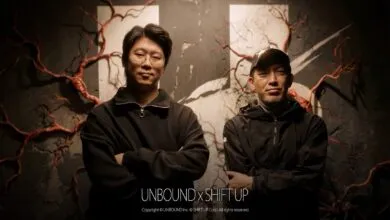
Stellar Blade CEO: AI Levels Playing Field for Smaller Nations

▼ Summary
– The CEO of Shift Up argues that countries like South Korea must adopt AI to compete with larger nations such as China and the US in the gaming industry.
– He states AI can maximize a studio’s output and safeguard jobs by making developers trained in the technology more valuable.
– Kim highlights a resource disparity, noting his studio uses about 150 people per game while Chinese competitors deploy 1,000 to 2,000.
– He believes generative AI could enable one trained developer to perform the work of 100 people, compensating for South Korea’s limitations in content volume and quality.
– In contrast, Larian Studios confirmed it will not use generative AI for concept art in its upcoming game, clarifying earlier exploratory use did not replace artists.
The strategic adoption of artificial intelligence represents a critical opportunity for smaller nations to enhance their global competitiveness in creative industries. Hyung-tae Kim, CEO of Shift Up, argues that for countries like South Korea, leveraging AI is not merely an option but a necessity to keep pace with larger economic powers. Speaking at a national economic strategy forum, Kim highlighted the stark resource disparity his studio faces. While his team dedicates approximately 150 developers to a project like Stellar Blade, competing studios in China might deploy between 1,000 and 2,000 personnel. In this context, he views generative AI as a powerful tool to maximize the impact of a smaller workforce, effectively allowing one skilled developer to accomplish what might otherwise require a hundred.
Kim’s perspective centers on using technology to amplify human talent rather than replace it. He suggests that by training developers in AI applications, their value and productivity increase significantly. This approach, he believes, can safeguard jobs by making teams more efficient and competitive on an international scale. The core idea is that AI can level the playing field where traditional manpower and budget cannot, enabling smaller studios to produce content of comparable quality and volume to their larger rivals. This is particularly vital for nations that Kim says lack the inherent capacity to compete on sheer scale alone.
The conversation around AI in game development remains intensely debated. Kim’s comments arrive alongside contrasting industry movements. For instance, Larian Studios, the developer behind major RPGs, recently confirmed it would not use generative AI for concept art in its upcoming project Divinity. This assurance followed clarification from CEO Swen Vincke, who noted the studio had experimented with the technology for exploratory purposes but had no intention of replacing human artists. This juxtaposition underscores the broader industry tension: while some see AI as an essential amplifier for efficiency, others prioritize a wholly human-driven creative process to maintain artistic integrity.
Ultimately, the discourse reflects a pivotal moment for global tech and creative sectors. Leaders like Kim are positioning AI as a strategic imperative for economic survival and growth, especially for nations and companies operating with constrained resources. The technology’s role is framed not as a wholesale replacement for human creativity, but as a sophisticated toolset that, when mastered, can dramatically elevate output and innovation. How different studios and countries choose to integrate, or reject, these tools will likely define competitive dynamics in the years ahead.
(Source: Games Industry)