At CES, One Robotaxi Company Left the Competition in the Dust

▼ Summary
– The reporter’s experience at CES and with robotaxi services led him to conclude that Waymo appears significantly ahead of competitors in the field.
– Despite technological progress, the robotaxi industry faces major hurdles, including the immense difficulty of building a profitable business model.
– Industry experts predict a future convergence of technologies like humanoid robotics, generative AI, and software-defined vehicles, rather than a sole focus on full autonomy.
– The German startup Vay presented a contrarian approach by building its driverless car rental service around the use of remote driving for vehicle delivery.
– Covering emerging tech requires acknowledging inherent uncertainty, as company leaders are often evasive or lack specific answers about the future.
The Consumer Electronics Show has evolved far beyond gadgets, now standing as a premier global stage for the future of transportation. While countless companies showcased their visions for autonomous vehicles, the experience of actually riding in a robotaxi revealed a stark reality: the gap between the industry’s leader and its competitors is far wider than many suggest. A firsthand comparison of services at CES sharpened the perspective that significant technological and operational hurdles remain before these vehicles can achieve mainstream adoption.
CES is an overwhelmingly large event. It’s simply not possible to visit every exhibit, no matter how efficiently you plan. One immediate impression was the sheer amount of convention space dedicated to automotive mobility. The observation from a veteran tech executive now at Ford rings true: CES has undeniably become as much an auto show as a technology exhibition.
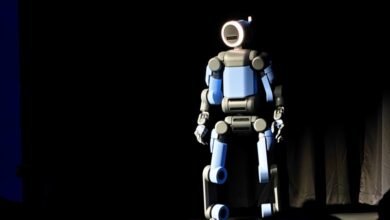
In terms of sheer spectacle, Hyundai Motor Group’s display was remarkable. The company presented a comprehensive vision of autonomy that extended far beyond cars, encompassing EV charging infrastructure, robotic arms, and even humanoid robots. Its subsidiary, Boston Dynamics, demonstrated the latest iteration of its Atlas humanoid robot. The fluid, almost biological way it powered up and rose to its feet was simultaneously terrifying and awe-inspiring.
Testing two different robotaxi services, including one from Amazon’s Zoox, was illuminating. It underscored two critical points. First, Waymo appears to be significantly ahead of the competition, at least in terms of the polished user experience. Perfecting the self-driving technology is just one piece of a massive puzzle. Waymo has spent years building the complex operational backbone, fleet scaling, management, and customer service, required to make a robotaxi feel like a viable, everyday ride-hailing option. Second, it highlighted the immense difficulty of building a profitable business model in this sector right now, as even the leading service is reportedly burning substantial capital.
Industry predictions point toward a convergence of major technological trends. According to one expert from Deloitte, automakers will increasingly tailor their autonomy strategies to specific customer needs rather than universally chasing full self-driving capabilities. For a brand whose buyers are primarily suburban families, the cost-benefit analysis of adding expensive hardware like LiDAR becomes a crucial business decision. Furthermore, he anticipates that the currently separate conversations around humanoid robotics, generative AI, and software-defined vehicles will soon merge into a single, broader field of mobility technology.
While not necessarily the flashiest startup at the show, a German company named Vay offered a compelling contrarian approach. Most robotaxi firms treat remote human control as a taboo, a secret crutch they hope to hide. Vay’s entire business model is built around it. The company uses tele-driving to deliver empty electric rental cars to customers, with a future goal of incorporating autonomy. This focus on a specific, practical use case for remote operation was a refreshing reminder that there are multiple paths forward in the driverless landscape.
Covering this beat requires a shift in approach. Emerging technologies like humanoid robots and autonomous vehicles are fraught with unknowns. Company leaders are often evasive on specifics or simply don’t have definitive answers. The instinct as a reporter is to resolve ambiguity, but in this field, that isn’t always possible. A more effective strategy is to write into that uncertainty, explicitly naming the open questions and building the narrative around them, rather than attempting to force premature conclusions.
(Source: Business Insider)