CES 2026’s Most Questionable AI Innovations

▼ Summary
– AI was ubiquitous at CES 2026, appearing in everything from wearables and appliances to robots, with many implementations being questionable or unnecessary.
– Several showcased products, like Glyde smart hair clippers and an AI bartender, added AI features such as real-time coaching or age verification that seemed like gimmicks.
– Some products, including the SleepQ supplement and the Fraction vacuum, used AI primarily for data analysis, like optimizing pill timing or predicting maintenance needs.
– Other gadgets, like the Fraimic AI art frame and the AI microwave, integrated AI for generation or guidance but functioned well as standard products without the AI label.
– The article criticizes the trend of “AI-washing,” highlighting concepts like the Infinix modular phone where the AI features were unconvincing or non-existent.
The annual CES showcase has become a relentless parade of artificial intelligence integrations, with the 2026 event pushing the concept into increasingly peculiar corners of daily life. From personal grooming to household chores, manufacturers are eager to slap an AI label on nearly any device, often with questionable utility. This drive for intelligent branding has resulted in a collection of gadgets where the promised “smart” features feel more like marketing gimmicks than genuine innovations, leaving many to wonder if the technology is solving problems or simply creating new ones.
Consider the Glyde smart hair clippers, a device that transforms a simple task into a complex technological ritual. Beyond the core function of cutting hair, which it accomplishes with adjustable blades, the system includes a specialized face mask for guidance. Its real claim to fame is an AI coach that provides real-time auditory feedback during your haircut. Future promises include voice commands and personalized style recommendations, asking users to place immense trust in algorithmic fashion sense.
In a move that blurred the lines between wellness and tech, the SleepQ booth promoted an “AI-combo drug.” The product itself is a supplement containing ashwagandha, but its intelligence supposedly lies in an app. This software analyzes biometric data from a wearable to suggest the optimal moment to ingest the pill. While timing may influence efficacy, branding this basic scheduling function as “AI-upgraded pharmacotherapy” feels like a significant stretch of the term.
Home cleaning also received an intelligence boost, at least in name. The Fraction stick vac boasts a sleek, modular design and utilizes what the company calls Neural Predictive AI. This system is designed to monitor performance and predict component failures, providing health scores for parts and facilitating easy replacement through an app. While the modularity is appealing, skeptics might view the AI primarily as a funnel for selling proprietary, high-margin replacement parts directly to the consumer.
Digital art displays entered the generative arena with the Fraimic AI art frame. This E Ink device features a microphone, allowing users to vocally describe an image they wish to see. The frame then generates it using a version of OpenAI’s image model. The underlying hardware is impressive—energy-efficient with a sharp display capable of showing personal photos—making the forced integration of often mediocre AI art the product’s most baffling choice.
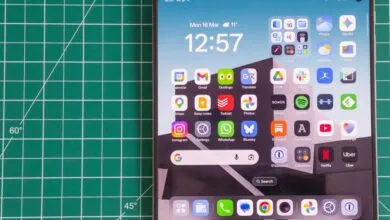
Phone maker Infinix showcased conceptual modular attachments under the AI ModuVerse banner. While one module for live meeting transcription and translation legitimately uses AI, other attachments stretched the definition. A gimbal with stabilization and a microphone with voice isolation were labeled as AI-powered, though these are standard features. Representatives eventually conceded that magnetic power banks in the lineup contained no artificial intelligence whatsoever.
The kitchen saw the introduction of the Wan AIChef, an AI-enabled microwave. It runs a custom interface offering recipes, cooking instructions, and internal camera monitoring. However, its fundamental operation remains that of a standard microwave, merely heating food. Its additional promises of meal planning and calorie tracking only hold value if one commits to preparing every single meal using this one appliance.
Automation reached the home bar with the AI Barmen, essentially a glorified vending machine for cocktails. A webcam adds a layer of supposed intelligence, attempting to verify age and assess sobriety—with noted inaccuracy. It can also invent custom drink recipes, though its interpretations of requests can be wildly off the mark, highlighting the limitations of its contextual understanding.
Perhaps the most ethically fraught exhibit was the Luka AI Cube, a toy offering children an LLM-powered chatbot embodied by various avatars, including a cartoonish Elon Musk. While marketed as a tool for fun and learning, it raises serious questions about data privacy and the appropriateness of giving unfiltered chatbot access to young minds. Featuring an avatar modeled after a figure whose own AI project has faced controversy does little to assuage these concerns.
(Source: The Verge)