TV Makers Are Pushing AI to Its Limits
▼ Summary
– TV sales have stagnated due to supply chain issues and economic uncertainty, leading manufacturers to focus on proven products like art TVs.
– TV makers are heavily integrating AI to simplify complex streaming interfaces and add features like voice-controlled recommendations and scene navigation.
– Many new AI features demonstrated at CES, such as generating videos or displaying sports stats, consume excessive screen space and may not be practical for everyday use.
– The most effective AI applications for TVs are subtle background enhancements that improve picture, sound, or usability without distracting from viewing.
– Despite innovations, the primary use of televisions remains watching content, which is still the core consumer demand.
The television industry is at a pivotal moment, with manufacturers aggressively integrating artificial intelligence to combat stagnant sales and capture consumer attention. While annual showcases like CES feature ever-improving display technology, the real battle is happening in software, as companies search for the next essential feature beyond the screen itself. With global shipments declining, the pressure to innovate has never been higher, leading to a fascinating yet sometimes perplexing array of AI-driven experiments.
TV sales are flat, so everyone is betting on what works. The market has faced significant challenges, from supply chain disruptions to economic uncertainty, causing many consumers to postpone major purchases. In response, manufacturers are doubling down on proven concepts. The art TV category, popularized by Samsung’s Frame TV, has become a major focus. Companies like Hisense and TCL have followed suit, and Amazon just unveiled its own Artline TV. The logic is clear: a television is a large piece of furniture, so it might as well look attractive when not in use. Amazon also used CES to debut a completely redesigned Fire TV interface, aiming to simplify navigation through an increasingly crowded landscape of streaming services, games, and other apps.
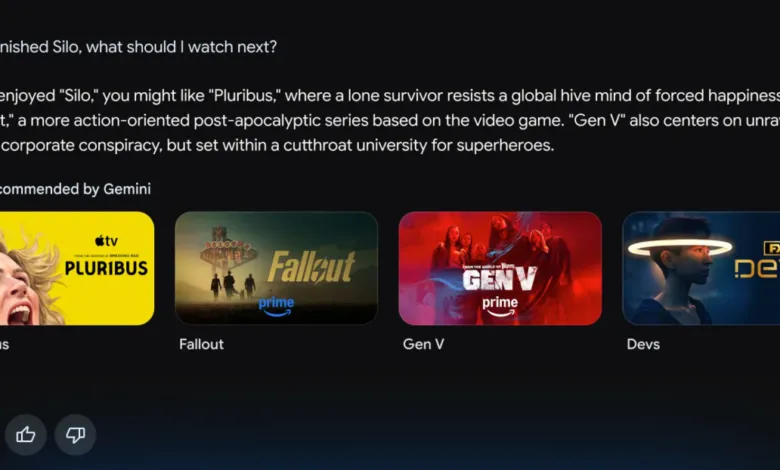
A central question for the industry is how to manage growing complexity. TV makers are in love with AI as a potential solution. This year’s show was filled with demonstrations of AI assistants going far beyond simple voice commands. Google’s Gemini can now explain why you might enjoy a show like Severance, while Amazon’s Alexa Plus allows users to jump to specific scenes in a movie by describing them. Samsung envisions a future where you ask your TV for sports predictions or recipes, which could then be sent to a kitchen display. Hisense showed an AI that identifies products within shows and generates a QR code for easy phone ordering.
Some applications, however, seemed to prioritize technological possibility over practical utility. Google demonstrated its Veo and Imagen 2 AI models on TVs, including a feature that generated a brief, slightly awkward video from a single photo. More concerning was a trend of serious screen real estate creep. Many demos involved asking the TV a question, which then minimized the live video to make room for sports stats or trivia. This could become intrusive on smaller screens. Hisense highlighted this issue with a soccer prototype that displayed player stats, requiring a specially built ultra-wide 21:9 television to accommodate all the information without overwhelming the game feed.
Amidst the flashy prototypes, the most sensible AI applications were often the most subtle. Features like AI-powered sound optimization or automatic display calibration work quietly in the background to enhance the core viewing experience. This underscores a fundamental truth for the industry. The real killer app for TV remains, quite simply, watching television. While smart home integration and cloud gaming have roles to play, the primary consumer demand is for high-quality content viewing. As one executive noted, despite all the new bells and whistles, people still primarily use their televisions to watch shows and movies. In the age of AI, the most successful innovations will likely be those that serve this basic purpose better, rather than distracting from it.
(Source: The Verge)