Razer’s AI Headset & Hologram Screen Steal the Show at CES 2026
▼ Summary
– Razer announced AI-focused products at CES 2026, including the Project Motoko AI gaming headset with dual cameras and the Project Ava desk-based AI companion.
– The Project Motoko headset uses a Snapdragon chip to see what the user sees, allowing for in-game assistance and access to various AI platforms like ChatGPT.
– Project Ava is a stationary AI assistant in a cylinder that displays an animated avatar, designed for gaming and personal tasks like schedule management.
– Razer also launched the Wolverine V3 Bluetooth controller, claiming it’s the world’s fastest wireless controller with under 3ms latency for cloud gaming on LG TVs.
– The company introduced next-gen gaming chairs, including an updated Iskur V2 with improved cooling materials and the immersive Project Madison concept chair with haptic feedback.
Razer’s presence at CES 2026 centered on a bold push into artificial intelligence, headlined by two intriguing prototypes and balanced by several high-performance, AI-free peripherals designed for serious gamers. The spotlight shone on Project Motoko, an AI-powered gaming headset, and Project Ava, a desktop holographic companion, signaling the company’s vision for an integrated AI future. Alongside these conceptual showcases, Razer unveiled tangible hardware including a groundbreaking low-latency controller and next-generation gaming chairs focused on ergonomics and immersion.
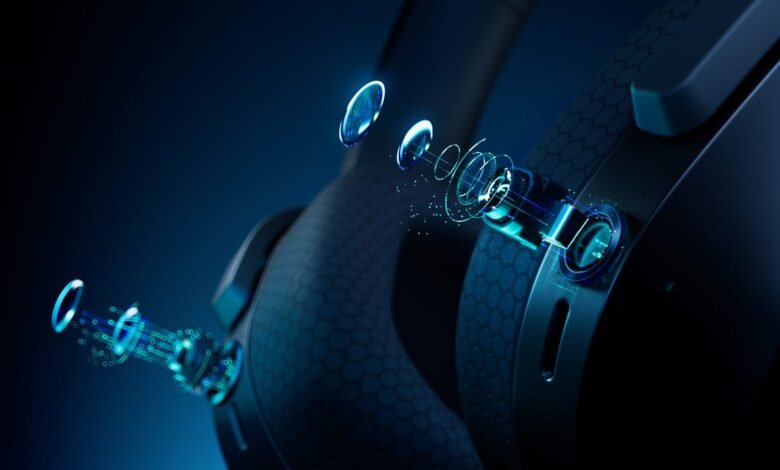
At first glance, Project Motoko appears to be a standard gaming headset. A closer look reveals dual cameras embedded in each earcup, providing a first-person view of the wearer’s surroundings. Powered by a Snapdragon chip, the built-in AI can process this visual data. The primary application is gaming assistance; imagine asking for a boss strategy in a difficult title or receiving real-time tactical advice during a competitive match. Razer’s demonstrations extended the concept to everyday tasks, like summarizing text or suggesting recipes, though these scenarios seemed more aspirational. Critically, the headset is designed as a gateway to existing AI services, allowing users to choose platforms like ChatGPT or Gemini rather than being locked into a proprietary Razer system. The company confirmed plans to release a consumer version later this year.
For those preferring a stationary assistant, Project Ava presents a cylindrical device featuring a 5.5-inch animated display that projects a selectable avatar as a holographic companion. Equipped with a camera and far-field microphone, Ava can observe your environment, remember preferences, and even view your computer screen via a USB connection. While gaming support is a key function, Razer also promotes its ability to manage schedules, offer fashion advice, or help plan meals, positioning it as a multifaceted desktop aide.
Not every announcement involved artificial intelligence. The Wolverine V3 Bluetooth controller made waves with its claim of achieving the world’s fastest wireless gaming controller status. Developed in partnership with LG for cloud gaming on their TVs, it utilizes an ultra-low latency Bluetooth technology Razer calls a world-first, boasting response times under 3ms. This performance potentially surpasses traditional 2.4GHz wireless and even wired USB connections. The controller is certified for the LG Gaming Portal, supporting 4K 120Hz HDR streaming through services like GeForce Now, and can also function as a remote for select LG televisions.
Razer’s seating offerings received significant updates. The new generation Razer Iskur V2 chair introduces a dynamically swiveling lumbar support system that adjusts through a full 360 degrees, aiming to maintain proper spinal alignment as the user shifts position. For improved comfort, the company swapped standard synthetic leather for EPU leather, a material with higher thermal effusivity. This scientific phrasing means it absorbs and dissipates body heat more effectively, preventing the seat from becoming uncomfortably warm. The seat cushion also uses a dual-density, cold-cured foam to further enhance breathability and durability. Pre-orders are open, with the full-featured V2 starting at $650 and a more basic V2 X model available for $350.
The company also teased an immersive concept chair dubbed Project Madison. This experimental design aims to engage multiple senses by integrating RGB lighting into the headrest, a built-in speaker system capable of functioning as part of a surround sound setup, and multi-zone haptic feedback delivered through six motors. The goal is to synchronize light, sound, and vibration with on-screen action for a more grounded experience in virtual worlds. As with many CES concepts, its journey to a retail product remains uncertain, but it exemplifies Razer’s ongoing exploration of gaming immersion.
(Source: IGN)