Anti-Surveillance Design: A Guide to Digital Privacy
▼ Summary
– Law enforcement uses facial recognition algorithms, similar to phone unlock tech, during traffic stops and immigration raids.
– Police have access to tools containing billions of web-scraped images, enabling identification via a simple phone camera.
– The pervasive use of these systems can feel overwhelming and difficult to resist in daily life.
– However, it is possible to disguise yourself from facial recognition in everyday situations.
– Effective countermeasures do not require special clothing or high-tech anti-surveillance gear.
Understanding how to protect your digital privacy from facial recognition technology is becoming a crucial skill in modern life. The same sophisticated algorithms that conveniently unlock your smartphone are now deployed by law enforcement for identification during traffic stops and immigration operations. Authorities utilize powerful tools that have aggregated billions of images from across the internet, enabling them to identify nearly anyone simply by pointing a camera phone in their direction. This reality can make the simple act of walking outside feel like an exercise in being watched, creating a sense of helplessness.
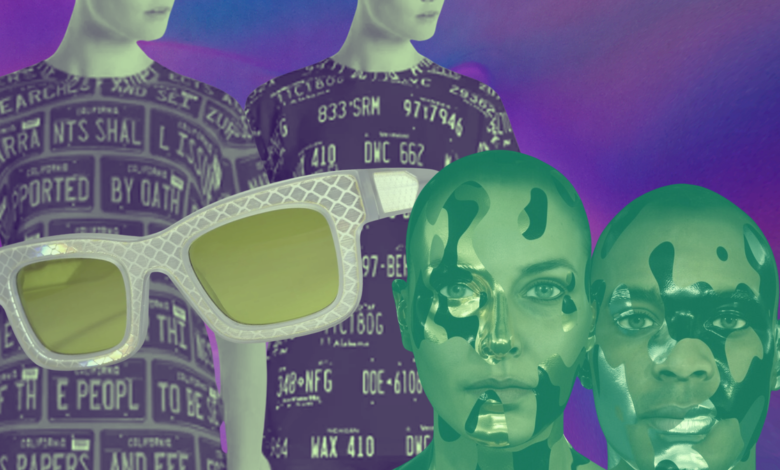
However, practical strategies exist to obscure your identity from these pervasive systems. Effective countermeasures do not necessarily demand specialized clothing or expensive, high-tech gadgets. Simple, everyday adjustments to your appearance and behavior can significantly reduce the accuracy of automated facial recognition. For instance, altering your hairstyle, wearing non-prescription glasses with distinctive frames, or using strategic makeup can confuse the key data points these algorithms rely on. The goal is to disrupt the geometric mapping of your facial features, the distance between your eyes, the shape of your jawline, and the contour of your nose, without making yourself conspicuously stand out in a crowd.
Beyond physical alterations, being mindful of your digital footprint is equally important. Limiting the public availability of your photos on social media platforms directly reduces the reference material these identification systems can harvest. Adjusting privacy settings to “friends only” and being selective about what you post are foundational steps. Furthermore, consider the broader environment; opting for routes with fewer public CCTV cameras or choosing seating in cafes that is not directly in the line of sight of security cameras are small but meaningful acts of spatial awareness.
Another layer of defense involves understanding the technology’s limitations. Most common facial recognition software struggles with significant obstructions, unconventional lighting, and certain angles. Wearing a wide-brimmed hat or scarf can cast shadows that obscure key features, while simply looking downward when passing a known camera can reduce its capture quality. The principle here is not to become a ghost, but to become a less reliable data point in a vast system built on clear, consistent imagery.
Ultimately, integrating these practices fosters a more conscious relationship with the surveilled spaces we navigate daily. It moves the feeling from one of futility to one of empowered adaptation. By combining subtle physical cues with diligent digital hygiene, individuals can reclaim a measure of anonymity. This approach demystifies anti-surveillance, framing it not as a niche technical pursuit, but as a series of accessible, informed choices available to anyone concerned about their privacy in public life.
(Source: 404 Media)