Hyundai to Use Boston Dynamics’ Atlas Robots in Car Factories by 2028

▼ Summary
– Boston Dynamics unveiled a new, fully electric version of its Atlas humanoid robot at CES, designed for factory work with its parent company Hyundai.
– Hyundai plans to mass-produce Atlas robots starting in 2028, aiming for 30,000 units annually to perform tasks from parts sequencing to handling heavy loads.
– The advanced robot features 56 degrees of freedom, tactile-sensing hands, can lift 110 pounds, and is designed for all-day autonomous operation in various conditions.
– Despite the vision of human-robot collaboration, the article notes widespread fears about job losses due to such automation, contrasting with Hyundai’s job creation claims.
– Shifting Atlas from a research platform to a cost-effective, commercial product is a significant and costly challenge, despite Hyundai’s claimed advantages in manufacturing and AI partnerships.
The automotive industry is poised for a significant shift as Hyundai announces plans to deploy Boston Dynamics’ advanced Atlas humanoid robots in its car factories, beginning in 2028. The automaker revealed its strategy at CES, showcasing a new, fully electric version of the Atlas robot designed for industrial collaboration. This move signals a major step from research and viral video fame into practical, high-volume manufacturing applications, with Hyundai aiming to produce an estimated 30,000 of these robots annually.
Initial deployments will focus on processes with proven safety and quality benefits, such as parts sequencing. By 2030, the company intends for Atlas to handle more demanding duties involving repetitive motions, heavy loads, and other complex operations. Hyundai emphasizes a vision of “harmonious collaboration” between human workers and robots, though this expansion of automation inevitably raises concerns about long-term job displacement in the manufacturing sector.
This initiative represents a crucial test for Boston Dynamics, a company long celebrated for its dynamic and agile robots like Spot and Atlas but which has historically struggled with profitability. Acquired by Hyundai in 2021 for $1.1 billion, the robotics firm is now leveraging its parent company’s industrial scale. Hyundai claims its extensive supply chain, advanced manufacturing facilities, and experience with AI software provide a unique advantage to scale production while controlling costs.
The technical specifications of the new Atlas are formidable. The robot features 56 degrees of freedom, human-scale hands with tactile sensing, and fully rotational joints. It is engineered for autonomy, capable of learning most tasks within a day, automatically swapping its own batteries for continuous operation, and lifting up to 110 pounds. It is also built to withstand harsh environments, being water-resistant and functional in temperatures ranging from -4 to 104 degrees Fahrenheit.
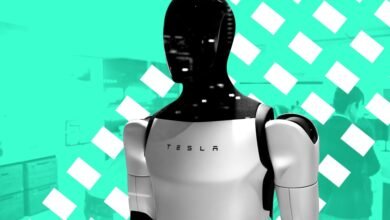
Hyundai’s push into humanoid robotics also places it in direct competition with other tech and automotive giants exploring similar technology, most notably Tesla and its Optimus robot. Despite Tesla’s market valuation dwarfing Hyundai’s, the Korean automaker is betting that its manufacturing prowess and the advanced dexterity of Atlas will give it a tangible edge in creating viable factory workers.
To bolster this effort, Hyundai is forging key partnerships, including one with Google’s DeepMind AI research lab to combine robotics with advanced AI foundation models. The company is also sourcing AI chips and software from Nvidia, indicating a comprehensive approach to developing the robot’s intelligence and capability.
The road from demonstration to dependable factory floor asset is fraught with challenge. The cost of each Atlas unit is estimated to be several hundred thousand dollars, a significant investment that must be justified by reliability and productivity gains. While the hype around humanoid robots is substantial, proving their economic value in complex, real-world settings remains the next great hurdle for Hyundai and Boston Dynamics to clear.
(Source: The Verge)