Rivian’s AI Strategy: Beyond Just Competing With Tesla

▼ Summary
– Rivian is making a major, expensive bet on developing its own self-driving AI and autonomy platform, aiming to achieve Level 4 autonomy and compete with companies like Waymo and Tesla.
– The company announced a new hands-free driving feature for existing roads and a future point-to-point system, which will be part of a paid subscription service called Autonomy Plus.
– A key part of Rivian’s Gen 3 strategy involves adding lidar sensors to its upcoming R2 vehicle, which it believes provides a superior safety and perception advantage over camera-only systems like Tesla’s.
– Despite high demand for the R2, its rollout will be phased, with the lidar sensor and advanced Gen 3 computer not being added until late 2026, a decision that has disappointed some early adopters.
– Rivian’s shift into AI is framed as an industry necessity for relevance and profitability, but it faces significant financial, technical, and liability challenges in realizing its ambitions.
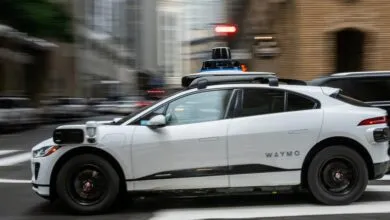
In the competitive landscape of electric vehicles, Rivian is making a bold and expensive pivot toward artificial intelligence and autonomous driving, a move that positions it directly alongside industry giants. During a recent event at its Palo Alto offices, founder and CEO RJ Scaringe outlined a vertically integrated strategy to develop proprietary AI chips and achieve high-level autonomy. This ambition was underscored by a timely, symbolic moment: a Waymo robotaxi, representing decades of autonomous research, glided past the window as Scaringe spoke, highlighting the immense challenge Rivian has chosen to undertake.
The company’s strategy is not framed as a reaction to Tesla, but as a necessary evolution. Advances in AI architecture prompted a complete redesign of its autonomy platform starting in early 2022. With its new vehicle generation, Rivian is building a “data flywheel” to train a comprehensive driving model using real-world data from its fleet. This end-to-end system is designed so that improvements in hardware, like sensors or computing power, directly enhance the software’s capabilities, creating a cycle of continuous advancement.
Rivian’s immediate offering is a hands-free driving system called Universal Hands-Free, which will operate on 3.5 million miles of North American roads. Available through a paid “Autonomy Plus” package, it represents Rivian’s answer to driver-assist features like Tesla’s Full Self-Driving. During a demonstration, an R1S SUV navigated complex Palo Alto streets with notable confidence, leveraging data from 11 cameras and five radar sensors, a key differentiator from camera-only systems.
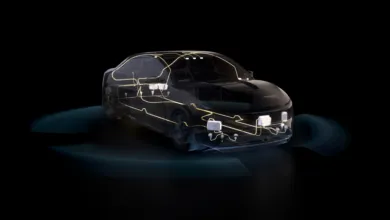
The roadmap, however, points to a more significant leap. The forthcoming Gen 3 platform will integrate a crucial new sensor: lidar. This laser technology, common in robotaxis but rare in consumer vehicles, provides a more detailed 3D map of the environment. Rivian plans to include it in its upcoming, more affordable R2 model, accepting the cost and complexity for a substantial gain in perception and safety. The associated AI computer promises immense processing power, aimed at handling billions of pixels per second to interpret the world in real time.
Scaringe envisions a progression from hands-free to eventual “eyes-off” driving, where occupants can fully disengage, and ultimately to personal Level 4 autonomy on specific roadways. Achieving this will require more than just sophisticated technology; it demands new business and legal frameworks. As driving responsibility shifts from human to machine, questions of liability and insurance must be resolved, a complex hurdle the entire industry, including Rivian, is still navigating.
The market’s initial reaction was skeptical, with Rivian’s stock dipping following the announcements. The company faces significant capital costs and a tough path to sustained profitability. Yet, industry observers note that developing an AI strategy is becoming essential for automakers that wish to remain competitive and command high market valuations. For Rivian, a monthly autonomy subscription could open a vital new revenue stream.
While the company has spun off a separate robotics division, its primary focus remains on solving the autonomous driving puzzle. Scaringe concludes that the industry is approaching a future where AI is as fundamental as utilities, though the environmental impact of such powerful computing remains an open question. For Rivian, this high-stakes bet on AI is not about chasing trends but an attempt to secure its place in the next era of transportation.
(Source: The Verge)