Microsoft’s AI Mandate: Adapt or Exit
▼ Summary
– Microsoft CEO Satya Nadella sees AI as a critical, generation-defining opportunity and a personal mission, driving a company-wide transformation to prioritize it.
– Nadella has implemented sweeping organizational changes, including high-profile executive shifts and new mandates, to consolidate power around AI and accelerate product development.
– To focus on technical AI work, Nadella promoted Judson Althoff to handle commercial operations and initiated weekly, bottom-up “AI accelerator” meetings for technical staff.
– The company is adopting a new “production function,” using AI to fundamentally change software development by reducing reliance on traditional inputs like engineering hours.
– Leadership is evolving, with veteran executives like Rajesh Jha considering retirement, while others like Ryan Roslansky and Charles Lamanna are taking on expanded AI-related roles.
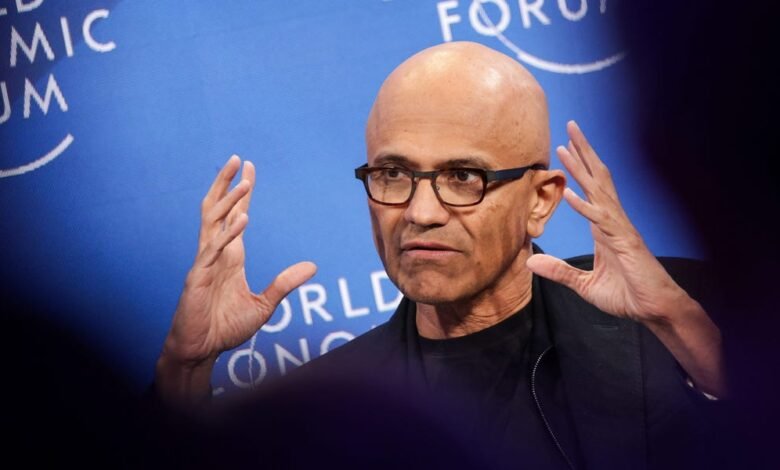
Microsoft CEO Satya Nadella sees artificial intelligence as a defining force for the company, framing it as both an existential challenge and a generational opportunity. This perspective is driving a profound internal transformation, as detailed in internal documents and discussions with company leaders. Nadella is personally steering a comprehensive overhaul, demanding greater urgency and a fundamental rethinking of operations to consolidate focus and resources around AI initiatives. This intense push is creating a pivotal moment for long-tenured employees, who must decide whether to fully commit to the demanding new direction or consider stepping aside.
The pressure is palpable, with one executive noting that veterans are asking themselves “how much longer you want to do this.” Nadella is directly engaging with senior leaders, presenting a clear choice: embrace the sweeping transformation or depart. This shift is not merely philosophical; it has triggered significant organizational changes. To dedicate more time to the technical demands of AI, Nadella recently appointed Judson Althoff as CEO of Microsoft’s commercial business. An internal memo described this move as enabling Nadella and engineering leaders to concentrate on “our highest ambition technical work” during what is termed a “tectonic AI platform shift.”
Operational rhythms are changing to accelerate innovation. Nadella instituted a weekly AI accelerator meeting and a corresponding Teams channel where lower-level technical staff, not executives, are encouraged to share insights directly from their work. This deliberately less-structured format aims to bypass traditional top-down management and surface ideas more rapidly from across the organization. Meanwhile, speculation about further leadership evolution persists. Insiders report that Rajesh Jha, the longtime head of Office and Windows, has contemplated retirement, though he has also expressed renewed excitement about AI’s potential. Should Jha depart, LinkedIn CEO Ryan Roslansky is seen as a potential successor, especially after his role was recently expanded to oversee key productivity applications.
The company’s core approach to creating software is being reimagined. Nadella has issued new directives to corporate vice presidents, urging them to act like “Individual Contributors” by constantly learning and unlearning. He emphasized the need to seek out and empower the agile, fast-paced work happening within Microsoft’s own ranks, particularly from early-career talent. This aligns with the new “production function” concept explained by Asha Sharma, president of Microsoft CoreAI. She states that AI is dismantling the traditional software assembly line, where scaling output required scaling inputs like engineering hours.
“AI breaks that relationship,” Sharma asserts. Instead, AI agents and data become scalable units that generate software and insights without a linear increase in cost or personnel. This dramatically lowers the marginal cost of creation, allowing teams to redirect resources toward “judgment, taste, and problem-solving.” As the pace of AI advancement accelerates from major releases every six months to constant iteration, Microsoft is being forced to rethink not just its products but the entire methodology of software development. The overarching message from the top is clear: adapt with intensity to this new paradigm or risk becoming obsolete.
(Source: Business Insider)