Gel-Based Batteries Show Promise as Solid-State Lags
▼ Summary
– Traditional lithium-ion batteries pose a public safety hazard due to fire risks, prompting recalls of millions of power banks and e-bikes in 2025.
– Semi-solid-state batteries, with a gel-like electrolyte, offer a safer bridge to solid-state technology, being less prone to thermal runaway.
– These batteries are entering products like power banks and e-bikes, offering longer lifespans, faster charging, and better cold weather performance than lithium-ion.
– Ride1Up and Giant are adopting semi-solid-state batteries for e-bikes, while Vivo uses them in phones with silicon-carbon anodes.
– Stricter Chinese regulations on battery safety are driving adoption of semi-solid-state batteries, which could lower costs and improve safety globally.
As we move deeper into 2026, lithium-ion batteries are more widespread than ever. That very ubiquity, however, has created a pressing safety crisis. From e-bikes igniting in apartment hallways to power banks catching fire during flights, the instability of traditional liquid electrolytes has become a clear public hazard.
In 2025 alone, the US Consumer Product Safety Commission (CPSC) recalled nearly 1.9 million power banks from major brands including Anker, Baseus, and INIU. Tens of thousands of e-bikes were also recalled due to fire risks, and a rare urgent warning was issued for several Rad Power Bikes models, instructing owners to immediately stop using their batteries.
For at least a decade, solid-state batteries have been heralded as the long-awaited solution. Their arrival has always seemed imminent, promising cheap, lightweight, combustion-free cells that charge quickly, run cool, and pack immense energy into a small footprint. That promise captured global attention when Donut Lab claimed to have a “miracle” solid-state battery ready for production. Many wanted to believe.
But as it turned out, what sounded too good to be true was exactly that. The claim has since been thoroughly debunked. While the spotlight lingered on that fantasy, however, a different class of improved battery has quietly entered power banks, e-bikes, and other devices.
These next-generation batteries are neither fully liquid nor fully solid. They exist in a middle ground. Semi-solid-state batteries use a gel-like composition that acts as a bridge to the future. They deliver some of the advantages of solid-state technology while dramatically reducing the risk of thermal runaway that plagues conventional lithium-ion cells.
In April 2025, I reviewed what was billed as the “world’s first” semi-solid-state power bank from Kuxiu. Today, several other brands sell similar products. They cost a bit more, but they store more energy in the same space, perform better in cold weather, and are far less likely to overheat or catch fire. Their lifespans can also be two to three times longer than standard power banks.
Each new product launch typically includes a video showing lab-coated individuals using hammers, nails, drills, and knives to puncture, bend, and tear the batteries. The result is revealing: volatile liquid electrolytes ignite, while the semi-solid gels do not.
Beyond the electrolyte, the basic design of a semi-solid-state battery remains the same. An anode sits on one side of the semi-solid electrolyte, a cathode on the other, and ions move back and forth during charging and discharging. With minor adjustments, these batteries can be manufactured on the same assembly lines as their more volatile predecessors.
This means semi-solid-state batteries don’t need to disrupt the present to power the future. The e-bike industry has taken notice.
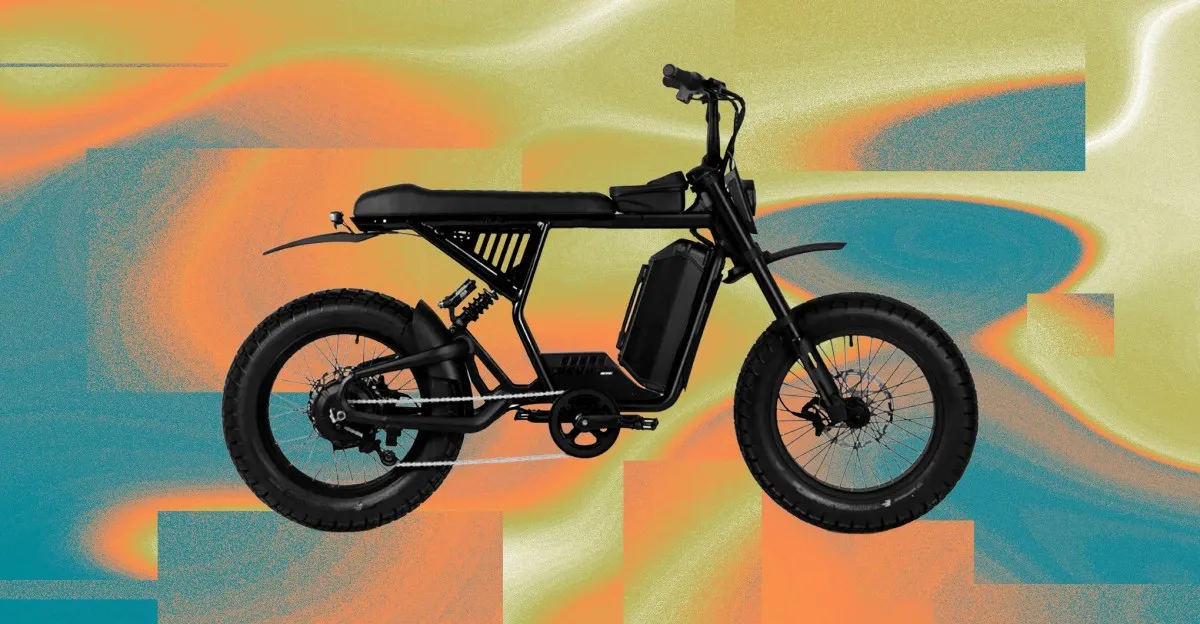
Ride1Up is arguably leading the charge toward semi-solid state in the US. In early May, it announced the Revv1 EVO, calling it “the world’s first semi-solid-state electric bike.” The 1,040Wh battery, made by Heyuan Lithium Inno, is designed to withstand over 1,200 charging cycles before dropping below 80 percent capacity. That is more than double the typical 500-cycle lifespan of standard e-bike batteries. It also charges in two hours and handles extreme temperatures better. Shipping begins in August 2026.
Not to be left behind, global cycling giant Giant announced in late May that it would also adopt semi-solid-state batteries. The company is working on at least five mass-produced e-bikes using Heyuan Lithium Inno’s technology. Giant has also partnered with T&D, a battery company spun off from component maker Bafang. According to Bike Europe, T&D’s battery offers 50 percent more capacity than lithium-ion while reducing frame-integrated weight by 21 percent. Actual e-bike models from Giant have yet to be revealed.
Chinese phone makers have been making headlines with silicon-carbon batteries, but some are also incorporating semi-solid electrolytes. Switching from graphite to a silicon-carbon anode allows these advanced batteries to pack even more energy into less space. Back in 2024, Vivo launched the X200 series with a battery combining a semi-solid electrolyte with a silicon-carbon anode. The same BlueVolt-branded battery now appears in newer Vivo devices like the X300 Ultra.
And this is only the beginning. Semi-solid-state batteries are being tested or commercialized in everything from drones to electric vehicles and the large power stations used for home backup during outages.
The push toward semi-solid-state adoption is partly driven by stricter regulations from Chinese authorities. New e-bike rules that took effect in December 2025 require batteries to pass a puncture test without triggering a fire or explosion. While power banks are not subjected to the same torture during certification, they must still pass rigorous tests that push liquid electrolytes to their limits. Without passing, they cannot earn China’s CCC mark, which is required for air travel and is analogous to the CE mark in Europe or UL certification in the US.
These regulations create a strong incentive for manufacturers to adopt semi-solid-state batteries, which naturally meet China’s demanding standards. If adoption accelerates, more assembly lines will retool, driving down manufacturing costs. That would open the door for a wider range of devices to benefit from this advanced technology.
Since China dominates the global battery supply, all countries could eventually see improved safety. That would be especially welcome news for the US, where a patchwork of state laws, city ordinances, and optional UL certifications have so far failed to make e-bike batteries and power banks meaningfully safer across the country.
As for true solid-state batteries? We will just have to keep waiting. In the meantime, Donut Lab says it is still open for business.
(Source: The Verge)