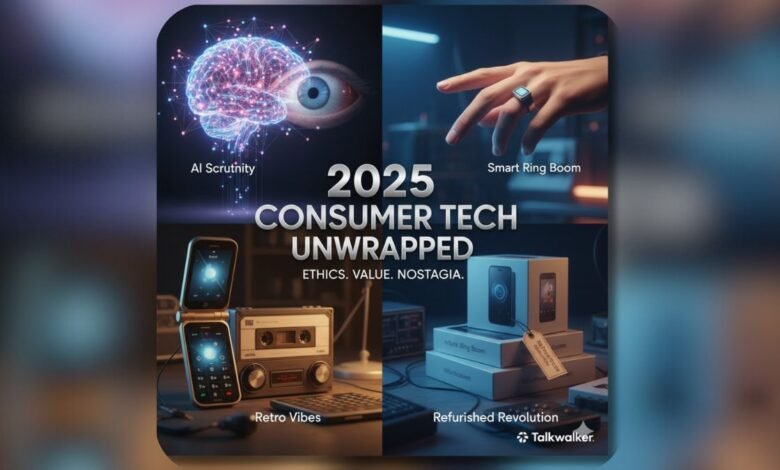
2025 Consumer Tech Unwrapped AI Scrutiny Retro Vibes and the Smart Ring Boom
▼ Summary
– Consumers are becoming more critical and value-focused, demanding technology that is thoughtfully integrated and ethically sound rather than just novel.
– There is significant consumer pushback against poorly implemented AI, with frustration over clunky features and ethical concerns in creative industries like gaming.
– Social commerce platforms like TikTok Shop and Temu are driving impulse buys of affordable, functional gadgets, emphasizing utility and value over brand names.
– Retro tech is resurging as consumers seek simplicity and tangible experiences to counter digital fatigue, favoring straightforward devices over complex ones.
– The refurbished tech market is growing rapidly, with a 70% increase in ownership, as consumers prioritize value and sustainability over repairing or replacing devices with new ones.
The technology market is perpetually spinning forward, but the consumer driving it is becoming more discerning, vocal, and value-oriented than ever before. As we look toward 2025, a clear picture emerges of a user base that has moved beyond mere adoption to critical evaluation. A comprehensive new report from social intelligence platform Talkwalker, titled “Social Media Trends 2025,” has analyzed millions of consumer conversations to decode the forces shaping the next wave of tech. The findings reveal a landscape defined by a growing demand for ethical AI, a surprising affection for retro gadgets, and a pragmatic approach to device ownership.
The Growing Pains of Artificial Intelligence
Artificial Intelligence is no longer a novelty; it’s an integrated part of daily life, and this familiarity is breeding contempt for lazy implementations. Consumers are vocally pushing back against what they perceive as carelessly “stapled on” AI features. The smart home sector, in particular, is a hotbed of this frustration. The Talkwalker report found that within emotion-categorized online discussions about smart home AI, a staggering 57% of mentions expressed anger. Users are tired of clunky, unpredictable assistants that complicate rather than simplify. As one user aptly put it, the experience “feels like slop every time.”
This critical lens is not limited to home gadgets. The ethical implications of AI are under intense scrutiny, especially in creative industries. The gaming community is at the forefront of this movement, resisting the use of AI for elements like voice acting, which they see as displacing human talent. This sentiment is directly impacting purchasing decisions. One gamer’s comment highlighted this trend: “That Liar’s Bar game, uses Ai voices. So I won’t be playing it, sorry.” The message from the market is unambiguous: consumers demand responsible AI. They want technology that is thoughtfully integrated, ethically sound, and genuinely enhances their experience, rather than serving as a cheap shortcut or a marketing gimmick.
The New Impulse Buy Social Commerce and Affordable Tech
The power of social media to drive commerce has fully matured, creating a new paradigm for consumer electronics. Platforms like TikTok Shop and Temu have become dominant forces, turning impulse buys of budget-friendly gadgets into a mainstream phenomenon. These platforms excel at showcasing handy, affordable home devices that promise to save time and add convenience, directly appealing to a consumer base focused on function and value over brand prestige.
This trend reflects a significant behavioral shift. The discovery-to-purchase funnel has been dramatically shortened, with viral videos and user-generated content fueling rapid sales of everything from portable blenders to smart cleaning tools. It’s a market driven by utility and accessibility, where a clever, low-cost gadget can achieve “must-have” status overnight. This movement underscores a broader economic consciousness where consumers are keen to maximize the practical value of every dollar spent, prioritizing functionality that makes a tangible difference in their daily routines.
Nostalgia Meets Function The Retro Tech Revival
In a fascinating counter-trend to the relentless push for innovation, retro tech products are experiencing a significant resurgence. This isn’t just about a fleeting sense of nostalgia; it’s a deliberate choice by consumers seeking a different kind of technological experience. In a world of increasingly complex, interconnected devices, the simplicity and tangible nature of older gadgets offer a refreshing alternative.
The retro tech revival speaks to a desire for products with a distinct aesthetic and a more straightforward user interface. Think flip phones, cassette players, and classic gaming consoles. These items provide a direct, focused function without the distractions of constant notifications and endless menus. This trend suggests a growing segment of the market is experiencing digital fatigue and is actively seeking out technology that feels more intentional and less intrusive, proving that good design and a satisfying user experience are timeless.
Repair or Replace The Rise of the Refurbished Market
The conversation around what to do with a broken device is changing. While online discussions about fixing gadgets are incredibly common, generating over 1.72 million mentions according to the report, the will to actually perform the repairs is waning. The primary culprit is downtime. Consumers are increasingly frustrated with the lengthy, inconvenient process of getting their essential devices fixed. “Whether it’s the time lost from broken products to the time it takes to get them fixed, downtime is causing upset among tech-reliant customers,” the report notes.
This frustration has fueled explosive growth in an alternative solution: the refurbished tech market. Consumers are flocking to refurbished devices not as a second-best option, but as a smart, value-driven choice. The expectation is high; buyers want products that are functionally and aesthetically “as good as new” but at a significantly lower price point. The data backs this up emphatically, with the report revealing that “the number of people that own refurbished products has increased by 70% in the two years running up to 2024.” This trend signals a maturing market where sustainability and savvy economics are reshaping the concept of device ownership.
Wearables Evolve Beyond the Wrist
The wearables market continues its march toward seamless integration into our lives, and its next phase of growth is set to be significant. While smartwatches have established a strong foothold, the next wave of innovation is moving to a more discreet form factor. According to Talkwalker’s analysis, “smart rings are all the rage.”
This points to a consumer desire for technology that is less conspicuous and more harmoniously blended with personal style. Smart rings offer health tracking, notifications, and payment functionalities in a compact, fashionable package. They represent the evolution of wearables from a functional accessory to a piece of integrated personal technology that doesn’t demand constant attention. As consumers look for more subtle ways to stay connected and monitor their well-being, the smart ring is perfectly positioned to become the next major category in personal tech.