This Tetris Watch Fails at Its Core Purpose
▼ Summary
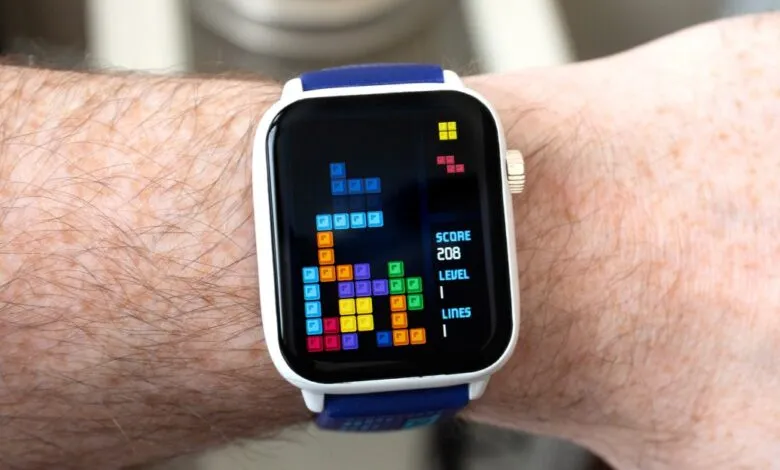
– The Tetris: My Play Watch is a smartwatch-like device focused almost entirely on playing Tetris and featuring a heavily Tetris-themed user interface.
– Its core functionality is very limited, offering only basic tools like a stopwatch and fitness tracker, with no smartphone connectivity, notifications, or software update capability.
– The watch’s primary feature, playing Tetris, is hampered by frustrating and unreliable touchscreen controls that often misinterpret gestures.
– It includes Tetris-themed design elements like nine static watch faces and swappable bands, but offers little customizability for its features.
– The battery life is poor, draining quickly with even minimal gameplay, requiring careful brightness and volume management to last a full day.
The Tetris: My Play Watch presents a clever idea for fans of the classic puzzle game, but it ultimately stumbles in its most fundamental task. This wearable device mimics the appearance of a popular smartwatch but strips away nearly all connectivity and advanced features to focus on playing Tetris. While the theming is charming and comprehensive, the frustrating touchscreen controls make the actual gameplay an exercise in irritation rather than relaxation.
Visually, the watch commits fully to its concept. It comes with nine different watch faces, all incorporating tetromino shapes and the iconic logo in either digital or analog designs. These faces display basic information like battery level, date, and simple fitness metrics. The included straps are also brightly colored with Tetris patterns, though they can be swapped for standard bands for a more subdued look. The interface is navigated using a combination of the touchscreen and a single crown button on the side, which feels adequate for the limited functions available.
Beyond playing the game, the watch offers a handful of basic tools including a stopwatch, timer, calendar, and calculator. There is a rudimentary fitness tracker with a heart rate sensor that proved accurate in testing, alongside step counting and calorie estimation. However, the device lacks any Bluetooth or Wi-Fi connectivity, meaning it cannot sync data, provide smartphone notifications, or receive software updates. All fitness data resets nightly with no historical tracking. This makes it an upgrade from a basic digital watch, but a stark downgrade from any true smartwatch.
For a product named the Tetris watch, its performance with the game is surprisingly poor. It offers two modes: Marathon and Puzzle. While it includes helpful features like a next-piece preview, the control scheme is a significant flaw. Gameplay relies entirely on touchscreen gestures, dragging to move, tapping to rotate, and swiping down to drop. The touch detection is inconsistent and often misinterprets inputs, turning a slight slide into an accidental rotation or a panicked tap into an unwanted hard drop. Settings like an auto-rotate option attempt to help, but they don’t prevent frequent control errors that ruin your game.
Battery life is another considerable shortcoming. With screen brightness and volume at maximum, the watch lasted only about six and a half hours with minimal gameplay. Reducing these settings extended battery life to roughly twelve hours, but a brief five-minute Tetris session still drained about six percent of the charge. For a device meant for quick gaming sessions, this requires constant battery awareness.
The core appeal here is a dedicated, notification-free Tetris experience on your wrist. In practice, however, the unreliable controls transform a normally calming game into a source of frustration. It functions as a bold statement piece for die-hard Tetris enthusiasts, but as a gaming device, it fails to deliver the smooth, enjoyable experience fans would expect.
(Source: The Verge)