Zevo to Launch Robotaxi Fleet, Starting with Tensor
▼ Summary
– Driverless cars are now a commercial reality with robotaxi services, and automakers aim to bring similar autonomy to personal vehicles soon.
– Companies envision personal autonomous vehicles being used for errands or deployed as ride-sharing assets to generate income.
– Zevo, an EV car-share company, is partnering with startup Tensor, which claims it will sell the first fully autonomous car to consumers in 2026.
– Zevo’s founder is betting on unproven companies like Tensor and Faraday Future due to lower costs and better software integration opportunities.
– The partnership is a calculated risk, offering Tensor a launch customer and Zevo a favorable deal with deep software access.
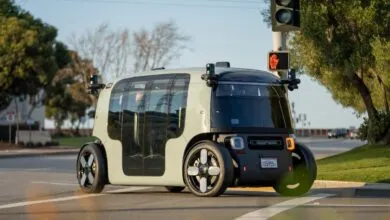
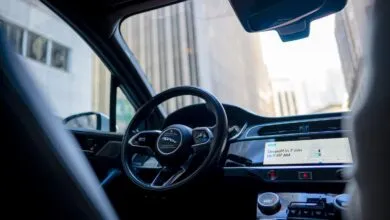
The vision of a self-driving future is rapidly shifting from science fiction to a tangible reality on our streets. Companies are now actively deploying commercial robotaxi services, while major automakers race to bring similar autonomous technology to consumer vehicles in the coming years. This evolution opens up fascinating possibilities for personal use, from sending your car on errands to generating income by having it offer rides to others, a concept that fuels the ambitions of both established players and bold new entrants.
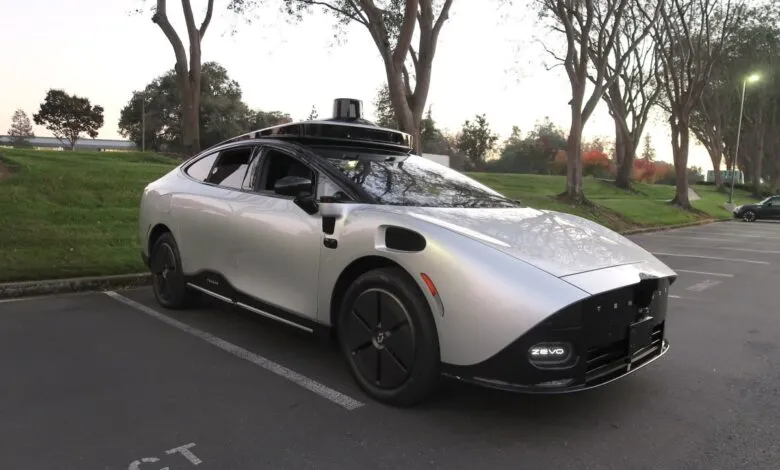
Hebron Sher, co-founder of Dallas-based Zevo, is positioning his company at the intersection of these trends. Having operated an electric vehicle-only car-share service for over a year, Zevo is now venturing into robotaxis through a partnership with a new startup called Tensor. This company emerged earlier this year from a previous China-based entity, AutoX, and makes a striking claim: it aims to be the first to sell a fully autonomous car directly to consumers by 2026. Zevo has committed to purchasing up to 100 of these vehicles to integrate into its network.
The plan, while ambitious, faces significant questions. Concrete timelines are scarce, and Tensor must still demonstrate it can manufacture vehicles at scale with reliability, a formidable challenge that has derailed numerous automotive startups. If successful, Zevo customers could access these Tensor autonomous vehicles through what would effectively become a decentralized robotaxi service. This announcement echoes the optimistic, often unmet promises from the initial peak of self-driving hype a decade ago, though the presence of actual robotaxis on roads today lends the concept a greater sense of feasibility.
Tensor’s leadership frames the partnership as part of a broader mission. “Tensor’s vision is to build a future where everyone owns their own Artificial General Intelligence, a personal AGI that enables more time, freedom and autonomy,” stated Hugo Fozzati, the company’s chief business officer. He emphasized that the deal with Zevo goes beyond a simple vehicle sale, enabling “individuals and micro-entrepreneurs to participate and profit from AV business in this AI era.”
For Sher, this is not his first gamble on an unproven company. Just last October, Zevo announced a non-binding order for 1,000 vans from the perpetually struggling EV startup Faraday Future. Faraday, which has spent a decade trying to produce its luxury FF91 SUV, recently pivoted to importing more affordable Chinese electric vans for assembly in the United States.
Sher’s strategy in backing these companies is driven by two key factors. The first is cost; companies like Tensor and Faraday Future, with nonexistent or troubled track records, are often willing to offer attractive deals. More critically, Sher notes that these startups show far greater willingness than traditional automakers to allow deep software integration with Zevo’s platform. This level of integration is absolutely crucial for enabling peer-to-peer sharing and managing a robotaxi fleet effectively.
He is openly critical of the alternatives, stating that getting legacy automakers to be similarly flexible is tough and bluntly adding that their “tech freaking sucks.” In contrast, partnering with fellow startups creates a synergistic environment. “The synergy of startup and startup, sort of mingling, commingling together, and saying, ‘Let’s build a solution side by side…’ I think I’ve really enjoyed that experience,” Sher explained.
He portrays the Tensor agreement as a mutually beneficial arrangement: Tensor gains an early, validating customer to prove its technology, while Zevo secures favorable terms and that essential software access. Nonetheless, Sher readily acknowledges the venture is a “calculated risk,” embodying a spirit of entrepreneurial daring. “I think that’s what makes America great, you know, the fact that we do encourage startups to take risk,” he remarked.
(Source: TechCrunch)