Steam Machine’s 8GB VRAM: A Performance Problem?
▼ Summary
– Valve’s upcoming Steam Machine is designed for decent 1080p-to-1440p gaming performance, occasionally reaching 4K with FSR upscaling, similar to a modern midrange PC.
– A key concern is its GPU’s 8GB of dedicated RAM, which is increasingly a bottleneck for midrange graphics cards in modern games.
– Testing shows 8GB GPUs perform worse on SteamOS than on Windows 11 when running the same games at identical settings.
– Valve is actively developing solutions to address these performance issues, which could also benefit other hardware with similar configurations.
– Comparative testing between the 8GB Radeon RX 7600 and the 16GB RX 7600 XT highlights the performance impact of VRAM limitations on SteamOS.
Valve’s upcoming Steam Machine desktop is positioned as a capable living room PC, targeting smooth performance at 1080p and 1440p resolutions, with 4K gaming possible in some titles using upscaling technology like FSR. This aligns with expectations for a system built around a contemporary mid-range graphics card. However, a significant point of discussion centers on its 8GB of dedicated video memory (VRAM), a specification that is increasingly viewed as a potential constraint for modern gaming, even at these target resolutions.
This concern isn’t unfounded. In testing various current-generation GPUs from both AMD and Nvidia, performance limitations due to VRAM capacity have been observed, particularly at 1440p in Windows. New testing on the SteamOS platform reveals that these 8GB limitations can be even more pronounced compared to running the same games under Windows 11. While Valve is actively developing optimizations for its hardware platform, the current state shows that games which push memory boundaries face additional hurdles on the Linux-based SteamOS.
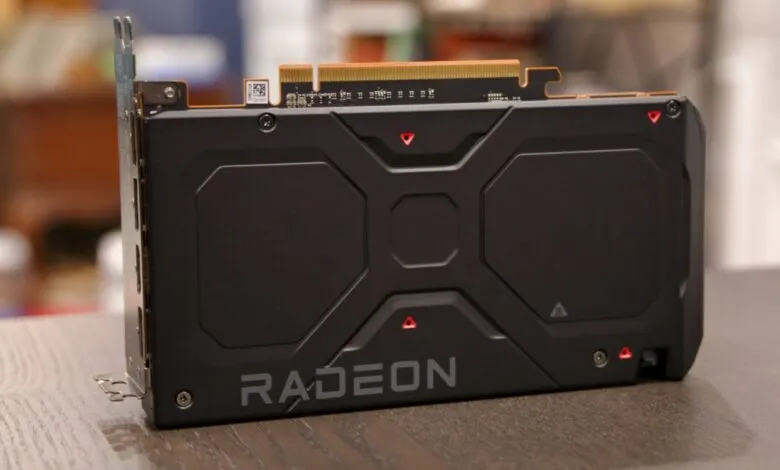
To illustrate the impact, comparative testing between two very similar AMD Radeon GPUs is telling: the 8GB RX 7600 and the 16GB RX 7600 XT. These cards share the same fundamental RDNA 3 architecture and are close analogs to the custom GPU Valve will use in the Steam Machine. The primary difference is the amount of available graphics memory. This controlled comparison helps isolate VRAM as the variable, clearly demonstrating where and how the 8GB ceiling affects gameplay on Valve’s operating system. The performance gap in certain demanding titles highlights the challenge of future-proofing a fixed hardware configuration with what is becoming a borderline amount of memory for high-quality settings.
(Source: Ars Technica)