2027 BMW iX3 Review: Advanced EV Tech Meets Thrilling Handling

▼ Summary
– BMW provided travel for this review of the iX3, which is the first model in its new “Neue Klasse” series, a name referencing its defining 1960s cars.
– The iX3 represents a major shift as it features a fully electric powertrain and advanced cabin technology, unlike its historical predecessors.
– It is the first of two Neue Klasse models, with an all-electric 3 Series sedan, including an M performance version, arriving later.
– The vehicle emphasizes sustainability, using recycled materials and a design focused on easier end-of-life recycling.
– It is powered by a new 463 hp electric drivetrain and a large 108.7 kWh battery pack that uses a lightweight, cost-saving cell-to-pack design.
The 2027 BMW iX3 represents a pivotal moment for the brand, introducing the first model in its visionary Neue Klasse series. This electric crossover blends advanced sustainability with a thrilling driving experience, setting a new benchmark for what a modern luxury EV can be. It signals a bold new direction, much like the iconic 1960s vehicles that originally defined BMW’s reputation for engineering excellence.
This vehicle is just the beginning of BMW’s electric transformation. An all-electric 3 Series sedan is also in development, with a performance-tuned M version expected to generate significant excitement among driving enthusiasts. That model arrives later, however. The iX3 arrives first, strategically targeting the high-demand crossover and SUV segment that dominates today’s market.
From a technical perspective, the iX3 is built on a foundation of radical sustainability. The automaker has prioritized the use of recycled materials, including battery minerals, interior plastics, and aluminum. A monomaterial design philosophy simplifies future recycling. The heart of the car is BMW’s sixth-generation electric powertrain. The initial launch model for the U.S. market, arriving next summer, will be the iX3 50 xDrive. This variant combines an asynchronous motor on the front axle with an electrically excited synchronous motor at the rear, delivering a robust 463 horsepower and 475 lb-ft of torque.
Power comes from a substantial 108.7-kWh (net capacity) 800-volt lithium-ion battery pack. BMW has shifted from pouch cells to new, larger cylindrical cells measuring 46 mm by 95 mm. The pack utilizes a cell-to-pack architecture, eliminating traditional modules to reduce weight and simplify manufacturing. This innovative design integrates the battery’s top surface directly as the vehicle’s floor, with seats mounted onto it. This approach saves considerable weight and maximizes interior cabin space.
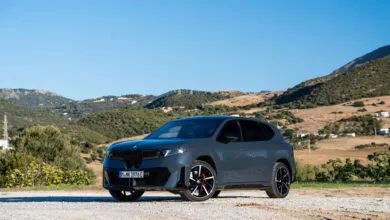
The car’s exterior styling, part of the new design language, features pronounced surface detailing. Lighter paint colors best highlight elements like the muscular, bulging wheel arches that contribute to its athletic stance.
(Source: Ars Technica)