Helldivers 2 Dev Praises AI’s Impact on Gaming
▼ Summary
– Arrowhead CEO Shams Jorjani believes AI can improve gaming and that opinions on its use are often too extreme rather than balanced.
– Jorjani clarified that his studio does not use AI in games but sees value in using it for administrative tasks to free up development time.
– Embark Studios used AI to generate voice lines in Arc Raiders, sparking debate and criticism, including a negative review from Eurogamer.
– Square Enix plans to automate 70% of QA work with AI, raising concerns about job losses in entry-level roles within the industry.
– The industry is divided on AI, with some companies like Krafton adopting “AI-first” policies while others face backlash for AI-generated content.
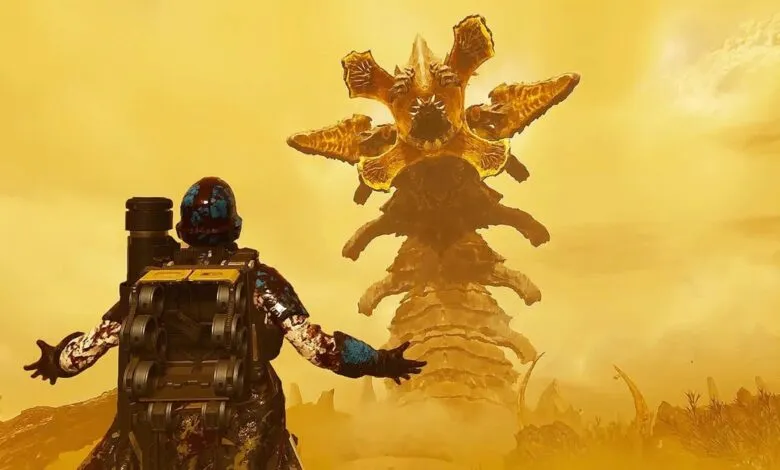
The ongoing conversation about artificial intelligence in video game development continues to spark intense debate, with industry leaders offering contrasting perspectives on its role and impact. Shams Jorjani, CEO of Arrowhead Game Studios, recently shared his nuanced viewpoint during an industry podcast, suggesting that the discourse often lacks necessary subtlety. While his own studio, responsible for the hit game Helldivers 2, does not integrate AI directly into its games, Jorjani advocates for its practical application in streamlining backend operations. He posits that if AI can handle administrative tasks like processing receipts more efficiently, it ultimately frees up creative resources, allowing developers to focus on what they do best: making more game content for players to enjoy.
This commentary emerged during a discussion about Embark Studios’ extraction shooter, Arc Raiders, which has become a focal point in the AI controversy. The developer employed voice actors for the initial recording sessions but later utilized AI to generate additional in-game dialogue, a decision that ignited a firestorm of criticism and even influenced a negative review from a major publication. Jorjani expressed his frustration with the polarized reactions, stating that people tend to adopt extreme positions. He finds the specific use case in Arc Raiders to be a fascinating example of how the technology can, in his opinion, enhance the final gaming experience.
The broader industry landscape reveals a deepening ideological divide. On one side, companies like Square Enix have publicly stated ambitious goals to automate a significant majority of their quality assurance processes with AI. This prospect raises serious concerns about the future of entry-level jobs within the sector, a critical pathway for new talent. Simultaneously, the CEO of Nexton Co. Ltd., the publisher for Arc Raiders, has asserted that the use of AI is now a universal standard, a claim that feels unsettling in an industry already struggling with widespread layoffs and studio shutdowns.
Conversely, prominent figures like Brendan Greene, the creator of PUBG, have voiced strong opposition, expressing encouragement at seeing the player community push back against AI integration. This stance creates a stark contrast with the corporate strategy of his game’s publisher, Krafton, which has instituted a company-wide “AI-first” directive and even offered voluntary resignation packages to employees who disagree with this new direction.
The controversy has also touched other major publishers. Activision, the company behind the Call of Duty franchise, recently faced scrutiny for utilizing AI-generated assets in some of its promotional artwork. In response, the company defended its practices, clarifying that a range of digital tools, including AI, are used to support their teams, but that the core creative vision remains firmly in the hands of their human developers.
The integration of artificial intelligence into game development appears to be an irreversible trend. However, the critical questions of how it will be implemented, the ethical boundaries that will be established, and the long-term acceptance by developers, performers, and the gaming community at large are chapters yet to be written. The industry stands at a crossroads, balancing the pursuit of efficiency with the preservation of its human creative spirit.
(Source: Kotaku)