Dispatch Review: A Fantastic Superhero TV Show
▼ Summary
– Dispatch is a character-driven superhero drama where you play as former hero Robert Robertson, now managing a team of former supervillains as a dispatcher.
– The core gameplay involves strategically assigning heroes to missions based on their stats and mission requirements while managing their availability and rest periods.
– Despite dialogue choices, the game’s narrative is largely linear with minimal player impact on major story outcomes, including a mandatory early team member cut.
– Invisigal’s character arc provides the most meaningful player influence through mentorship choices that can affect her potential redemption and the story’s conclusion.
– The game features strong writing, voice acting, and TV-show-like presentation, though its limited player agency makes it feel more like an interactive show than a choice-driven game.
Finding the perfect superhero TV show often means balancing action with compelling character drama, and Dispatch masterfully delivers both. This series captures the spirit of early 2010s graphic novel adaptations, blending office comedy dynamics with the quippy, self-aware tone that revitalized the superhero genre. While it sometimes leans so heavily into its television inspirations that you forget it’s interactive, the exceptional writing and voice acting create a deeply engaging, character-focused story you’ll want to revisit.
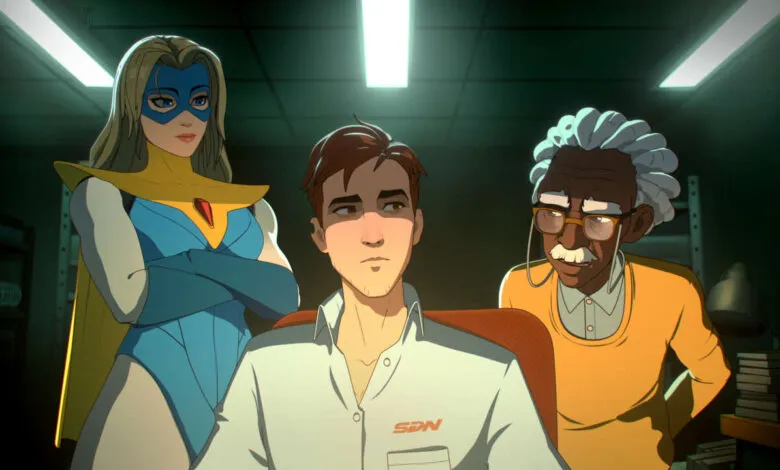
The series follows Robert Robertson III, formerly known as Mecha Man, a hero who relied on a powerful mech suit to battle villains. After his suit is destroyed, Robert feels lost until the famous hero-for-hire Blonde Blazer recruits him as a dispatcher. His new role involves coordinating a team of heroes, but there’s a twist, his squad consists entirely of reformed supervillains. Their abrasive personalities, volatile tempers, and complete lack of teamwork make them a chaotic and often ineffective group.
A single inspiring speech can sometimes turn misfits into heroes.
This premise shines thanks to a wonderfully diverse cast. Initial trailers painted Robert as a typical washed-up hero defined by sarcasm, but he’s a refreshing protagonist. While he deals with depression and uses humor as a shield, he possesses a genuine desire to help people and remain a force for good. He doesn’t see his team of former villains as a burden, but as a mission, he aims to mentor them into becoming heroes greater than he ever was, believing it will benefit both the city and their own lives.
Characters often joke about Robert’s talent for motivational speeches, and they’re not wrong. His encouraging words add weight to every assignment, making you take your responsibilities seriously. The core gameplay loop places Robert behind a computer screen, monitoring incoming crime reports and calls for assistance across the city. You must carefully read each request, as the specific wording indicates exactly what the person needs. For instance, a caller might request help stopping a fight but emphasize a non-violent approach, or a citizen might report a bomb that needs immediate defusing.
You need to strategically decide where to send each hero.
Every aspiring hero on Robert’s team has ratings across five attributes: Combat, Vigor, Mobility, Charisma, and Intellect. By analyzing the language of each crime report, you determine which former villain is best suited for the task. For example, Malevola, a sword-wielding half-demon who creates portals, is a reliable all-rounder. Coupé, a winged assassin, excels in Combat, Mobility, and Intellect but lacks Vigor and Charisma. Rarely is one hero the perfect fit, and every mission carries a risk of failure determined by chance. You can reduce this risk by sending multiple heroes on an assignment, for a high-speed chase under enemy fire, you might deploy both the highly mobile stealth expert Invisigal and the damage-absorbing bruiser Golem.
The downside to overpreparing is the cost in time and resources. Every hero you dispatch is unavailable for a period that includes travel time, mission execution, the return trip, and a mandatory rest period. Each shift typically presents a dozen or so missions, with two to four active at any moment. These missions remain available for only a short time, encouraging quick and strategic decision-making. Sending too many heroes on early missions to ensure success means your entire team will be exhausted and unavailable when the next wave of missions arrives, leading to certain failures. However, sending too few heroes from the start also increases the likelihood of mission failure.
Coupé and Invisigal begin the series as the most mobile team members.
Occasionally, a hero will request Robert’s direct intervention, requiring him to make a judgment call on how to handle an unexpected complication. These moments typically present three or four options, each phrased to hint at the necessary skill. At other times, Robert can use his background as a tech-based hero to hack his way around a problem.
Hacking is presented as a mini-game where you guide a polyhedron through a maze of nodes. Sometimes the goal is simply to reach the end. Other challenges require inputting a specific pattern, transferring an electrical charge between nodes, or evading a pursuing antivirus program represented by a glowing red eye. These hacking sequences grow progressively more complex, with tighter time limits and fewer attempts allowed, creating genuine tension by the endgame. An accessibility option grants unlimited time and retries for players who find these sections too demanding.
Who knew an antivirus could be so relentless?
The entire process of dispatching heroes is an exciting challenge that becomes more intricate as the series progresses. The mechanics are easy to grasp, but your initial shifts will likely involve missed calls and failures as you learn the ropes and manage a team of former villains ill-suited for many tasks. However, as team members complete assignments, they gain experience and level up, allowing you to improve any of their five core stats.
Over time, you learn to recognize which keywords indicate the ideal team member for a job. You train each hero to handle calls more effectively and discover which pairings have synergy, boosting their success rates when working together. You also uncover each member’s unique passive ability, which is revealed later in their development. At certain points, you can temporarily remove a hero from rotation for specialized training with Blonde Blazer, who helps them develop additional passive skills. As you successfully handle calls, Robert also gains experience, unlocking dispatcher perks like powerful coffee that instantly returns a hero to duty or medic training to heal injured characters suffering success rate penalties.
Dispatch tracks numerous small decisions, but the major ones don’t drastically alter the overarching narrative.
The series is structured so that the learning curve for dispatching on a first watch mirrors Robert’s growing confidence and bond with his team. This creates a more personalized and engaging experience, fostering the compelling illusion that your efforts to understand the team directly influence their solidarity with Robert over time.
Much of Dispatch is a carefully crafted illusion, one that conceals how little power you truly have to shape the story. Between shifts, you guide Robert through this new chapter of his life as he interacts with coworkers, explores potential romantic relationships, and seeks a way to become Mecha Man again. Dialogue branches offer two or three choices, and a timer pressures you to make quick decisions while considering the nuances of each option. You can pause at any choice to take all the time you need, a welcome accessibility feature for viewers who need more than the few seconds typically allotted. However, it’s clear the series is designed for you to make these decisions instinctively, in the moment, regardless of the consequences.
Pay close attention to the specific wording of each request to determine which hero is best suited for the assignment.
This setup will feel familiar to fans of Telltale adventure games and similar interactive narratives. However, Dispatch makes one significant deviation from this established format, and it weakens the experience: you cannot choose to have Robert remain silent. In similar series, opting to say nothing, whether intentionally or accidentally, could significantly impact the narrative. Silence served as a powerful narrative tool in titles like The Walking Dead and Firewatch. In Dispatch, if you don’t select an option, the game automatically picks one for you, presumably the “canon” choice. This means you don’t actually need to participate in the story outside of the dispatching segments, the plot will continue on its own.
This diminishes the interactive aspect and shifts the overall experience closer to an interactive TV show than a cinematic video game. The overarching narrative reinforces this distinction. While certain choices allow you to remove major characters or introduce new ones, these decisions lack dramatic consequences. A prime example occurs early on: Robert is ordered to dismiss the lowest-performing team member based on an effectiveness leaderboard. However, the decision ultimately narrows down to two specific candidates. No matter how much you focus on improving those two characters’ performance, argue against dismissing anyone, or deliberately sabotage other team members to alter the rankings, you are always forced to dismiss one of those two.
You’ll get opportunities to see Robert in the Mecha Man suit through flashback sequences.
On repeat viewings, this highlights how few narrative pathways Dispatch’s story actually contains. Even during a first watch, signs that your choices are an illusion begin to surface. The two candidates for dismissal have no significant impact on the story or any major scenes with Robert that might inform your leadership approach. Admittedly, since the two candidates possess different superpowers, they have varying stats and passive abilities for assignments. But given how easily you can develop any team member, you can quickly fill the gap in your roster. It might take a shift or two to level up a replacement hero, but it’s not a difficult task. So while this decision isn’t entirely without consequence, it might as well be.
The game further underscores this lack of player agency by making the choice for you if you let the timer expire. None of this ruins Dispatch, the writing remains fantastic, and its story would make for an excellent standalone TV series, but it does reduce the tension of each decision. You can experience this choice-driven series without making many choices and still reach a satisfying conclusion.
Blonde Blazer represents one of two potential romance paths in the series.
To some extent, this lack of true responsiveness is more frustrating because of Dispatch’s phenomenal writing. Invisigal’s storyline demonstrates how choice consequences could have had more impact. Among Robert’s team, Invisigal struggles the most with her heroic identity, believing her invisibility power destines her for villainy. One of Robert’s first actions, and the game offers no alternative, is to give her a pep talk asserting that fate isn’t real; our choices, he insists, define who we are.
Ignoring the ironic contrast between this speech’s theme and the game’s rigid structure, fate becomes the central theme of Robert and Invisigal’s relationship. Robert becomes her de facto mentor, and your choices involving her do influence Dispatch’s conclusion. If the series didn’t end immediately afterward, this impact would be substantial. As it stands, it creates an interesting variable should the developers ever create a sequel.
Invisigal is the other available romance option.
Robert and Invisigal share a captivating dynamic, brought to life by expressive animation and superb voice performances from Aaron Paul (Robert) and Laura Bailey (Invisigal). Many of their best scenes are exclusive to the romance path, meaning you miss crucial character development if you pursue Blonde Blazer or remain single. However, investing time and effort into Invisigal’s storyline, regardless of romantic interest, is deeply rewarding. It creates a compelling reason to engage with the game’s choices, if only to help her realize she isn’t destined for villainy and can become a hero if she truly desires it.
While the rest of the team doesn’t receive the same depth as Invisigal, they are all enjoyable to interact with, whether you actively make choices or not. Although the limited narrative branching prevents most decisions from feeling substantial enough to warrant careful thought, Invisigal’s potential redemption arc, combined with incredible writing and stellar voice acting, make this one of the best superhero dramas available. Plus, the process of dispatching heroes and growing as a leader provides a fun interlude between decision-making moments, especially when you see your improvement reflected in Robert’s character development. While I have some reservations about certain aspects, Dispatch absolutely deserves a second season. The quality of its writing and world-building is too exceptional for this to be a one-time experience.
(Source: Gamespot)