Where Winds Meet PS5: A Vast, Visionary World on the Brink

▼ Summary
– Where Winds Meet is a massive free-to-play historical epic offering 150+ hours of gameplay with both single-player and MMO-style multiplayer features.
– The game’s pre-release version contained numerous technical issues like bugs, crashes, and localization errors, though developers claim many will be fixed for the November 14 launch.
– Players can customize their experience by choosing between single-player or multiplayer focus and adjusting guidance levels, with a dense world comparable to Ghost of Tsushima and Assassin’s Creed.
– Combat is stylish and responsive, choreographed by a Hong Kong film director, featuring diverse weapons and skill systems, though it has MMO-like cooldowns and technical flaws.
– Despite its ambition and compelling content, the game feels unfinished and overwhelming, making its full potential dependent on post-release polish and bug fixes.
Where Winds Meet presents a staggering vision of a free-to-play historical epic set in ancient China, offering both a deep single-player narrative and expansive MMO-style multiplayer features. After spending roughly twenty hours exploring its world, it became clear that we had only just begun to uncover what this massive title has to offer. The sheer scale of the game made any attempt at a timely review impossible before its November 14th launch date.
We also have lingering questions about the state of the pre-release build we experienced and what improvements players can expect on day one. One thing is undeniable: the ambition on display is breathtaking. This is a 150-hour adventure that doesn’t cost a dime, though its monetization strategy, apparently focused on cosmetics, Battle Passes, and gacha mechanics for clothing, was mostly inactive in our version.
Our impressions remain somewhat fluid because the game is incredibly dense, and its final live-service state is still a mystery. This uncertainty is critical, as any reviews published at launch will likely highlight significant technical problems. During our playthrough, we encountered dozens of bugs, including incorrect button prompts, missing dialogue, mislabeled subtitles, unresponsive menus, and outright crashes.
We reported these issues to developer NetEase, who assured us that many are being addressed. However, we cannot confirm how many will be resolved for the public release. Despite these flaws, there’s a potentially extraordinary game here if Everstone Studios can refine its ambitious vision into a polished final product.
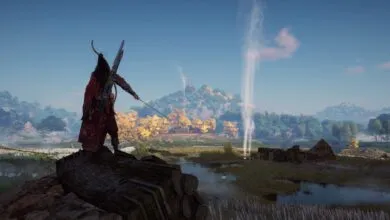
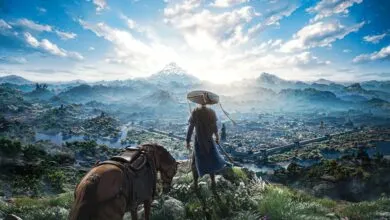
For points of reference, the game evokes the open-world freedom of Ghost of Tsushima, particularly in the sprawling plains of the starting area, Qinghe. It also carries the dense, living-world feel of a modern Assassin’s Creed or a Bethesda RPG, with reportedly 10,000 NPCs bustling through settlements and a later area, Kaifeng, recreating a vibrant 10th-century metropolis.
Players can tailor their experience from the outset, choosing to emphasize single-player or multiplayer, adjusting the level of guidance for exploration, and setting combat assistance to their preference. We opted for more guidance and a single-player focus to save time, though discovering the world organically seems highly appealing.
The narrative begins with the theft of a childhood jade pendant, unraveling into a complex tale steeped in the history of China’s Five Dynasties and Ten Kingdoms period. Fans of wuxia stories will feel right at home. The game’s density is staggering, scannable objects fill a compendium with historical details, while the user interface presents a labyrinth of modes, skill trees, unlockables, and currencies.
Even with a gradual introduction, the sheer volume of systems can feel overwhelming. We estimate needing another thirty to fifty hours to fully grasp everything. Quests are divided between the main campaign and Fractured Tales, which serve as side stories that enrich the world, making it feel genuinely alive.
Combat offers a wide array of weapons, from conventional swords and spears to more inventive choices like parasols and rope darts. With Hong Kong film director Stephen Tung Wai choreographing the action, the fights carry a cinematic flair. The system leans more toward titles like Stellar Blade than Dark Souls, though a stamina meter and stagger mechanics are present. We played on the easiest setting and found the combat responsive and enjoyable, despite underlying bugs.
Special skills mapped to hot keys allow for powerful moves on cooldown, a mechanic that may draw criticism from action purists for its MMO feel. We did not test the online multiplayer, focusing instead on the single-player quests that captivated us. However, a subtle FromSoftware influence appears through player-left notes on the ground, offering clues, revealing secrets, or sometimes just trolling.
Cutscenes are plentiful and impressive for a free-to-play game, though the English voice acting falls short, and subtitles in our build were often inaccurate. Playing in Chinese with corrected subtitles is the recommended way to experience the story. The quests excel at contrasting the mundane aspects of 10th-century life with the spectacular action of a wuxia film, creating a fascinating dynamic.
The central question is how long it will take for Where Winds Meet to realize its full potential. Our build felt unfinished, with features like the DualSense adaptive trigger support for archery barely functioning. We are cautious that the volume of issues may not be fully resolved by launch, which is why we hesitate to offer even a preliminary review.
There is an immense amount to see and, admittedly, much that could go wrong. Based on our time so far, the game is bold, wildly ambitious, and compelling, but only just functional. For every moment of brilliance, there is a visible crack. Whether Everstone can polish this diamond in the rough remains to be seen, but we are certain they will try.
(Source: Push Square)