PS5 Pro Review 2025: Still Worth Buying?
▼ Summary
– Sony launched the PlayStation 5 Pro one year ago with promises of improved performance, visuals, and DLSS-like upscaling over the standard PS5.
– The PS5 Pro received a mixed reception due to its high $700 price tag and questions about its necessity, despite some excitement from performance-focused gamers.
– While some games like Battlefield 6 and Death Stranding 2 benefit significantly from the Pro’s power, many others show no noticeable improvements or enhancements.
– The console is well-built and reliable, running quietly and remaining snappy without issues, unlike the author’s base PS5 which had hardware problems.
– The author finds the PS5 Pro hard to recommend due to inconsistent game support, lack of clear enhancement information, and suggests waiting for the PlayStation 6 instead.
A year after its debut, the PlayStation 5 Pro remains a topic of debate for gamers weighing its premium price against its promised performance gains. Sony introduced this high-end console as a significant upgrade over the standard PS5, highlighting better visuals, smoother frame rates, and advanced upscaling technology. However, after twelve months of regular use, the console often blends into the background, failing to consistently deliver a transformative experience that justifies its cost.
When Sony first revealed the PS5 Pro, reactions were sharply divided. Enthusiasts welcomed the prospect of a more powerful machine capable of pushing games to higher resolutions and frame rates. Skeptics, however, questioned the necessity of such an upgrade, especially once the $700 price tag came to light. Despite the steep cost, I was personally eager to test the hardware. With a large 4K television and a keen interest in graphical fidelity, I looked forward to seeing what the Pro could do. Over the past year, certain titles have indeed shined on the system. Battlefield 6 runs with impressive smoothness and visual clarity, while Death Stranding 2 appears incredibly sharp without any compromise in performance.
Still, a great many games show little to no perceptible improvement on the PS5 Pro. Compounding the issue is the PlayStation Store’s failure to clearly label which titles include Pro-specific enhancements. Too often, I’ve had to search through forums or Reddit threads just to confirm whether a game actually leverages the extra power. For a console that now retails for $750, this lack of transparency is a significant drawback.
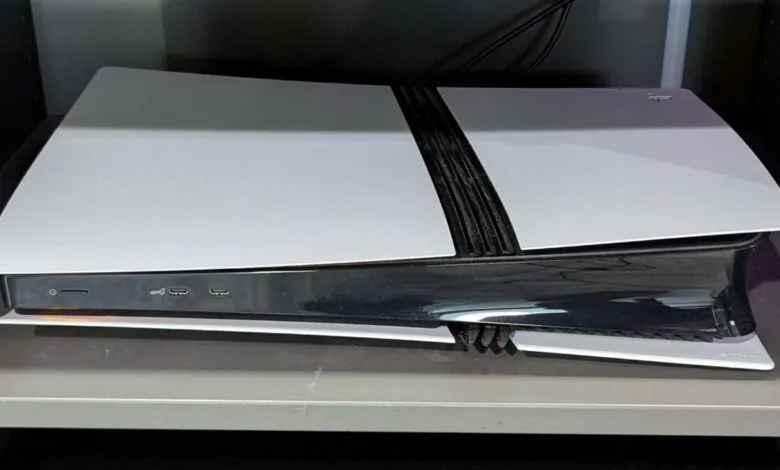
From a reliability standpoint, the PS5 Pro has been solid. It operates quietly, maintains responsive system navigation, and has experienced no hardware failures. By comparison, the USB-C port on my base PS5 stopped functioning after only a few weeks. So, in terms of build quality, the Pro model feels robust and dependable. But does that alone make it worth the investment?
So, is the PS5 Pro a smart purchase in 2025? After a full year with the console, I struggle to give a broad recommendation. There’s a narrow audience, specifically, gamers with 4K displays who are obsessive about performance, that might appreciate the benefits. Yet for the majority of players, the standard PS5 remains perfectly adequate. I consider myself someone who values high frame rates and crisp graphics, yet I frequently overlook the fact that I’m even using a Pro model because so few games feel meaningfully enhanced.
Another letdown has been the limited third-party support. A surprising number of new releases on the PlayStation Store still launch without any Pro optimizations. Given the console’s premium positioning, you would expect Sony to actively encourage developers to incorporate these features. That doesn’t seem to be happening, which feels like a missed opportunity and further weakens the argument for buying one.
At this stage, my advice for most people is to hold onto your existing PS5 if you have one. Enjoy it for another couple of years, then consider upgrading to the PlayStation 6 when it eventually arrives, likely at a comparable price point but with a more substantial leap in technology.
(Source: Kotaku)