Valve Reenters VR Market with Standalone Steam Frame
▼ Summary
– Valve is launching the Steam Frame VR headset in early 2026, marking its return to the VR hardware market after years of inactivity.
– The headset runs VR and traditional Steam games locally via SteamOS or streams them wirelessly from a PC, powered by a Snapdragon 8 Gen 3 processor with 16 GB RAM.
– It features 2160×2160 resolution per eye, up to 110-degree field-of-view, 144 Hz refresh rate, and storage options of 256GB or 1TB with microSD expansion.
– The Steam Frame uses inside-out tracking cameras, eliminating the need for external base stations but making old SteamVR controllers incompatible.
– Wireless PC streaming is enabled via a 6 GHz Wi-Fi 6E adapter and enhanced by foveated rendering to reduce latency by focusing resolution where the user is looking.
After a lengthy hiatus from the virtual reality hardware scene, Valve is making a significant comeback with the announcement of the Steam Frame, a standalone headset scheduled to launch in early 2026. This new device aims to blend the convenience of all-in-one VR with the extensive library of the Steam platform, running both VR and traditional PC games natively on its own hardware or streaming them wirelessly from a user’s computer.
The Steam Frame is equipped with a Snapdragon 8 Gen 3 processor and 16 GB of RAM, positioning it as a powerful competitor in the standalone VR market. Its visual specifications include a 2160 x 2160 resolution per eye, a field of view reaching up to 110 degrees, and a refresh rate that can go as high as 144 Hz. These features place it in direct competition with devices like the Meta Quest 3, though it utilizes a more recent chipset. Potential buyers will have a choice between 256GB and 1TB internal storage models, with both offering the flexibility of expandable storage via a microSD card slot. Valve has not yet disclosed the official pricing for these models.
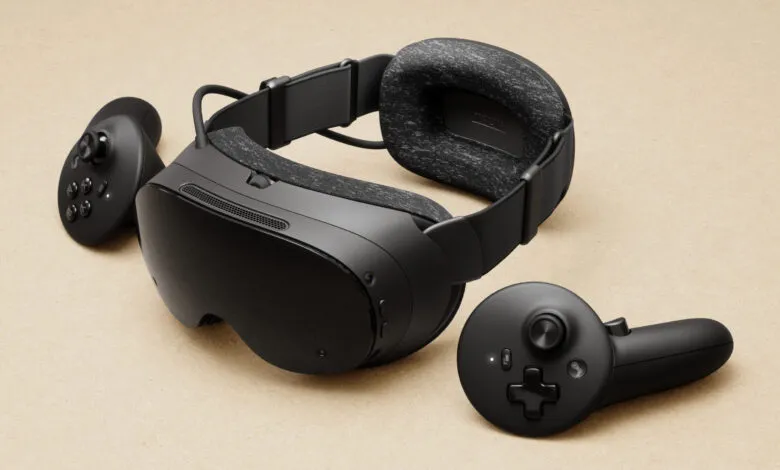
The included controllers bear a resemblance to those used with the Meta Quest, featuring the standard array of buttons and control sticks that VR enthusiasts have come to expect. A key component of the system is its inside-out tracking cameras, which eliminate the need for external base stations that were a hallmark of earlier SteamVR hardware like the Valve Index. This modern tracking approach allows the controllers to precisely follow hand movements, deliver haptic feedback, and provide what Valve describes as “input parity with a traditional game pad.”
For users seeking the ultimate graphical fidelity, the headset supports a wireless connection to a gaming PC. This is facilitated by an included 6 GHz Wi-Fi 6E adapter. To optimize performance during this wireless streaming, Valve is implementing a technology called “foveated rendering.” This system uses internal eye-tracking cameras to detect where the user is looking and then dedicates the highest-resolution video stream to that specific focal point, conserving bandwidth and processing power.
Valve claims this method will help establish a “fast, direct, low-latency link” to the host PC. However, the company has not provided specific details on the exact amount of wireless latency users can anticipate. This figure is critically important in VR, as even minor delays between a user’s head movement and the corresponding update on the display can lead to discomfort and a less immersive experience. The final performance in this area will be a key factor for the headset’s success among demanding gamers.
(Source: Ars Technica)