First Look: Valve’s Steam Machine Game Console

▼ Summary
– Valve is launching a new Steam Machine console in early 2026, designed as a powerful living room PC that runs SteamOS and uses Proton to play Windows games.
– The Steam Machine offers six times the power of a Steam Deck with PS5-level performance, featuring dual AMD chips and 16GB DDR5 RAM for smooth 4K gaming.
– Its compact 6-inch cube design includes an efficient cooling system with minimal wasted space, an internal power supply, and extensive venting for airflow.
– The console supports customization with swappable magnetic front panels and expandable storage via an M.2 SSD, though most components are not user-upgradable.
– Pricing is not finalized but will be comparable to a PC with similar specs, positioning it competitively in the entry-level PC market rather than as a budget console.
Valve is preparing to make a significant entry into the competitive console market with its new Steam Machine, a powerful living room device designed to bring the acclaimed Steam Deck experience to the big screen. Scheduled for an early 2026 release in all current Steam Deck markets, this compact 6-inch cube runs on SteamOS and leverages Proton compatibility technology to seamlessly play Windows games without needing Microsoft’s operating system. This approach has already won over countless gamers with the Steam Deck, and the new console aims to replicate that success with enhanced performance and convenience.
The Steam Machine addresses two key limitations of its handheld predecessor: sheer power and update management. While the Steam Deck outperforms the Nintendo Switch, it falls short of current-generation home consoles. Valve’s solution packs six times the power of a Steam Deck, targeting performance that meets or exceeds the PlayStation 5. A major advantage is its background updating system for the OS, games, and cloud saves, ensuring your library is always ready to play the moment you turn it on.
At the heart of the Steam Machine are two specialized AMD chips paired with 16GB of DDR5 RAM. The CPU is a six-core AMD Zen 4 processor capable of boosting to 4.8GHz, while the GPU is a semi-custom discrete AMD RDNA 3 unit with 28 compute units and 8GB of GDDR6 memory. During hands-on testing, the system delivered a smooth experience in demanding titles. Running Cyberpunk 2077 on a 4K TV with medium settings and basic ray tracing enabled, the game averaged 65 frames per second when upscaled from 1080p using AMD FSR 3.0, with frame rates rarely dropping below 55 fps during intense action.
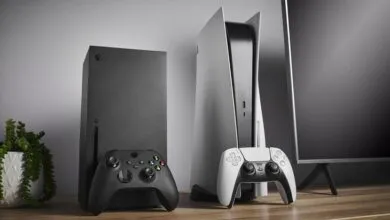
Packing this level of performance into a 3.8-liter chassis, roughly half the volume of a PS5, required innovative engineering. The entire design revolves around an advanced cooling solution, featuring a custom 120mm fan and a massive finned heatsink that also acts as RF shielding. The interior is incredibly dense, with virtually no wasted space. The system includes an internal power supply and uses strategic venting to maintain airflow, a critical consideration for living room environments where consoles can easily overheat if vents are obstructed.
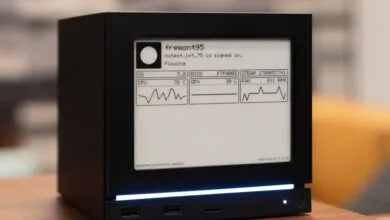
A unique and user-friendly feature is the magnetic, swappable front panel. Valve demonstrated several designs, including a wood-grain finish and a Team Fortress 2-themed option, and even showed a panel with an integrated e-paper display revealing the internal codename “Fremont.” While the company may not sell these panels directly, it plans to release CAD files, enabling the community to design and 3D-print their own custom faces. Below this panel sits a customizable RGB light bar intended to display download and update progress.
The new Steam Controller has also been completely redesigned. Moving away from the experimental form factor of the original, it now offers a comfortable, traditional layout while retaining the precision needed for a wide variety of PC games. This makes it a far more appealing option for couch-based gaming sessions right out of the box.
In terms of expandability, the Steam Machine is somewhat limited. Users can upgrade the SSD, it supports both full-size M.2 2280 and the Steam Deck’s M.2 2230 drives, and the 16GB of RAM, which uses standard laptop memory sticks. However, its connectivity is robust. It offers two display outputs (HDMI 2.0 and DisplayPort 1.4) for multi-monitor setups, four USB-A ports, a 10Gbps USB-C port, Gigabit Ethernet, and a dedicated 6GHz wireless dongle port for the new Steam Frame headset. It can also function as a full desktop PC, and users have the option to install Windows.
The most pressing unanswered question is price. Valve has not finalized costs but has indicated that the Steam Machine will be priced comparably to a PC with similar specifications, positioning it in the entry-level segment of the PC market. Early estimates suggest a DIY PC with equivalent performance could cost around $800, while pre-built compact systems with similar graphics power often start at $1,000 before adding storage, memory, or an OS. While this places it above a typical console price point, the value proposition lies in immediate access to the vast and frequently discounted Steam library.
Valve also hinted at the possibility of future partner-made versions of the Steam Machine, though it plans to be more selective than it was a decade ago, potentially collaborating with companies like Lenovo. For now, the industry will be watching closely to see how this ambitious console from one of PC gaming’s most influential companies performs in a crowded market.
(Source: The Verge)