Formula E’s Gen4 Car Revealed: More Menacing Than Ever
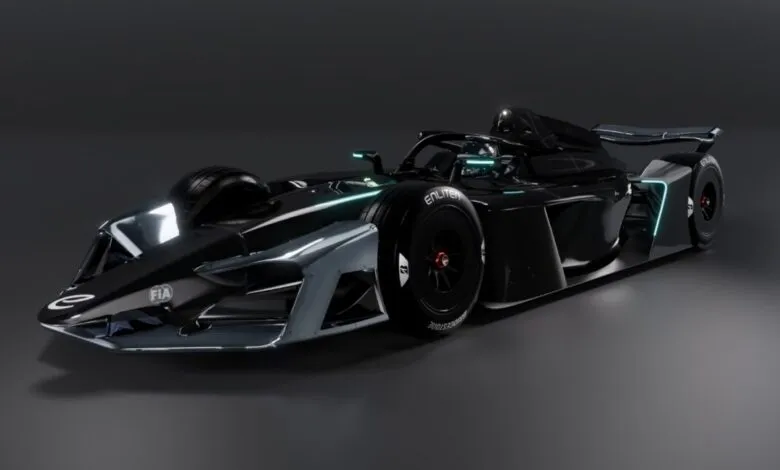
▼ Summary
– Formula E unveiled its new Gen4 electric racing car, which is longer, wider, more powerful, and features aerodynamic downforce.
– The Gen4 car is significantly more powerful, generating 603 hp in race mode and 804 hp in attack mode, with permanent all-wheel drive.
– Top speed will nearly double to 210 mph, making aerodynamic grip essential and increasing the need for HALO head protection.
– The car is fully recyclable, and Bridgestone will return as the new tire supplier for single-seat racing.
– Formula E has evolved since its 2014 debut, with Gen2 eliminating car swaps and Gen3 adding power, leading to improved racing over the years.
The latest generation of Formula E’s electric race car has been officially unveiled, presenting a design that pushes the boundaries of performance and sustainability. While its silhouette may echo previous models, the Gen4 machine represents a significant leap forward in both capability and environmental responsibility. According to Formula E CEO Jeff Dodds, the vehicle appears “so much more menacing” than its predecessors, featuring increased dimensions, substantially enhanced power output, and aerodynamic components that generate meaningful downforce. Adding to its credentials, the championship welcomes Bridgestone back as tire supplier and introduces a fully recyclable vehicle construction.
Early skeptics of Formula E might find themselves surprised by the championship’s evolution. When the series launched in Beijing during 2014, reactions were mixed, some celebrated its innovative approach to motorsport while others criticized the modest speeds and mid-race car swaps. Despite these initial challenges, the racing delivered entertainment value that grew substantially with each technological iteration. The introduction of the Gen2 car eliminated the need for vehicle changes during races, while Gen3 brought increased power and temporary all-wheel drive capabilities through the Gen3 Evo variant. This current model will complete its service during season twelve, running from December’s Brazilian opener through to the London finale in mid-August, paving the way for a transformed racing experience when season thirteen commences in late 2026.
With the dramatic performance increases comes greater emphasis on driver safety. The HALO head protection system becomes more crucial than ever as cars reach unprecedented velocities. Dodds characterized the Gen4 introduction as “a real moment for us,” highlighting the car’s race mode output of 603 horsepower, marking a fifty percent improvement over the Gen3 Evo. When drivers activate attack mode, that figure surges to an impressive 804 horsepower (600 kW). For comparison, while next year’s Formula 1 cars will generate higher peak power from fully charged batteries, their output drops to just 536 horsepower (400 kW) from the V6 engine when battery energy is depleted.
The acceleration experience promises to be exceptionally intense thanks to permanent all-wheel drive, a feature not seen in FIA-sanctioned single-seater competition for decades. Maximum velocity approaches double that of the original Formula E car, with the Gen4 capable of reaching 210 mph (337 km/h). These performance figures clearly demonstrate why the championship determined that aerodynamic grip would become an essential component for managing such tremendous power and speed.
(Source: Ars Technica)