80% of World Population Now Has Digital Access, DEN 2025 Reports
▼ Summary
– The Digital Cooperation Organization launched the Digital Economy Navigator 2025 at the World Summit for Social Development in Doha.
– The report analyzes 80 countries using 145 indicators and surveys of 41,000 people to assess digital economy maturity across multiple dimensions.
– Digitalization is creating growth opportunities globally, with internet access reaching over 80% of people in covered countries and significant potential from connecting underserved communities.
– AI development is uneven globally, gender equality in digital participation averages 70.8%, and more investment in digital skills is needed, especially for women.
– The report highlights how emerging economies can leapfrog legacy systems in sustainability and encourages policymakers to use it for evidence-based decision-making.
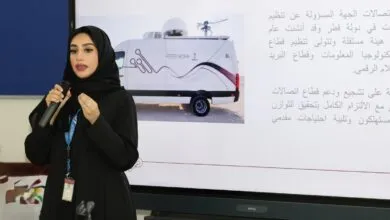
The latest global analysis reveals that a remarkable 80% of the world’s population now has access to digital technologies, marking a significant milestone in worldwide connectivity. This finding comes from the newly released Digital Economy Navigator (DEN) 2025 report, presented by the Digital Cooperation Organization at the Second World Summit for Social Development in Doha, Qatar. The comprehensive study evaluates digital infrastructure, innovation, governance, business capacity, and inclusion across 80 countries, representing 94% of global GDP and 85% of the global population.
Drawing on 145 distinct indicators and a survey of more than 41,000 individuals, the report offers the most detailed assessment to date of digital economy maturity. According to DCO Secretary-General Deemah AlYahya, the findings underscore both the progress achieved and the challenges that remain. She emphasized the organization’s vision of a future where every country can actively participate in the digital economy, not just as consumers but as creators and innovators in their own right.
The data indicates that digitalization is driving growth opportunities across all economic levels. Internet access has expanded to include over four in five people within the countries studied, with lower-middle-income nations showing the most substantial overall gains. The report estimates that connecting currently underserved communities could bring an additional 1.3 billion individuals into the fold of online banking and digital services, unlocking immense social and economic potential.
Artificial intelligence is advancing quickly, though its development remains uneven. While advanced economies are strengthening their positions, regions like South Asia and Sub-Saharan Africa demonstrate strong potential for rapid progress. On the gender front, global equality in digital participation has reached an average of 70.8%, reflecting continued improvement. However, persistent gaps remain, as only 3.1% of female graduates currently enter ICT fields. Increased investment in digital skills and education, especially for women, is identified as a critical need to bridge this divide.
A newly introduced “Digital for Sustainability” component highlights how emerging economies can leapfrog older, resource-intensive systems by directly adopting renewable technologies. This allows them to potentially outpace higher-income counterparts in certain areas. Although North America leads in this domain, regions including South Asia, Europe and Central Asia, and Latin America and the Caribbean are in transition, showing promising potential for future advancement.
The DCO is urging policymakers, private sector leaders, international organizations, and researchers to utilize the DEN 2025 as a foundational resource for evidence-based decisions and collaborative efforts. By prioritizing data sharing, building digital competencies, and enhancing trust in online systems, nations can work toward ensuring that the advantages of digital transformation are distributed widely and equitably. The complete report is accessible online for further review.
(Source: MEA Tech Watch)