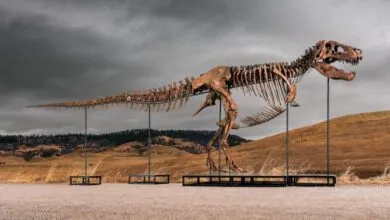
Nanotyrannus: A Separate Species, Not a Young T. Rex
▼ Summary
– A decades-long debate over whether rare fossils were juvenile T. rex or a new species called Nanotyrannus has been settled by a new analysis, confirming Nanotyrannus as a valid taxon.
– The new study, published in Nature, reclassified two specimens as distinct species within the Nanotyrannus genus, establishing it as separate from T. rex.
– This finding challenges previous T. rex research by suggesting multiple tyrannosaur species existed and that dinosaur diversity in that period was underestimated.
– The debate dates back to 1942 with the discovery of the Nanotyrannus skull, initially misidentified and later contested between being a juvenile T. rex or a new species.
– Researchers concluded Nanotyrannus was a distinct species based on growth ring analysis showing near-full growth and anatomical differences like a lighter build and longer limbs compared to T. rex.
A long-standing paleontological dispute over the identity of certain dinosaur fossils appears to have been resolved, with new research confirming that the controversial specimens belong to a separate species called Nanotyrannus rather than representing juvenile Tyrannosaurus rex. This conclusion, detailed in a recent study published in the journal Nature, not only validates Nanotyrannus as a distinct genus but also identifies a second species within it, fundamentally reshaping our understanding of tyrannosaur diversity in the Late Cretaceous period.
According to Lindsay Zanno, a paleontologist at North Carolina State University and head of paleontology at the North Carolina Museum of Natural Sciences, the implications are profound. “This fossil doesn’t just settle the debate,” Zanno stated. “It flips decades of T. rex research on its head.” For years, scientists have used these specimens to model the growth patterns and behavior of T. rex, but the new findings indicate that multiple tyrannosaur species coexisted, suggesting a richer ecosystem than previously assumed.
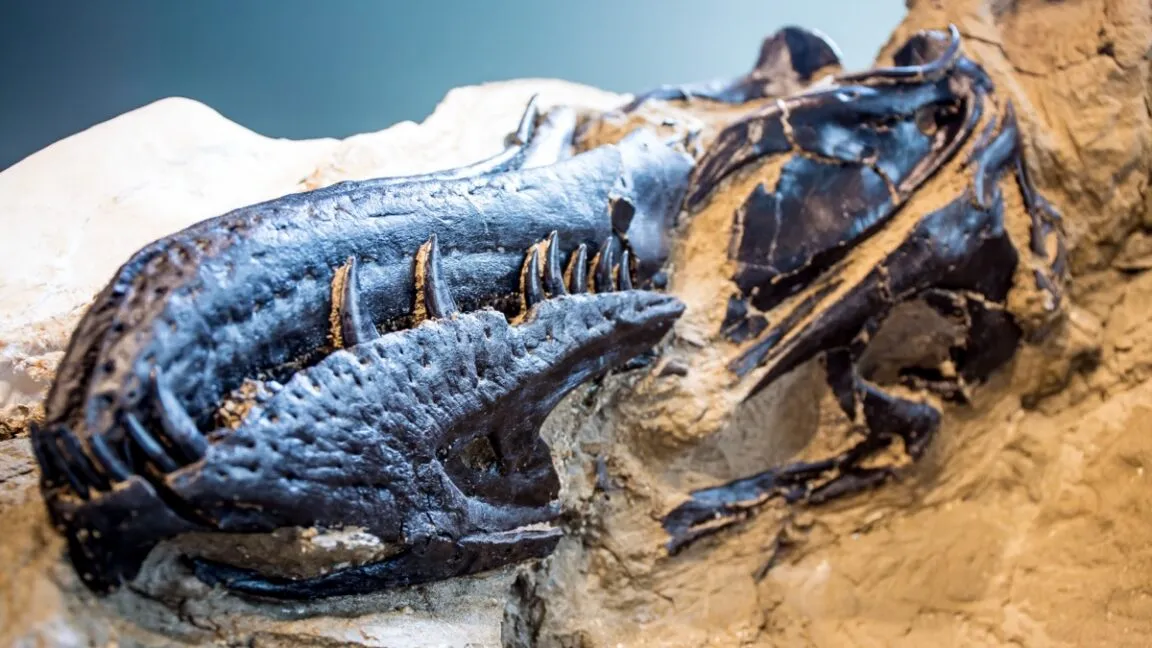
The origins of this debate trace back to 1942, when a fossil skull later nicknamed Chomper was unearthed in Montana by a Cleveland Museum of Natural History team. Initially identified as a Gorgosaurus, the skull’s classification shifted in 1965 when researchers proposed it was a young T. rex. It wasn’t until 1988 that the name Nanotyrannus was formally introduced, sparking a scientific tug-of-war that has continued for decades.
Even as recently as 2020, a prominent study asserted that Nanotyrannus was unequivocally a juvenile T. rex. However, many experts remained unconvinced. A January 2024 paper by Nicholas Longrich of the University of Bath and Evan Saitta of the University of Chicago provided compelling evidence supporting the separate species hypothesis. By analyzing growth rings in Nanotyrannus bones, they determined these individuals were nearly fully grown adults, not juveniles.
Adding to the evidence, researchers noted the absence of hybrid fossils displaying features of both Nanotyrannus and T. rex, a pattern that would be expected if one were simply the young of the other. Longrich and Saitta further strengthened their case when they examined a juvenile T. rex skull bone housed in a San Francisco museum, allowing direct anatomical comparison. Their analysis revealed that Nanotyrannus possessed a lighter build, longer limbs, and more substantial arms than T. rex, suggesting it was a smaller, faster, and more agile predator.
(Source: Ars Technica)