Teens Dive Into Tech at IEEE TryEngineering Summer Camp
▼ Summary
– The IEEE TryEngineering Summer Institute is a nine-day residential program for students aged 13-17, offering hands-on engineering activities, field trips, and interactions with engineers.
– It is held annually at multiple U.S. universities, including Columbia, Georgia Tech, Rice, University of Pennsylvania, and University of San Diego, with 311 students participating this year.
– Students explore trending technologies like AI and microcontrollers, address engineering ethics, and engage in challenges such as building bridges, gliders, and robotic boats.
– The program includes leadership sessions and industry visits to organizations like NASA, Qualcomm, and Accenture, enhancing real-world understanding of engineering careers.
– Scholarships funded by IEEE societies enable broader participation, with many students reporting increased confidence in pursuing engineering as a career path.
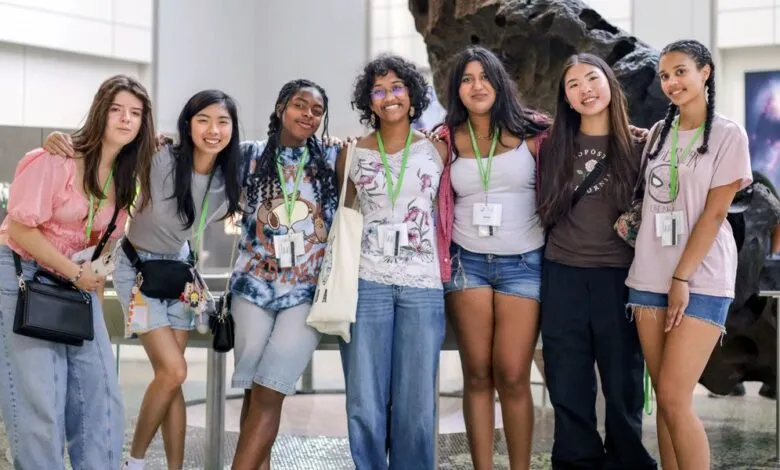
For teenagers with a passion for technology, the IEEE TryEngineering Summer Institute offers a dynamic nine-day residential program that brings engineering to life. Designed for students aged 13 to 17, the camp provides an immersive, hands-on environment where participants engage directly with real-world engineering challenges, connect with industry professionals, and explore university campuses. One student captured the essence of the experience, noting it allowed them to gain new experiences, understand different engineering disciplines, and forge lasting friendships and memories.
Organized by IEEE Educational Activities, the institute launched in 2018 with over 80 students and has since grown significantly, welcoming 311 attendees this year. The program is hosted at several prestigious U.S. universities, including the University of Pennsylvania, Rice University, the University of San Diego, the Georgia Institute of Technology, and Columbia University, the newest location run in partnership with the National Student Leadership Conference (NSLC).
Participants dive into cutting-edge technologies like artificial intelligence and microcontrollers. The curriculum also tackles critical ethical questions in engineering, provides a realistic look at college life, and outlines potential STEM career trajectories. Here’s a glimpse into the unique activities at each campus.
At the University of Pennsylvania, students enjoyed a blend of historical and cultural enrichment. A visit to the Franklin Institute featured an IEEE volunteer explaining the science center’s exhibits. A speaker from Philadelphia International Airport detailed the engineering required to maintain one of the nation’s busiest airports, while engineers from Salesforce emphasized the growing role of technology across all sectors and the value of creative problem-solving. One student remarked, “TryEngineering is a fantastic place to learn about all facets of engineering.” Hands-on sessions were a major draw, with another participant sharing, “I enjoyed the microcontroller lessons the most because I was able to combine my computer programming skills with my friend’s electrical skills to create something I wouldn’t have been able to make on my own.”
Rice University challenged its students with practical design problems. They constructed and tested balsa wood bridges to the point of failure and engineered gliders to understand aerodynamics. “I enjoyed the challenges because they were interesting and competitive, helping us develop more critical thinking and teamwork skills,” one student commented. A highlight for many was hearing from engineers at companies like Salesforce and BP, who spoke about the universal value of an engineering mindset. An unforgettable field trip to NASA’s Johnson Space Center included a behind-the-scenes tour and meetings with former astronauts, who shared insights into rocket design and career guidance.
The University of San Diego campus saw students building and testing gliders and collaborating on the “toxic popcorn challenge,” a task requiring them to design a system for safely removing hazardous materials. A tour of Qualcomm’s headquarters provided a look into industry operations. One camper described the program as “an invaluable resource, especially for students who don’t have access to engineering classes or a robotics team at their school.”
In New York City, the partnership with NSLC added a leadership development component to the engineering activities. Students visited Joint Base McGuire-Dix-Lakehurst in New Jersey, where U.S. Air Force and Marine personnel introduced them to advanced rescue technologies; participants explored helicopters and operated drones. The experience was rounded out with trips to the American Museum of Natural History and Times Square. “I loved the program, the campus, the staff, my classmates, and the activities,” one student enthusiastically reported.
A significant initiative at Georgia Tech provided full scholarships to 20 local high school students, supported by the Guggenheim School of Aerospace Engineering, the Georgia Space Grant Consortium, IEEE Technical Activities, and industry partners. These students lived on campus, attended classes in aerospace engineering labs, and participated in evening residential activities. Their central project involved designing, building, and testing a robotic boat capable of delivering simulated humanitarian aid. With mentorship from Georgia Tech students and faculty, they learned critical thinking, problem-solving, and how to work with Arduino microcontrollers. After presenting their prototypes to parents and faculty, one student reflected, “This program is an opportunity to explore the different branches of engineering.” Additional activities included team-building exercises, a visit to Accenture’s offices, a session with Siemens engineers on STEM careers, and a trip to the Delta Flight Museum.
A common activity across all campuses was the “sparking solutions” group project. Student teams identified an engineering problem, from enhancing mobility for the elderly to improving park water quality, and used a formal design process to develop a prototype and presentation. They pitched their solutions to judges from the IEEE Educational Activities pre-university education committee, who evaluated projects based on demand, student passion, design quality, and presentation effectiveness, with the top team receiving a prize.
Scholarship support is a cornerstone of the program, made possible through the IEEE Foundation’s Educational Activities Scholarship Fund. This year, funding from numerous IEEE societies, including Computational Intelligence, Computer, and Robotics and Automation, enabled 45 students to attend. This backing not only broadens access but also reinforces IEEE’s commitment to nurturing the next generation of innovators. One scholarship recipient shared, “Before I attended the summer camp, I was not sure if I was cut out to be an engineer. But after my wonderful experience at the IEEE TryEngineering Summer Institute, I am sure that this will be the right career path for me.” Another expressed profound gratitude, stating, “To the people who funded my scholarship, I would like to thank you from the bottom of my heart. The only reason that I was able to experience a great city in California and become more independent while staying in college dorms is because of you.”
(Source: Spectrum)