AMD Rebrands Old CPUs to Boost Budget Laptop Performance
▼ Summary
– Chipmakers like Intel and AMD are rebranding older processors with new model numbers due to rising costs and difficulties in developing new silicon manufacturing processes.
– This rebranding allows companies to release “new” products that are not actually new, confusing consumers shopping for lower-end and midrange laptops.
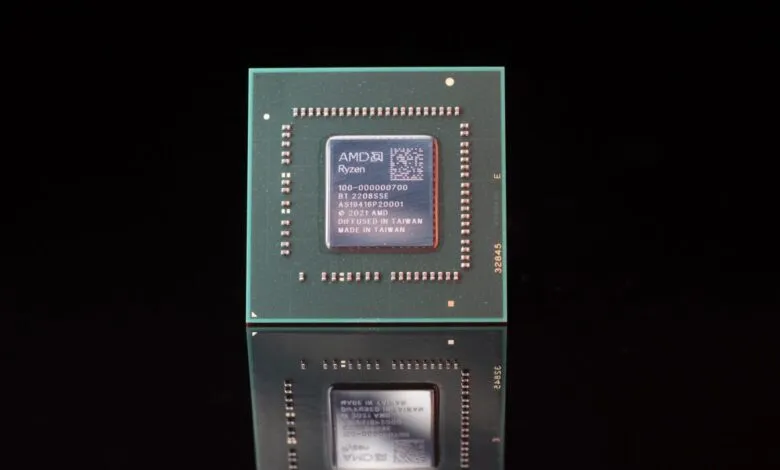
– AMD has quietly rebranded Ryzen laptop chips using Rembrandt-R silicon with Zen 3+ CPU cores and RDNA 2 graphics or Mendocino silicon with Zen 2 CPU cores and RDNA 2 graphics.
– The rebranded chips were previously sold as Ryzen 7035- and 7020-series, with Rembrandt-R silicon having been launched as the Ryzen 6000 series in 2022.
– These rebranded AMD processors will compete directly with Intel’s non-Ultra Core 100 series, which mostly use 2022 Raptor Lake silicon.
Navigating the laptop market just became more challenging as AMD quietly refreshes its processor lineup with familiar technology under new names. This strategy of rebranding existing chips allows the company to present older architectures as current offerings, particularly within budget and mid-range portable computers. While this approach helps manage production costs amid increasingly expensive semiconductor development, it creates confusion for buyers expecting genuine technological upgrades.
Industry observers at Tom’s Hardware recently identified AMD’s latest rebranding effort, which assigns fresh model numbers to a selection of Ryzen mobile processors without altering the underlying silicon. The updated chips utilize either Rembrandt-R architecture featuring Zen 3+ CPU cores alongside RDNA 2 graphics, or Mendocino architecture built around Zen 2 CPU cores paired with RDNA 2 graphics. Both platforms originally debuted in 2022, though the Zen 2 design within Mendocino traces its origins back to 2019. Previously marketed under AMD’s model numbering system as Ryzen 7035-series and Ryzen 7020-series processors respectively, these components now receive another identity shift.
This represents the second rebranding for the Rembrandt-R silicon, which initially launched as the Ryzen 6000 series two years ago. These recycled processors will primarily compete against Intel’s standard Core 100 series chips, most of which themselves utilize 2022-era Raptor Lake architecture. The practice highlights how both major chip manufacturers are extending the lifecycle of existing designs through marketing rather than innovation, particularly for cost-sensitive market segments.
(Source: Ars Technica)