Our Top-Tested Fitness Trackers and Watches
▼ Summary
– Modern fitness trackers have evolved from basic step counters to sophisticated devices monitoring heart health, recovery metrics, and offering comprehensive workout support.
– The ideal fitness tracker varies by user needs, with options ranging from budget-friendly bands for casual users to advanced smartwatches for serious athletes.
– Key testing criteria for fitness trackers include durability, performance, accuracy, consistency in metrics, battery life, and compatibility with different phone ecosystems.
– Top recommendations include the Amazfit Active 2 as the best overall for its balance of features and price, and specialized picks like the Garmin Fenix 7 Pro for outdoor athletes and the Oura Ring for discreet tracking.
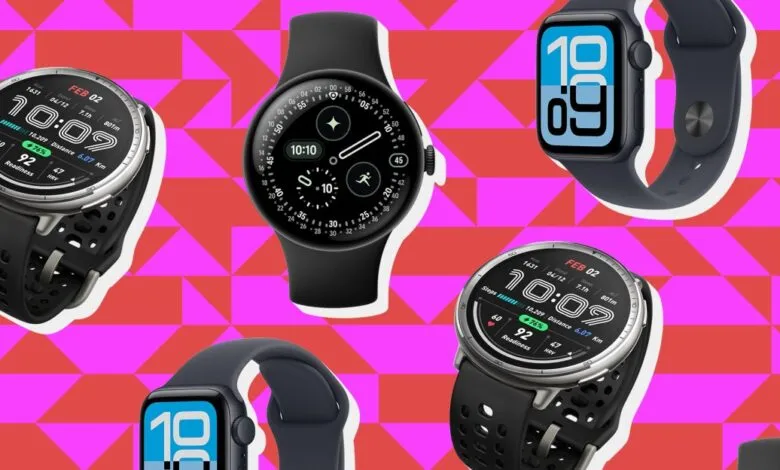
– Recent updates highlight new models like the Apple Watch SE 3 for iPhone users and the Pixel Watch 4 for Android, emphasizing improved hardware, AI features, and expanded health tracking capabilities.
Finding the perfect fitness tracker or smartwatch can feel overwhelming given the sheer number of options available today. These devices have evolved far beyond simple step counters, now offering deep insights into heart health, sleep quality, and workout recovery. Even high-end smartwatches have become powerful fitness companions. The key is identifying which features align with your personal health goals and daily routine.
Because wearables are so personal, declaring one single “best” tracker for everyone is impossible. The good news is that the current market offers incredible variety, ensuring there’s a device to suit every lifestyle and budget.
How We Evaluate Fitness Trackers
Our testing process combines controlled benchmarks with extensive real-world use. We wear these devices to sleep, take them on GPS-tracked runs and hikes, and use them during various workouts. We constantly compare their data for heart rate, sleep staging, and GPS accuracy against trusted control devices. Our final rankings heavily weigh factors like durability, performance, battery life, and the consistency of the metrics provided.
Key Buying Considerations
Intended User: The ideal device for a dedicated athlete differs greatly from one meant for someone simply aiming to move more each day.
Amazfit Active 2 – Best Overall Fitness Tracker
Size: 43mm (20mm straps) | Weight: 29.5g | Battery: Up to 10 days | Display: OLED | GPS: Five GNSS systems | Water Resistance: 5ATM
The Amazfit Active 2 offers the best all-around value in fitness tracking. It blends smartwatch-level technology with the simplicity and affordability of a traditional tracker. Starting at $99.99 (or $129.99 for a premium version with a leather band), it packs an impressive range of features.
Its stainless steel case and 2,000-nit tempered glass display feel far more premium than its price suggests. The upgraded model adds sapphire crystal protection. Battery life averages eight to ten days, and European versions include NFC for contactless payments.
Health tracking covers all essentials, continuous heart rate, blood oxygen, stress, and skin temperature, plus readiness scores, detailed sleep insights, and optional AI coaching via subscription. With 160+ workout modes, offline maps, turn-by-turn navigation, and an AI-powered training coach, it’s remarkably capable for the cost.
Drawbacks are minor: the touchscreen struggles with sweaty fingers, and the voice assistant needs clear speech. It lacks EKG support, but that’s outside its target use. Overall, the Active 2 stands out as a feature-rich, stylish tracker at an affordable price.
Garmin Venu Sq 2 – Ideal for Casual Users
Size: 40mm | Weight: 38g | Battery: Up to 11 days | Display: OLED | GPS: All-systems GNSS | Water Resistance: 5ATM
At $250, the Garmin Venu Sq 2 is perfect for anyone upgrading from an older Fitbit. It delivers a familiar look but with a sharper OLED display and significantly longer battery life.
Garmin’s hallmark tracking accuracy shines through, with built-in GPS, multiple sport profiles, and smart tools like notifications, timers, Garmin Pay, and Incident Detection (requires a connected phone). A Music Edition costs $50 more and holds around 500 songs, though it’s unnecessary if you usually carry your phone.
The free Garmin Coach program adapts to your running goals, from 5K to half-marathon, while health tracking includes heart rate, blood oxygen, stress, hydration, and menstrual data without paywalls.
The newer Venu 3 adds nap detection and an improved sensor but costs $450. The Forerunner 165 offers similar capabilities for $249 in a sportier design. Even older Garmin models remain strong choices due to consistent software updates. A recent Strava survey showed that an eight-year-old Garmin was still the most-used watch among its community.
Garmin Fenix 7 Pro Series – Built for Serious Outdoor Athletes
Sizes: 42mm, 47mm, 51mm | Weight: From 58g | Battery: Up to 37 days (solar) | Display: MIP touchscreen | GPS: Dual frequency | Water Resistance: 10ATM
The Garmin Fenix 7 Pro series is a powerhouse for endurance athletes and adventurers. It features solar charging across all models, multiband GPS, detailed topographical maps, and extensive training metrics, without any subscription fees.
Every model includes a built-in LED flashlight, an upgraded heart rate sensor, and a clearer MIP display. The build quality meets military-grade standards and provides 10ATM water resistance. GPS locks in quickly, even in remote conditions.
The MIP screen prioritizes endurance over color depth, so those seeking vibrant visuals might prefer Garmin’s Epix line. The Fenix, however, offers longer battery life and a more accessible price point.
The Forerunner 570 and 970, priced at $549.99 and $749.99, introduce OLED displays, skin temperature tracking, and daily reports, with the 970 adding advanced running analytics. Despite the launch of the Fenix 8, the 7 Pro still delivers the best balance of performance and cost, especially for users who don’t need deep-dive features like dive tracking.
(Source: The Verge)