Scientists Solve 150-Million-Year-Old Pterosaur Mystery
▼ Summary
– The Solnhofen Limestones in Germany 150 million years ago featured islands and lagoons where tropical storms caused mass mortality of pterosaurs.
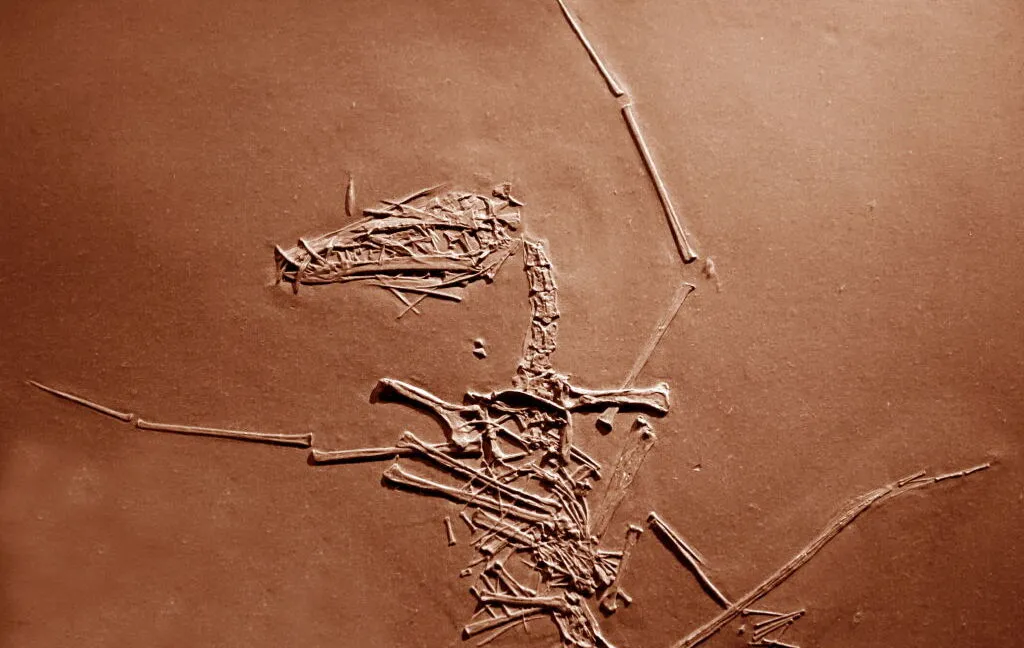
– Paleontologist Rab Smyth discovered two Pterodactylus antiquus hatchlings with fractured humerus bones from being twisted by storm winds, leading to their drowning.
– Most pterosaur fossils are preserved through catastrophic events, as revealed in a study published in Current Biology, based on findings from Solnhofen.
– Solnhofen is a Lagerstätte known for exceptional preservation, but this discovery is significant as it’s the first to show skeletal trauma in juvenile pterosaurs.
– Juvenile pterosaurs, once mistaken for a smaller species, had fragile hollow bones that shouldn’t have fossilized easily, raising questions about their preservation compared to adults.
Nestled within Germany’s Solnhofen Limestones lies a window into a 150-million-year-old world, where small islands dotted warm saltwater lagoons. This vibrant Jurassic ecosystem teemed with crinoids, sponges, and jellyfish, while dragonflies buzzed overhead and small reptiles basked along the shoreline. Pterosaurs and Archaeopteryx soared through the skies, yet this prehistoric paradise held a deadly secret. Violent tropical storms periodically transformed the tranquil lagoons into mass graves for young pterosaurs, creating a mystery that has puzzled scientists for decades.
The crucial breakthrough came when paleontologist Rab Smyth from the University of Leicester’s Center for Paleobiology and Biosphere Evolution examined two exceptionally preserved Pterodactylus antiquus hatchlings. These specimens, ironically named Lucky I and Lucky II, revealed clear evidence of how they met their demise. Their wing bones showed clean, slanted fractures in the humerus, indicating the young pterosaurs had been caught in powerful storm winds that twisted their wings beyond use. Unable to remain airborne, they plunged into the lagoons and drowned, their bodies quickly buried in the deep sediments.
Smyth’s research team emphasized in their Current Biology publication that “our results show that most pterosaurs are preserved predominantly through catastrophic events, often reflecting mass mortality episodes.” This finding provides crucial insight into the preservation biases within the fossil record and explains why certain age groups appear more frequently as fossils than others.
The Solnhofen region represents what paleontologists call a Lagerstätte – an area renowned for its exceptional preservation of delicate organisms that would normally decay without a trace. Creatures that sank to the lagoon bottom became encased in soft carbonate muds that gradually hardened into fine limestone over millions of years. While numerous juvenile pterosaur specimens have emerged from this site over the years, previous discoveries lacked the critical skeletal evidence of trauma that Smyth’s specimens clearly displayed.
Interestingly, most pterosaur fossils recovered from Solnhofen are relatively small in size. Researchers initially believed these represented smaller species, but later analysis confirmed they were actually juveniles of larger pterosaur types. This discovery raises compelling questions about preservation dynamics. Juvenile pterosaurs possessed hollow bones similar to adults, but their skeletal structures were significantly more fragile and theoretically less likely to withstand the pressure of overlying sediments. The scientific expectation would naturally favor the preservation of more robust adult specimens, yet the fossil record tells a different story entirely.
(Source: Ars Technica)