National Academies Defies Congress, Releases Critical Climate Report
▼ Summary
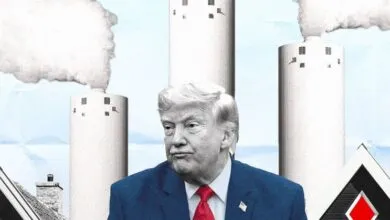
– The EPA announced it would revisit its 2009 determination that greenhouse gases endanger public health, citing outdated science.
– The National Academies of Science confirmed that climate understanding has advanced but only strengthened the 2009 EPA conclusion.
– The original endangerment finding enabled greenhouse gas regulation under the Clean Air Act but faced legal and implementation challenges.
– The first Trump administration attempted weak regulations, while the second seeks to overturn the endangerment finding entirely.
– The EPA’s current effort to reject its prior work is part of a broader strategy to prevent future climate regulations.
The National Academies of Science has released a critical climate report that directly challenges recent efforts to roll back environmental protections, reinforcing the scientific consensus that greenhouse gases endanger public health and welfare. This timely analysis arrives amid ongoing debates over federal climate policy and regulatory authority, offering a clear-eyed assessment based on the latest research.
Earlier this year, the Environmental Protection Agency signaled its intention to revisit a landmark 2009 determination that greenhouse gas emissions threaten the American public. Among the justifications provided was the claim that scientific understanding has evolved significantly over the past fifteen years, warranting a fresh evaluation. In response, the National Academies convened a panel of experts to conduct a rapid review of current climate science, aiming to complete their work before the close of the public comment period on the EPA’s proposed reversal.
The resulting report delivers a unambiguous verdict: not only was the EPA’s original endangerment finding scientifically sound, but subsequent research has only strengthened the evidence supporting it. Every major advance in climate modeling, atmospheric chemistry, and impact assessment over the past decade and a half has consistently pointed toward greater, not lesser, risks associated with greenhouse gas pollution.
The political context surrounding emissions regulation is complex and deeply contested. The 2009 endangerment finding emerged during the Obama administration after extensive scientific review and legal scrutiny. It concluded that greenhouse gases endanger both public health, through direct effects like worsened air quality and heat-related illness, and economic stability, via damage from extreme weather, sea level rise, and ecosystem disruption. This finding activated the EPA’s authority under the Clean Air Act to regulate emissions from major sources such as vehicles and power plants.
Despite this legal foundation, most regulatory efforts stemming from the finding have been stalled by litigation, legislative challenges, or shifts in administrative priorities. During the first Trump term, the strategy focused on adopting minimal enforcement mechanisms rather than confronting the scientific basis of the endangerment finding directly. The current administration, however, has taken a more aggressive approach, seeking to nullify the finding altogether in order to preempt future regulatory actions.
To support this effort, officials have put forward multiple arguments, including assertions about scientific uncertainty and the economic costs of regulation. The National Academies report, however, underscores that the core conclusions regarding climate risk remain robust and widely accepted within the scientific community.
(Source: Ars Technica)