Inside the Hellscape of American Content Moderation
▼ Summary
– American Sweatshop is a psychological drama about content moderators who screen disturbing online content and the psychological toll it takes on them.
– Director Uta Briesewitz was inspired by her own concerns about children’s smartphone use and the documentary The Cleaners to explore this topic.
– The film centers on a moderator named Daisy who becomes obsessed with a video she believes depicts a real murder, causing her reality to unravel.
– Briesewitz intentionally avoids showing explicit footage clearly, instead focusing on how such content affects the human psyche through close-ups and reflections.
– The director emphasizes that content moderation is a uniquely human job requiring empathy and suffering, which AI cannot replicate, making the film a commentary on this essential but grim work.
The hidden world of content moderation forms the backbone of our digital existence, a reality powerfully explored in Uta Briesewitz’s new film. American Sweatshop delves into the psychological toll faced by those who sift through the darkest corners of the internet, revealing a workforce silently bearing the burden of keeping online spaces usable for everyone else.
Briesewitz, initially unfamiliar with this industry, found herself drawn to the project while grappling with her own concerns about technology and safety. Handing smartphones to her teenage children sparked difficult questions about connection versus risk, a tension mirrored in the film’s narrative. The story centers on Daisy Moriarty, played by Lili Reinhart, a content moderator whose stability fractures after encountering a video she believes depicts an actual murder. Despite reassurances from her team that the content doesn’t violate platform guidelines, Daisy becomes consumed by the conviction that what she saw was real, and that a woman’s death is being treated as entertainment.
Originally conceived as a series, the project was reimagined as a feature film under Briesewitz’s direction. She drew inspiration from the documentary The Cleaners, which exposed the human cost of moderation work. Briesewitz describes these workplaces as “laboratory experiments in human endurance,” where employees are exposed to relentless trauma. The consequences are severe: depression, PTSD, and in some cases, suicidal ideation.
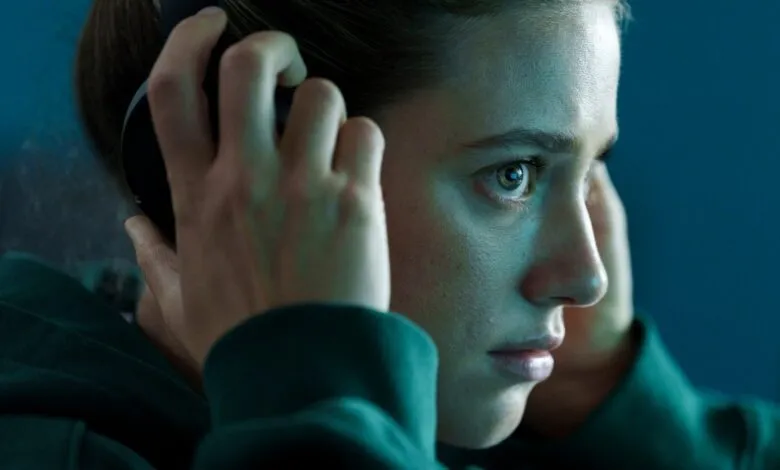
A key creative decision was to avoid explicit visuals. Instead of showing the horrific content directly, the film uses reflections in Daisy’s eyes and tight close-ups to imply the psychological imprint of what she sees. This technique allows viewers to engage with the emotional impact rather than the imagery itself, emphasizing how repeated exposure to brutality can erode a person’s mental state.
Briesewitz resists labeling the film as a straightforward thriller, noting that genre expectations might mislead audiences. American Sweatshop is less about suspense and more about the slow distortion of reality, a meditation on how this work changes people from the inside. Daisy’s unpredictability reflects her own fractured sense of self, a portrayal meant to underscore the invisible damage caused by daily exposure to traumatic material.
Ultimately, the film serves as a stark reminder that behind every content decision is a human being. While automation handles many digital tasks, the judgment required to evaluate context, nuance, and harm still falls to people. As one character states, this is work that artificial intelligence cannot perform, because it demands a capacity for suffering. Briesewitz hopes the film sparks uncomfortable but necessary conversations about the real human cost of our curated online experiences.
American Sweatshop arrives in theaters and becomes available for digital purchase on September 19.
(Source: The Verge)
