The End of the EV Carpool Lane Perk: What You Need to Know
▼ Summary
– California is ending its program allowing EVs to use carpool lanes due to lack of federal reauthorization, effective September 30.
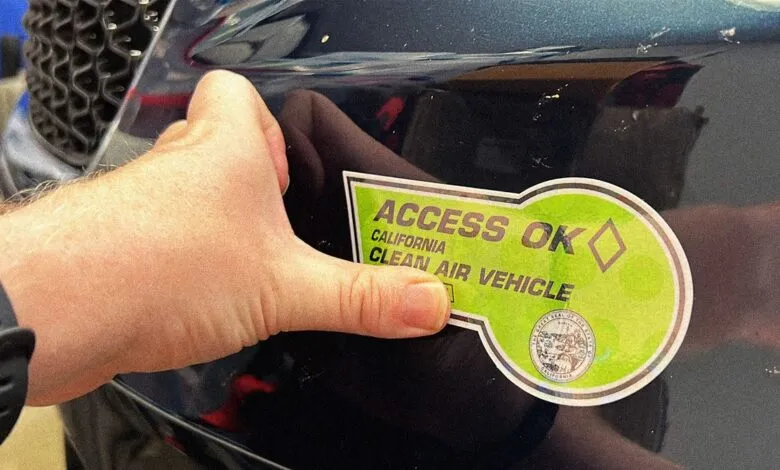
– The program offered decals for $27, granting access to carpool lanes and toll discounts, with over 1 million issued since 1999.
– A similar Clean Pass program in New York is also ending, affecting over 48,000 EV drivers there.
– This change reflects broader setbacks for US EV adoption, including expiring tax credits and revised lower sales projections.
– Despite the program’s end, California leads in EV adoption with 22% of new light-duty vehicles being electric or plug-in hybrids.
A significant change is coming for electric vehicle owners in California, as a long-standing perk allowing single-occupant EVs to use carpool lanes will soon expire. This shift follows the federal government’s decision not to reauthorize the program, marking the end of an incentive that has encouraged EV adoption for over two decades.
Starting next month, drivers with electric, plug-in hybrid, or hydrogen fuel cell vehicles will no longer be permitted to travel in California’s high-occupancy vehicle lanes without passengers. For years, motorists could purchase a $27 decal granting access to these lanes, along with discounts on certain toll roads and bridges. Since the program launched in 1999, more than one million stickers have been distributed to California drivers.
The California Department of Motor Vehicles has confirmed that all existing decals will become invalid after September 30. Even those who recently bought the stickers will not receive refunds. A similar program in New York, known as Clean Pass, is also ending, affecting over 48,000 participants.
According to Walter McClure, a spokesperson for the New York DMV, these initiatives are concluding because they were not renewed at the federal level. The White House did not provide clarification on why the reauthorization did not move forward.
This development represents another challenge for electric vehicle sales in the United States, which have already been slower than anticipated following reductions in government support. Many buyers accelerated their EV purchases this month to take advantage of expiring tax credits worth up to $7,500, but analysts predict a renewed slowdown once the incentive ends.
Despite the conclusion of the carpool lane benefit, California’s transition to electric vehicles remains well ahead of the national average. So far this year, 22% of new light-duty vehicles sold in the state were electric or plug-in hybrid models, compared to just 8% across the rest of the country. The high adoption rate may have contributed to overcrowded carpool lanes, reducing the program’s effectiveness.
Gil Tal, director of the Electric Vehicle Research Center at UC Davis, noted that the decal program “worked nicely as a bundle with monetary incentives” and served as an additional reason for consumers to choose electric cars. While its absence may disappoint some drivers, California’s strong EV market suggests the impact on overall adoption could be limited.
(Source: Wired)