Oura CEO Responds to Backlash, Envisions ‘Cloud of Wearables’
▼ Summary
– Oura CEO Tom Hale denied that the company shares user data with the government, addressing misinformation and backlash from viral reports.
– He clarified that the Department of Defense program involves a secure, separate enterprise solution with no government access to user health data.
– Hale explained that Oura’s relationship with Palantir is a small commercial contract, not a data-sharing partnership, and no external parties can access user data.
– The company emphasizes user privacy, opposing data use for surveillance and limiting internal access only to authorized support purposes.
– Oura aims to expand as a preventive health device and sees future growth in diverse wearables tailored to specific clinical uses.
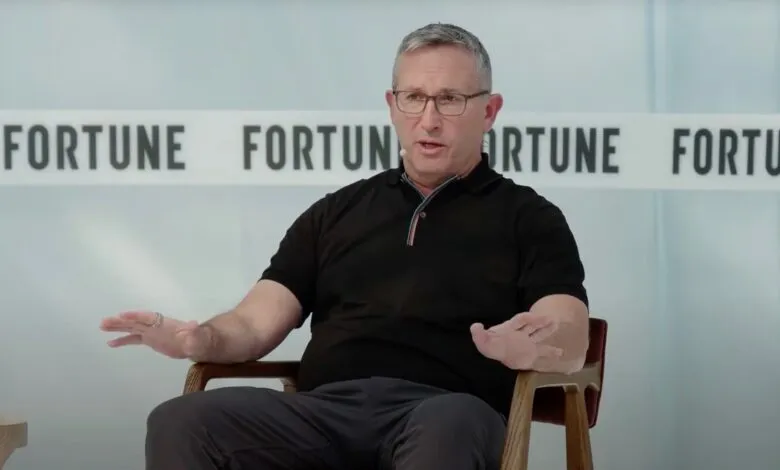
Oura CEO Tom Hale is actively addressing recent public concerns regarding the company’s involvement with the Department of Defense and Palantir, emphasizing that user health data remains strictly private and is not shared with government or third-party entities without explicit consent. Speaking at the Fortune Brainstorm Tech conference, Hale firmly denied allegations that Oura collaborates in any data-sharing arrangement with U.S. agencies, calling earlier reports “misinformation.”
Hale pointed out that Oura’s rings gather a wide range of personal health metrics, including heart rate, sleep patterns, body temperature, and menstrual cycles, but stressed that this information is handled with the highest level of confidentiality. In response to viral backlash fueled by social media influencers, he took to TikTok to personally reassure users, marking his first video on the platform to clarify the company’s data policies.
The CEO explained that Oura’s participation in a DoD program involves operating an enterprise solution within a segregated, secure environment. He made it clear that no government body has access to individual user data, and the same applies to Palantir. Describing the relationship with Palantir as a commercial SaaS agreement rather than a partnership, Hale noted that the connection stems from Oura’s acquisition of another company. That existing contract supports Impact Level 5 (IL5) compliance, a Defense Department standard for managing sensitive unclassified data.
Hale reiterated, “We will never share your data with anyone unless you direct us to do it. We will never sell your data.” He expressed relief that initial public outrage appears to be subsiding as more accurate information circulates.
Privacy and security, according to Hale, are foundational to Oura’s operations. The company’s terms of service explicitly oppose using customer data for surveillance or legal prosecution. Even when users grant limited access for troubleshooting, only authorized personnel can view specific data points, general browsing of personal information is strictly prohibited.
Looking forward, Hale discussed Oura’s significant growth, noting that sales have more than doubled. While wrist-based wearables are gaining popularity in Asian markets for their affordability and compact size, Oura continues to see strong demand for its ring form factor.
The company aims to position itself as a “preventionist” health tool, using metrics and machine intelligence to alert users to potential health issues before they escalate. This vision includes expanded collaboration with healthcare providers; for instance, Oura already partners with Medicare Advantage to distribute rings to qualified patients.
Hale also hinted at a future where multiple wearable devices work together, describing an emerging “cloud of wearables.” Rather than a single device dominating the market, he envisions a connected ecosystem where different wearables, monitoring everything from metabolism to blood pressure, integrate seamlessly based on individual clinical needs.
(Source: TechCrunch)