Taiwan’s Silicon Shield & ChatGPT’s Personality Flaw
▼ Summary
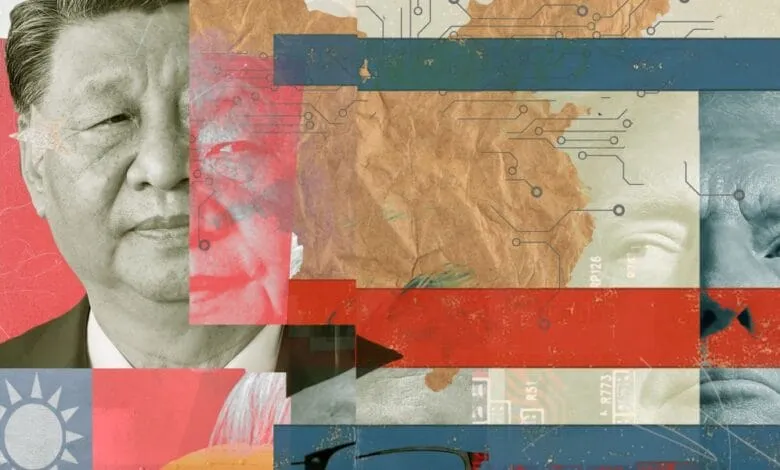
– Taiwanese politics is increasingly focused on the threat of a potential Chinese invasion, with China’s leader Xi Jinping emphasizing “taking back” Taiwan.
– Taiwan’s dominance in semiconductor manufacturing, producing most of the world’s chips and 90% of advanced AI chips, has been seen as a deterrent against invasion.
– Concerns are growing that Taiwan’s “silicon shield” may be weakening, raising fears about its ability to deter Chinese aggression.
– OpenAI faced backlash after replacing GPT-4o with GPT-5, prompting emotional reactions from users who had formed bonds with the older model.
– OpenAI quickly reinstated GPT-4o for paying users after recognizing the strong emotional attachment some users, particularly women, had developed.
Taiwan’s semiconductor dominance has long been viewed as a strategic deterrent against potential Chinese aggression, but growing concerns suggest this protective “silicon shield” may be weakening. The island produces over half the world’s semiconductors and more than 90% of cutting-edge chips powering AI systems, a technological stranglehold that historically made military action economically unthinkable for Beijing.
Yet analysts and Taiwanese citizens increasingly question whether this advantage still holds. China’s aggressive investments in domestic chip production and recent technological breakthroughs have narrowed the gap. While Taiwan remains the undisputed leader in advanced semiconductor manufacturing, the shifting balance has sparked debates about whether economic leverage alone can prevent conflict.
Political tensions continue escalating as Chinese leader Xi Jinping reaffirms ambitions to “reunify” with Taiwan, a territory Beijing claims despite never governing it. Many experts argue that while semiconductors buy time, they don’t eliminate the long-term threat. The situation remains volatile, with Taiwan’s technological supremacy facing unprecedented challenges from mainland competitors.
Meanwhile, OpenAI faced unexpected backlash after rolling out GPT-5, as users revolted against losing access to the previous model’s distinct personality. The company underestimated how emotionally attached people had grown to GPT-4o, particularly among a subset of female users who described it as a companion or even romantic partner.
Within 24 hours of complaints, OpenAI reinstated GPT-4o for paying subscribers, a rare reversal highlighting how AI interactions increasingly blur the line between tool and relationship. Free users, however, remain locked into the newer model, fueling further frustration. Psychologists note this reaction underscores how conversational AI can trigger deep emotional responses, especially when updates abruptly alter familiar dynamics.
In another development, US federal health agencies are quietly shifting away from mRNA vaccine technology despite its pandemic-era success. While these vaccines proved groundbreaking against COVID-19, officials now cite logistical hurdles, storage limitations, and emerging alternatives as reasons for exploring different approaches.
The pivot reflects broader reassessments of vaccine strategies as global health priorities evolve. Some researchers argue mRNA platforms still hold immense potential for other diseases, but bureaucratic inertia and funding reallocations appear to favor traditional methods. This transition could reshape future immunization campaigns, though the long-term implications remain unclear.
(Source: Technology Review)