Salesforce CoAct-1 Agents Write Code to Boost Task Efficiency
▼ Summary
– Salesforce and USC researchers developed CoAct-1, a hybrid AI agent that combines GUI navigation with code execution to improve workflow efficiency and reduce errors.
– CoAct-1 outperforms existing methods on benchmarks, achieving a 60.76% success rate while requiring fewer steps (10.15 on average) for complex tasks.
– The system uses three specialized agents: an Orchestrator for task delegation, a Programmer for coding tasks, and a GUI Operator for visual interactions.
– CoAct-1 excels in enterprise scenarios like customer support and sales, where mixed API and GUI-based tools are used, but requires sandboxing and human oversight for security.
– Human-in-the-loop validation remains essential for high-stakes tasks, though the technology shows promise for scalable automation in messy real-world environments.
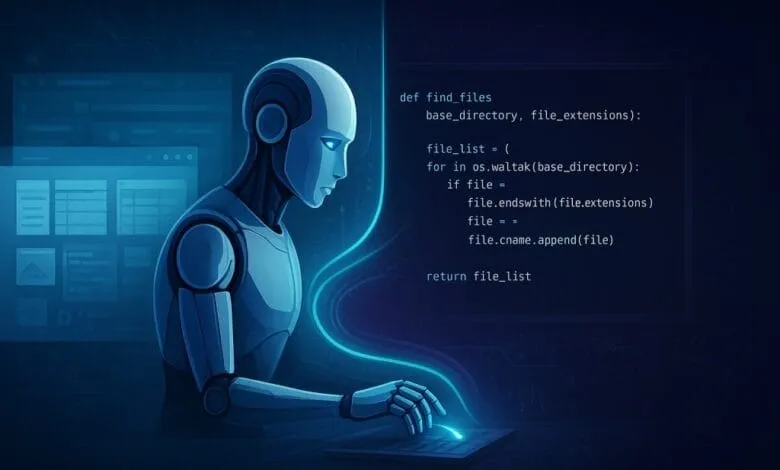
Salesforce’s CoAct-1 system represents a breakthrough in AI-driven automation, blending code execution with traditional GUI navigation to streamline complex workflows. Developed by researchers at Salesforce and the University of Southern California, this hybrid approach tackles inefficiencies in conventional point-and-click automation, delivering faster results with fewer errors.
Most AI agents rely on visual models to mimic human interactions with screens, clicking buttons and navigating menus. While effective for simple tasks, these methods often stumble when handling lengthy or intricate processes, like filtering spreadsheet data or managing multi-step workflows. A single misclick can derail the entire operation.
The Orchestrator serves as the main decision-maker, dividing tasks into subtasks and assigning them to suitable agents. This collaborative approach enables the system to avoid cumbersome GUI sequences in favor of efficient coding, although it still uses visual input when necessary. After each step, the Orchestrator evaluates progress to determine the next action, ensuring tasks are completed accurately.
Benchmark Performance
In tests, CoAct-1 surpassed existing methods by achieving a 60.76% success rate and completing tasks in an average of just 10.15 steps, significantly fewer than agents reliant solely on GUIs. The most notable improvements were seen in tasks like file management where scripting reduces repetitive actions. For instance, tasks such as resizing images and compressing folders can be accomplished with a single script rather than multiple manual steps.
Enterprise Potential
CoAct-1 shows great promise for enterprise applications. Customer support, sales prospecting, and marketing automation often involve managing various tools, some with APIs and some without. CoAct-1 adapts to the available access methods, making it well-suited for real-world business settings.
Challenges and Considerations
Certain challenges persist. Legacy software and unpredictable interfaces require thorough testing, and executing custom code can pose security risks. Implementing sandboxing and maintaining human oversight will be key to avoiding errors or misuse. According to Salesforce’s Ran Xu, early deployments will likely involve human involvement for validation, particularly in critical scenarios.
The evolution of automation points toward flexible, hybrid systems like CoAct-1. By combining the precision of coding with the adaptability of GUIs, it paves the way for more reliable and scalable workflows, whether in office productivity, IT operations, or customer service. As businesses embrace AI-driven tools, those that strike a balance between efficiency and safety will set the standard.
(Source: VentureBeat)