Ask Data Questions in Plain English – Get Instant AI Answers

▼ Summary
– Businesses have collected extensive customer and sales data over the past decade.
– Employees and executives often face challenges working directly with these datasets.
– Data typically requires specialized tools or skills to analyze effectively.
– Many organizations struggle to translate raw data into actionable insights.
– The gap between data collection and practical usage remains a significant issue.
Businesses today sit on mountains of valuable data, but extracting meaningful insights often requires specialized skills that most employees lack. Traditional analytics tools demand technical expertise, creating barriers between decision-makers and the information they need. A new generation of AI-powered solutions is changing this dynamic by letting users ask questions in plain English and receive instant, actionable answers.
Natural language interfaces eliminate the need for complex queries or coding knowledge, allowing anyone in an organization to interact with data as easily as having a conversation. Instead of wrestling with SQL or waiting for reports from data teams, employees can type or speak questions like “What were our top-selling products last quarter?” or “Show me customer churn trends by region.” The system interprets the intent, analyzes relevant datasets, and delivers clear responses, often visualized through charts or summaries.
This shift democratizes data access, empowering teams across departments to make faster, evidence-based decisions. Marketing professionals can test campaign assumptions on the fly, while operations managers identify inefficiencies without technical intermediaries. Even executives gain real-time visibility into performance metrics without relying on pre-built dashboards.
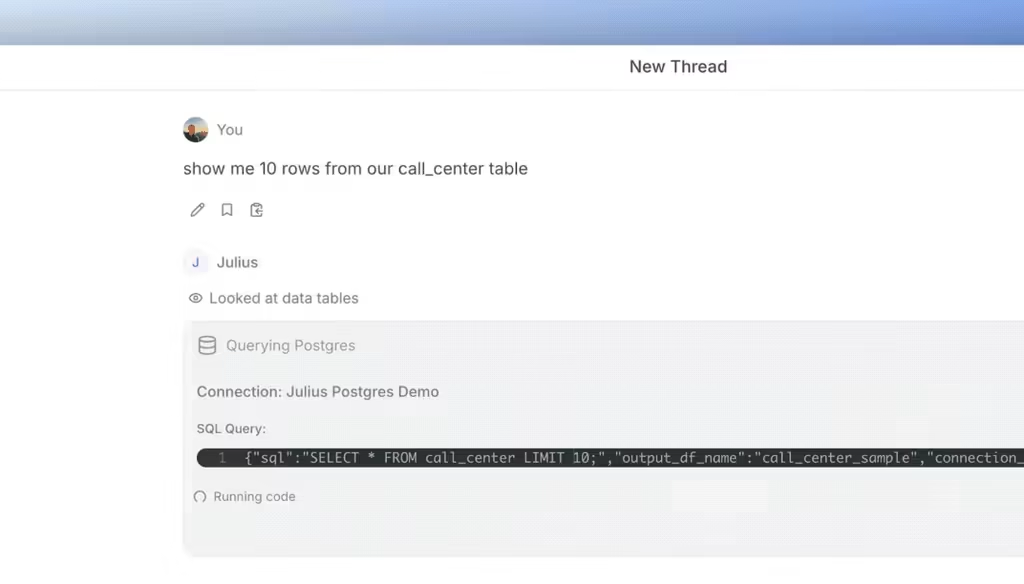
Accuracy remains critical, and leading platforms combine large language models with robust data validation to minimize errors. Some solutions allow users to drill into source information, ensuring transparency about how answers were derived. As these tools evolve, they’re increasingly capable of handling nuanced follow-up questions, refining results based on additional context.
The implications for productivity are substantial. Organizations reduce dependency on overburdened data specialists, while employees spend less time searching for information and more time acting on it. Early adopters report measurable gains, from accelerated sales cycles to improved inventory management.
While no tool replaces human judgment, AI-driven natural language querying bridges the gap between raw data and practical business insights. As adoption grows, companies that leverage these capabilities stand to gain a competitive edge through agility and data literacy at every level.
(Source: Fast Company)