Peacock Feathers Can Produce Laser Light Naturally
▼ Summary
– Peacock feathers can emit laser light when dyed multiple times, marking the first known biolaser cavity in the animal kingdom.
– The iridescent colors in peacock feathers and butterfly wings result from structural arrangements, not pigments, such as chitin scales or melanin-keratin nanostructures.
– These natural structures are photonic crystals, which block certain light wavelengths while allowing others through, with tunable properties based on structural changes.
– The color perception of photonic crystals is angle-independent, and their structures provide functional benefits like environmental protection for insects.
– Understanding natural photonic crystals could inspire applications like iridescent windows, self-cleaning surfaces, waterproof textiles, and anti-counterfeiting measures for currency.
Peacock feathers have long fascinated scientists and artists alike with their dazzling colors, but recent research reveals an even more extraordinary capability, these natural structures can generate laser light under specific conditions. A groundbreaking study published in Scientific Reports documents the first known instance of a biological laser cavity within the animal kingdom, opening new possibilities for bio-inspired optical technologies.
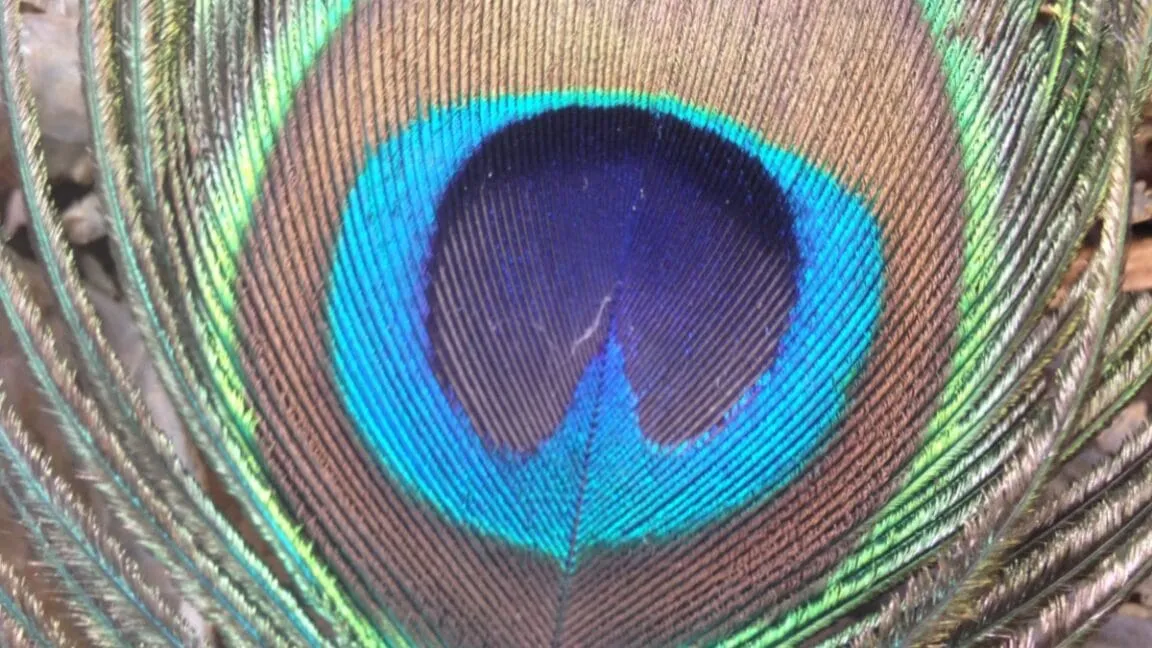
The vibrant hues of peacock feathers, much like those seen in butterfly wings, don’t stem from pigments but from intricate nanostructures. These microscopic arrangements interact with light in ways that produce iridescence. In butterflies, chitin scales overlap like roof tiles, creating photonic crystals that selectively reflect specific wavelengths. Peacock feathers achieve similar effects through barbules, tiny fibers made of melanin rods encased in keratin. The spacing between these barbules determines which colors appear, showcasing nature’s precision engineering.
Photonic crystals, whether natural or synthetic, possess a unique “tunable” quality. Their carefully ordered structures block certain light wavelengths while permitting others to pass. Adjusting the scale or composition of these crystals, like the rainbow weevil does with its chitin, can shift the colors they produce. Unlike traditional pigments, these structural colors remain vivid regardless of viewing angle and often serve practical purposes, such as protecting insects from environmental damage.
Beyond their visual appeal, these natural designs hold immense potential for human innovation. Understanding how photonic crystals form in peacock feathers and butterfly wings could lead to advancements in materials science. Applications might include iridescent smart windows, self-cleaning coatings for vehicles, or even counterfeit-resistant banknotes with encrypted color patterns. The discovery of laser emission in dyed peacock feathers further highlights how biological structures could inspire next-generation optical devices, merging biology with cutting-edge technology.
This research underscores how much we still have to learn from nature’s ingenuity. By decoding the secrets of photonic crystals in peacock feathers, scientists are paving the way for sustainable, high-performance materials that mimic the brilliance of the natural world.
(Source: Ars Technica)