Trump’s Nvidia H20 Export Shift Could Escalate Trade War
▼ Summary
– National security experts warn Trump’s potential chip tariffs and export decisions could disrupt US trade and security.
– Experts urged Trump to block Nvidia’s H20 chip exports to China, citing risks to US military AI superiority.
– Trump previously reversed H20 chip export curbs after Nvidia pledged $500B in AI investments and a trade truce with China.
– H20 chips, though not for AI training, could boost China’s military AI in autonomous weapons and surveillance, experts cautioned.
– The Trump administration is assessing chip tariffs’ national security risks, with a report due in two weeks.
The Trump administration’s decision to allow Nvidia H20 chip exports to China could spark new trade tensions while potentially undermining U.S. national security interests, according to warnings from policy experts. A coalition of national security professionals recently urged Commerce Secretary Howard Lutnick to reverse this controversial move, citing serious strategic risks.
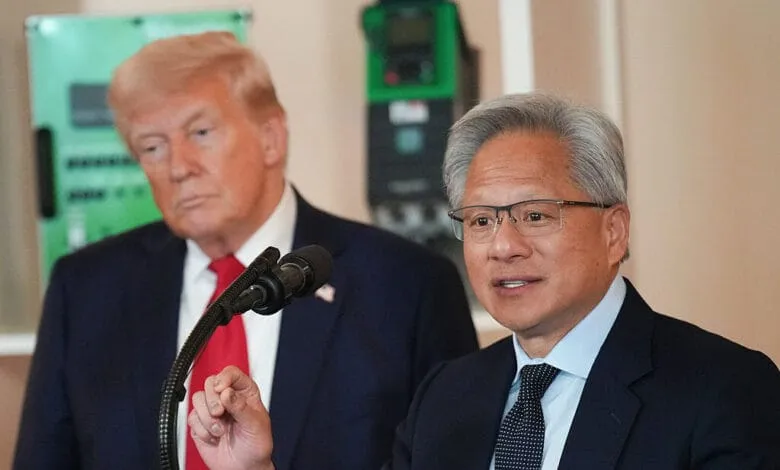
Reports indicate the administration initially planned stricter export controls on these advanced semiconductors before reversing course. This shift followed Nvidia CEO Jensen Huang’s high-profile Mar-a-Lago engagement, where the company pledged massive investments in U.S. AI infrastructure. The policy change also aligned with a temporary trade agreement with China, which involved resumed rare earth mineral imports in exchange for relaxed chip restrictions.
Security analysts argue the H20 chips, though not designed for AI training like restricted models such as Blackwell or H100, still pose significant risks. Optimized for AI inference, the technology behind real-time decision-making in advanced systems, these semiconductors could accelerate China’s military AI applications. Experts warn they may be deployed in autonomous weapons, surveillance networks, and battlefield analytics, effectively strengthening China’s defense modernization efforts.
The Commerce Department is currently finalizing a report on semiconductor dependency risks, expected within weeks. This assessment could influence whether the administration imposes new tariffs or export bans, potentially escalating tech trade tensions. Critics stress that without swift action, the U.S. risks inadvertently fueling the very technological advancements that could erode its military and economic advantages.
While economic deals and diplomatic bargains may offer short-term benefits, the long-term implications of transferring cutting-edge AI hardware remain contentious. The coming weeks will reveal whether security concerns outweigh trade priorities in this high-stakes tech rivalry.
(Source: Ars Technica)