NASA Launches Next Great Observatory to Expand Universe View
▼ Summary
– The Nancy Grace Roman Space Telescope launched successfully from Florida aboard a SpaceX Falcon Heavy rocket on Sunday.
– This mission aims to study mysterious cosmic forces and will provide a field of view 100 times wider than the Hubble Space Telescope.
– Roman arrived at the launch pad nine months ahead of schedule, marking it as a success story for NASA’s disciplined execution.
– The telescope is positioned to complement the James Webb Space Telescope by offering a broader perspective of the universe.
– The Falcon Heavy rocket deployed the observatory on a trajectory four times farther from Earth than the Moon.
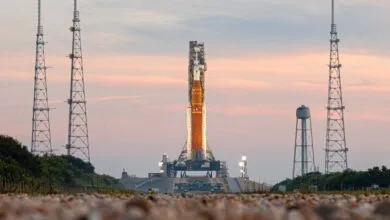
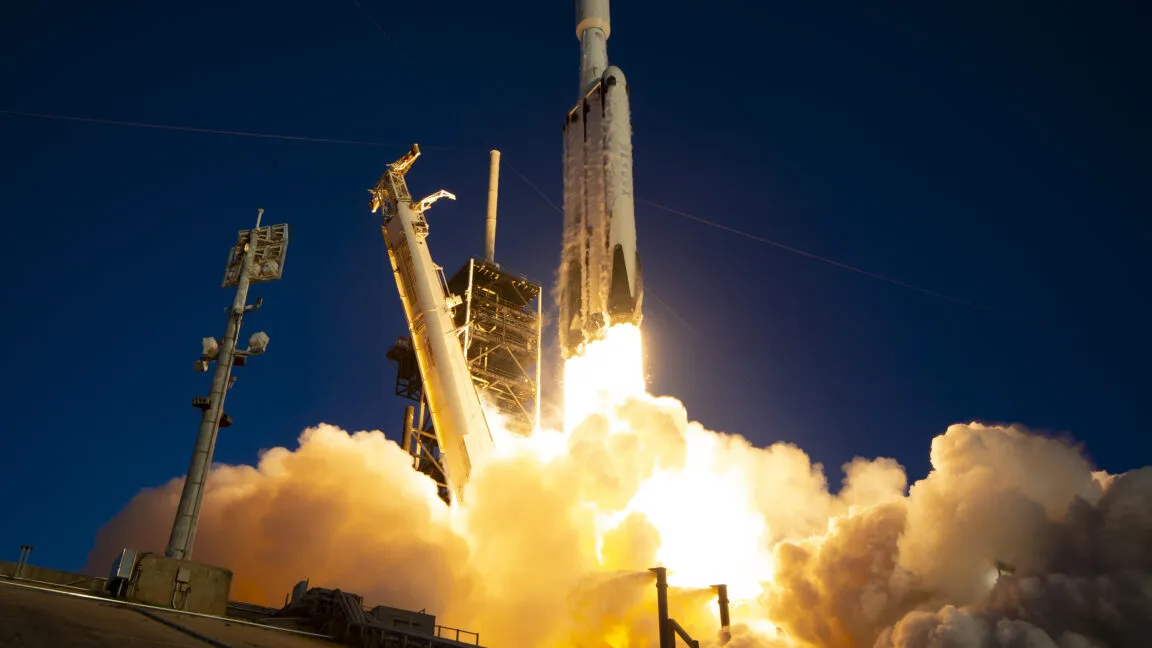
NASA’s Nancy Grace Roman Space Telescope has officially begun its journey to revolutionize our understanding of the cosmos. Launched on Sunday from Kennedy Space Center in Florida, this $4.3 billion mission utilizes a refurbished spy satellite mirror paired with a massive 300-megapixel camera to peer into the unknown forces shaping the universe. The observatory is designed to cast a wider net than any previous NASA-led astrophysics instrument, offering a field of view that is 100 times broader than that of the Hubble Space Telescope while working in tandem with the James Webb Space Telescope to complete the picture of deep space.
This launch marks a significant milestone as only the second major NASA astrophysics mission to lift off in the current century, following the 2021 debut of Webb. In stark contrast to Webb’s protracted development timeline, which involved years of delays, Roman reached the launch pad nine months ahead of the agency’s May 2027 deadline. This efficiency underscores a shift in how complex space missions are managed and executed.
“Roman is exactly the kind of success story we want to see across NASA,” said NASA Administrator Jared Isaacman. “Delivered ahead of schedule and on budget, this mission reflects more than a decade of dedication from the NASA workforce and our industry partners. Now, Roman will give us a new atlas of the Universe, push the boundaries of discovery, and demonstrate what is possible when America’s space program pairs bold ambition with disciplined execution.”
The vehicle chosen for this ascent was a SpaceX Falcon Heavy rocket, which provided the immense thrust needed to propel the telescope toward its destination. Powered by 27 kerosene-fueled main engines, the heavy-lifter ignited at 7:25 am EDT (11:25 UTC) from Launch Complex 39A. As it pierced the early morning sky over the Atlantic Ocean, the rocket separated its two reusable side boosters, which returned to Cape Canaveral for potential reuse. The core stage then continued its trajectory, deploying Roman onto a path that will carry it four times farther from Earth than the Moon, positioning it for its extensive survey of the cosmos.
(Source: Ars Technica)