
The 95th Annual INMA World Congress of News Media concluded last month with a resounding message: transformation, not adaptation, is the path forward for news organizations navigating AI disruption, declining platform traffic, and evolving audience behaviors. The May 19-23 gathering in New York City brought together over 600 senior media executives from 50+ countries under the urgent theme “How to Turn Ecosystem Chaos Into Media Opportunity.“
The congress delivered unprecedented strategic clarity on three critical pillars for industry survival: AI integration as a strategic imperative, direct audience relationships over platform dependence, and editorial integrity as competitive advantage. Major announcements included a landmark INMA-OpenAI partnership and CNN’s multimedia transformation, while industry leaders like Nicholas Thompson of The Atlantic and Bob Woodward shared transformative insights about journalism’s evolution in an AI-first world.
Strategic transformation takes center stage
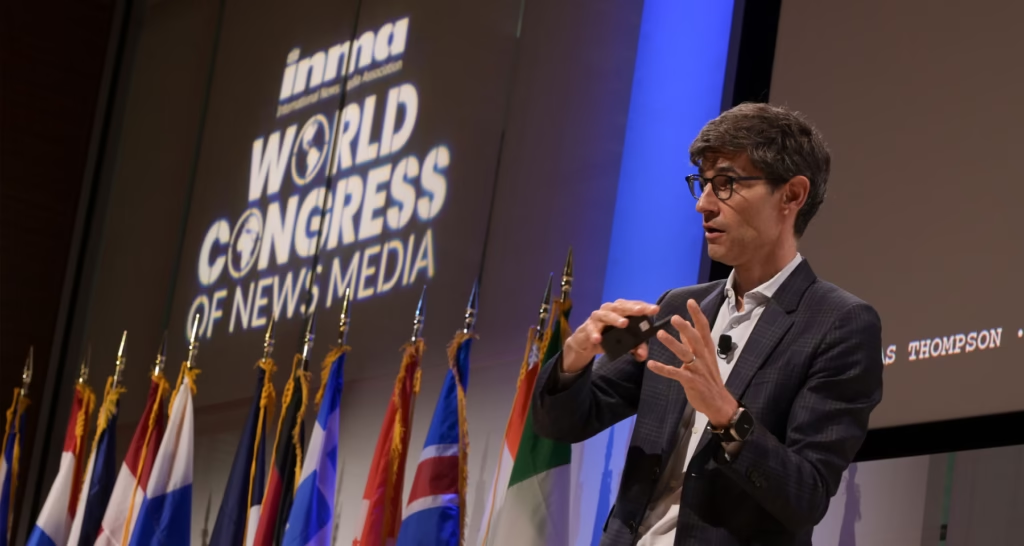
The congress marked a pivotal moment for the industry, with The Atlantic CEO Nicholas Thompson delivering perhaps the most consequential keynote about AI’s existential impact on web traffic and traditional business models. Thompson’s central insight resonated throughout the five-day event: “This is the most important question that we’ve been dealing with on the business side at The Atlantic. In a world where the Web is fundamentally different, how do we develop direct relationships with our readers?“
Thompson’s frank assessment cut to the heart of publisher anxieties:
We don’t need to keep all of them. We just need to keep some of them. I don’t mind if we lose 90% of our Google traffic but we keep the 10% who have some propensity to subscribe or become loyal readers, that’s fine.
This philosophy of quality over quantity emerged as the consensus strategy among attending executives.
The TimesCenter hosted the main conference sessions, while specialized seminars at Lincoln Center provided deep-dive workshops on AI implementation, newsroom transformation, product development, and subscription optimization. Study tours offered behind-the-scenes access to 15 major New York media companies, including The New York Times, Wall Street Journal, Financial Times, Reuters, and The Atlantic, showcasing practical transformation strategies in action.
Global CEO panel reveals transformation blueprints
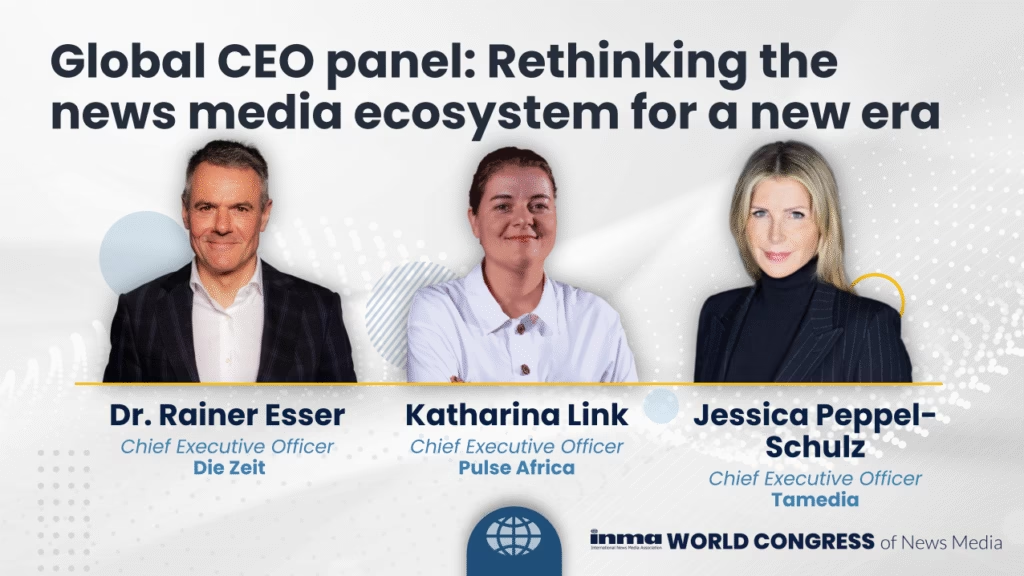
Three standout CEOs shared their organizational transformation playbooks during a marquee panel discussion. Dr. Rainer Esser of DIE ZEIT achieved 320% revenue growth through what he calls a culture of listening and innovation, operating under the motto “Nichts ist unmöglich” (“Nothing is impossible”). His five-pillar approach emphasizes employee input, learning from failure, and bold experimentation.
Katharina Link of Pulse Africa stressed being “social-first and AI-forward” to reach younger audiences, advocating for bold experimentation on TikTok and with digital avatars while maintaining editorial integrity. Meanwhile, Jessica Peppel-Schulz of Tamedia focused on internal transformation with people and communication at the core, declaring:
The old party is over, but everyone’s invited to the new one.
Almar Latour, CEO of Dow Jones/WSJ, shared how his organization crossed $1 billion in digital revenue and reached 6.1 million paid subscriptions by focusing on “people, not traffic” as the core organizational priority. This metric shift from vanity numbers to meaningful engagement became a recurring theme throughout the congress.
Major industry research reveals critical trends
The congress featured significant research releases that quantified industry challenges and opportunities. INMA’s collaboration with the Reuters Institute surveyed 326 senior media executives across 51 countries, revealing a dramatic 20-point drop in journalism confidence (from 60% to 40%) alongside strategic pivots toward 3-5 revenue streams for sustainability.
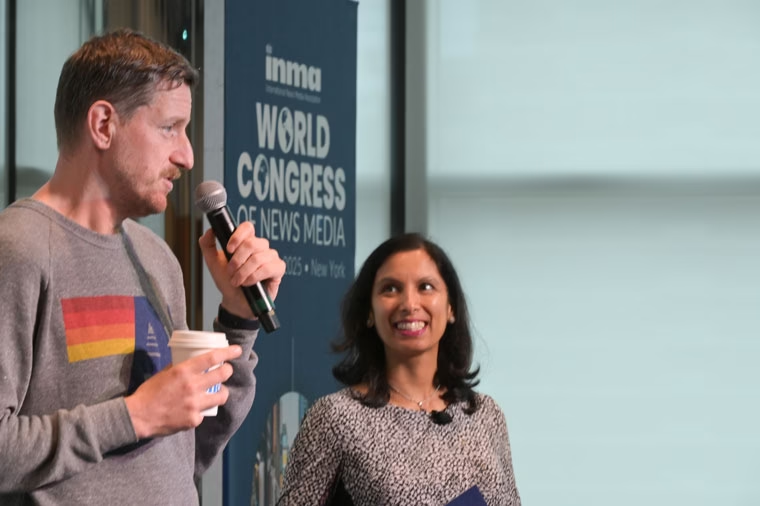
Sonali Verma’s comprehensive report on “6 Emerging GenAI Trends for Media to Watch in 2025“ provided frameworks for strategic AI implementation, featuring case studies from Süddeutsche Zeitung, The New York Times, Financial Times, and 18+ other global publishers. The research emphasized maintaining “human in the loop” oversight while automating routine tasks to free journalists for investigative work.
The study revealed that 44% of publishers are investing in new products beyond core news offerings, while platform relationships continue evolving away from traditional Google/Meta partnerships toward AI companies like OpenAI and emerging tech partnerships.
INMA-OpenAI partnership reshapes industry collaboration
The congress’s most significant announcement was a landmark partnership between INMA and OpenAI, featuring exclusive webinar series for members, regional workshops worldwide, OpenAI credits for experimentation, and collaborative research on AI integration in journalism. OpenAI’s Head of Media Partnerships Varun Shetty emphasized:
Supporting innovative thinking and knowledge sharing is a key part of our strategy to support quality journalism around the world.
This partnership represents a strategic shift in how news organizations approach AI relationships, moving beyond vendor relationships to collaborative innovation frameworks. The initiative provides practical resources for INMA’s 22,000+ members across 90+ countries to implement AI strategically rather than tactically.
CNN Chairman & CEO Sir Mark Thompson announced that CNN.com will feature streaming programming starting autumn 2025, transitioning to a multimedia platform model. This transformation exemplifies the multi-modal content strategies discussed throughout the congress.
Bob Woodward delivers masterclass on journalistic purpose
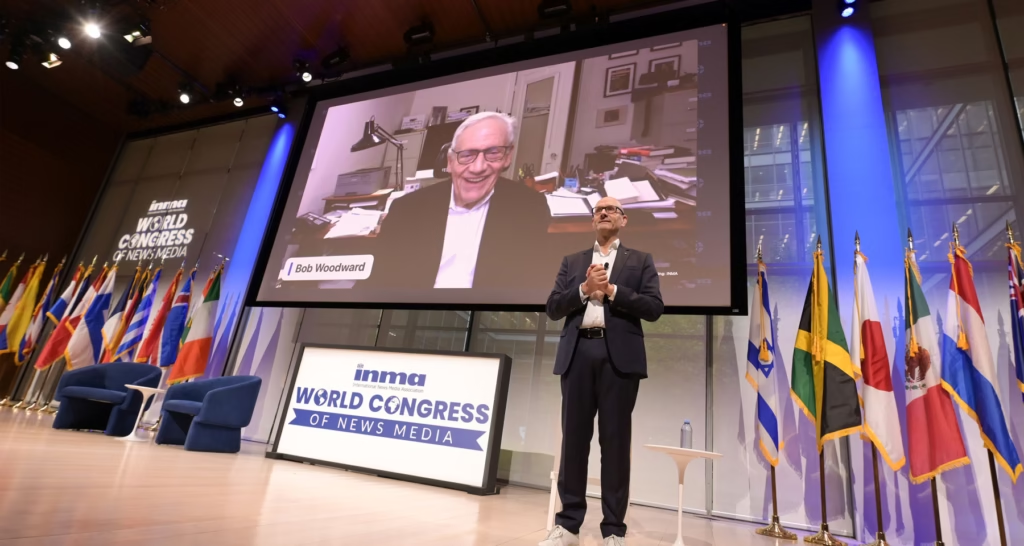
The legendary Washington Post journalist provided the congress’s most memorable moments, delivering a remote keynote (due to injury) that reinforced journalism’s fundamental mission during political upheaval. Woodward’s central message was uncompromising: “Our job is more important than ever.“
His practical advice resonated deeply with attendees: “Trust is all about results, products. Make the stories. Talk to 16 people. Nail it down.” Woodward emphasized rigorous verification over speed, declaring:
There is too much pomposity in the media, in politics, in the country, and in the world. And if you’re looking for the embodiment of it, you have to go no further than Donald Trump.
Quoting Katharine Graham’s warning to “Beware the demon pomposity,” Woodward reinforced that editorial integrity and transparency remain the foundation for rebuilding audience trust in an era of misinformation and AI-generated content.
Revenue diversification and subscription evolution
The congress addressed the critical shift from advertising-dependent models to diversified revenue strategies. Research presented showed that subscription revenue now exceeds advertising revenue globally, with Norway leading at 40% digital subscription penetration while maintaining significant growth opportunity in most markets.
Publishers are developing 3-4 revenue streams including events, e-commerce, philanthropy, and premium content offerings. Dynamic paywalls and AI-powered personalization gained traction as optimization strategies, while the focus shifted from subscriber volume to subscriber value and retention.
The Condé Nast commerce case study demonstrated how editorial authority drives shopping content and merchant partnerships, while Media24’s Brand Story Studio showcased native advertising innovations that maintain editorial integrity while generating revenue.
Conclusion: transformation as competitive advantage

The INMA World Congress 2025 established clear strategic imperatives for news organizations navigating industry disruption. The consensus emerged that survival isn’t sufficient, media organizations must transform fundamentally to thrive, with AI integration, direct audience relationships, and editorial integrity as the three pillars of future success.
The event’s emphasis on turning “ecosystem chaos into media opportunity” provided actionable frameworks for publishers to lead rather than merely react to change. With the 96th Annual World Congress scheduled for Berlin in May 2026 under the theme “From Walls to Bridges: News Media Reimagined,” and new specialized conferences launching in San Francisco and Toronto, INMA continues positioning itself as the strategic planning hub for global news media transformation.
The industry’s path forward is clear: bold experimentation, strategic AI implementation, people-first leadership, and unwavering commitment to editorial excellence will distinguish winners from casualties in journalism’s next chapter.