HaloBraid raises $7M for first robotic hair braiding assistant

▼ Summary
– HaloBraid raised $7 million in a seed round led by Seven Seven Six to launch a robotic braiding assistant for salons later this year.
– The device works alongside stylists, finishing each braid in seconds after a human starts it, and completes braids roughly five times faster than a human hand.
– Founder Yinka Ogunbiyi, inspired by a four-day personal braiding experience during COVID-19, studied braiding mechanics using engineering and material science methods.
– The market is large, with an estimated eight billion hours spent braiding annually, and 95% of surveyed people would braid more if it took less time.
– HaloBraid aims to reduce physical strain on stylists, who face high rates of carpal tunnel and arthritis, and plans to explore a product for undoing braids.
HaloBraid, a robotics startup developing an automated braiding assistant for hair salons, has secured $7 million in a seed round led by Seven Seven Six, the venture firm founded by Reddit co-founder Alexis Ohanian. The device is designed to work alongside professional stylists, not replace them. A braider starts each braid manually, then hands it off to the robot, which completes the rest in seconds. The company expects to launch its first product in salons later this year.
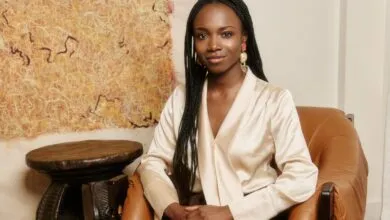
Founder Yinka Ogunbiyi, who holds an MS in engineering and an MBA from Harvard, first encountered the problem during the COVID-19 pandemic while attempting to braid her own hair in her London apartment. The process took her four days. Having previously founded a smart cooking appliance company, she approached braiding as an engineering challenge, studying the mechanics of a practice that has remained manual for thousands of years.
The market size is far larger than most outsiders realize. Ogunbiyi’s research revealed that people spend an estimated eight billion hours braiding hair annually. In a survey of 2,000 people, 95 percent said they would get their hair braided more often if the process took less time. A single braiding session can last between six and 12 hours, limiting stylists to just one or two clients per day.
The physical toll on braiders is severe. Professional stylists face elevated rates of carpal tunnel syndrome and arthritis from the repetitive hand motions required by the work. HaloBraid’s device is designed to reduce that strain by automating the most labor-intensive portion of each braid, completing it roughly five times faster than a human hand.
Ogunbiyi has not disclosed detailed specifications due to pending patents, but she described hair as one of the trickiest substrates to manipulate mechanically. Building the technology required borrowing methods from material science and inkjet printing, among other fields. The startup won Harvard’s President’s Innovation Challenge and its $75,000 grand prize before raising its seed round.
Ohanian’s interest is personal. Married to Serena Williams, he has two daughters who regularly wear braided hairstyles. His oldest loves the ritual for the first few hours, but by hour nine, everyone is ready to stop. He framed the investment as part of a broader thesis that hardware startups are entering their strongest investment cycle, comparing HaloBraid to other portfolio companies like rocket maker Stoke Space and asteroid mining firm AstroForge.
He also pointed to Dyson as a model for what happens when engineering talent is applied to overlooked personal care categories. Tooling for textured hair remains largely unexplored, he noted, despite a loyal audience eager to spend. AlleyCorp and Bling Capital also participated in the round.
The competitive landscape is thin. The most notable rival is Braidiant, another automated braiding device. But the category has been slow to develop because hair is genuinely difficult to work with mechanically, especially for a process as intricate as braiding that requires tension control, pattern consistency, and gentle handling across highly variable hair textures.
HaloBraid’s team of roughly 15 people will use the funding for product development, manufacturing, and securing salon partnerships ahead of launch. The company is also thinking beyond its first device. Ogunbiyi said the team is already exploring a product that can undo braids, a process that can take nearly as long as the braiding itself.
Consumer robotics is attracting fresh attention after years of being considered too capital-intensive for venture returns. HaloBraid fits the pattern: a hardware device built around a specific, high-frequency task in a market that technology has largely ignored. The startup’s bet is that the same venture capital logic that once dismissed physical products has now reversed, and that a robot braider serving a $42 billion global hair industry is a more durable business than another software dashboard.
Whether HaloBraid can navigate manufacturing, salon adoption, and the realities of operating a hardware startup will determine if the device reaches the millions of people who currently endure half-day braiding sessions. Ogunbiyi is clear about the ambition beyond the first product. “HaloBraid is our first product, but our larger vision is to create breakthrough technology that makes textured haircare faster, easier, more comfortable, and more joyful,” she said.
(Source: The Next Web)