Submarine Discovers Strange Ocean Floor Object, Then Vanishes
▼ Summary
– In 2022, an orange autonomous underwater vehicle named Ran explored the cavity beneath West Antarctica’s Dotson Ice Shelf using upward-looking sonar.
– Ran surveyed 54 square miles and found the ice shelf’s underbelly was not smooth, but featured terraces, channels, grooves, and teardrop-shaped pits nearly 1,000 feet long.
– These features were previously unknown because they did not appear in satellite imagery.
– Oceanographer Anna Wåhlin compared the discovery to seeing the far side of the Moon.
– When researchers returned in early 2024 to observe ice movement, Ran was deployed again but never resurfaced.
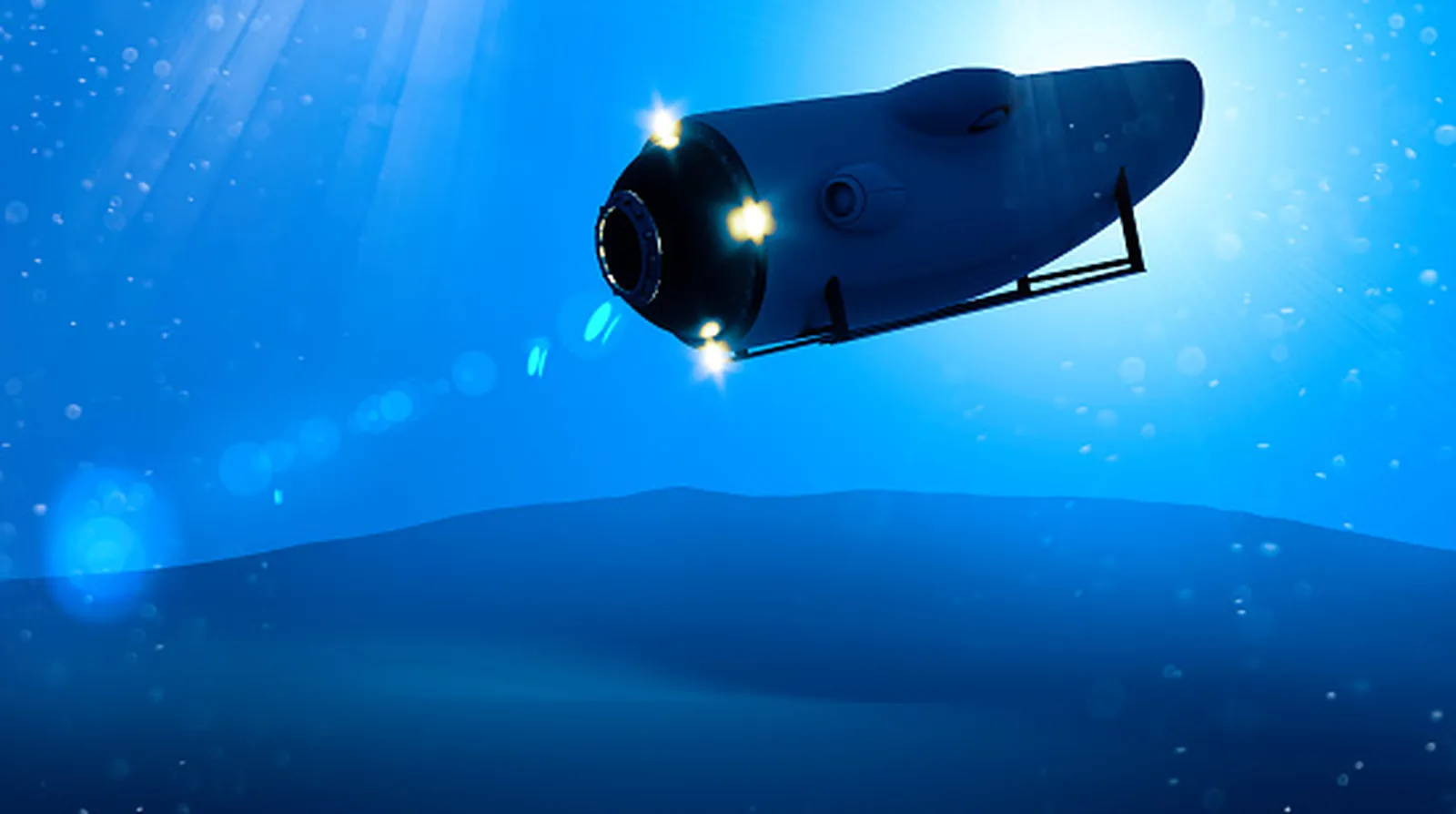
Antarctica, a frozen continent concealing an entire world beneath its ice, has long tempted scientists with its hidden mysteries. Since human divers are physically incapable of reaching the extreme depths under the ice, researchers turned to a robotic substitute. That machine, a bright orange autonomous underwater vehicle named Ran, measured roughly 20 feet in length and was built to explore where people simply cannot go.
In 2022, the International Thwaites Glacier Collaboration deployed Ran into the cavity beneath West Antarctica’s Dotson Ice Shelf. The robot’s mission was to map the underside of the shelf using upward-facing sonar, sweeping across an area of 54 square miles. The resulting images shocked the research team. Instead of a uniform, smooth sheet of ice, they discovered a complex landscape. The ice formed terraced steps, like a frozen staircase, alongside channels and scooped grooves. Most surprising were teardrop-shaped pits carving upward into the ice, some stretching nearly 1,000 feet long. These features had never been seen before, as they remain invisible to satellite observation.
Anna Wåhlin, an oceanographer from the University of Gothenburg who led the study, described the discovery as akin to getting a first glimpse of the far side of the Moon. But the expedition’s most dramatic moment came in early 2024. The team returned to observe how the ice had shifted over time. Ran was sent back beneath the shelf, and this time, it never resurfaced. The robot vanished without a trace, leaving scientists with a trove of unprecedented data and a haunting reminder of the challenges lurking in Earth’s most remote environments.
(Source: SlashGear)