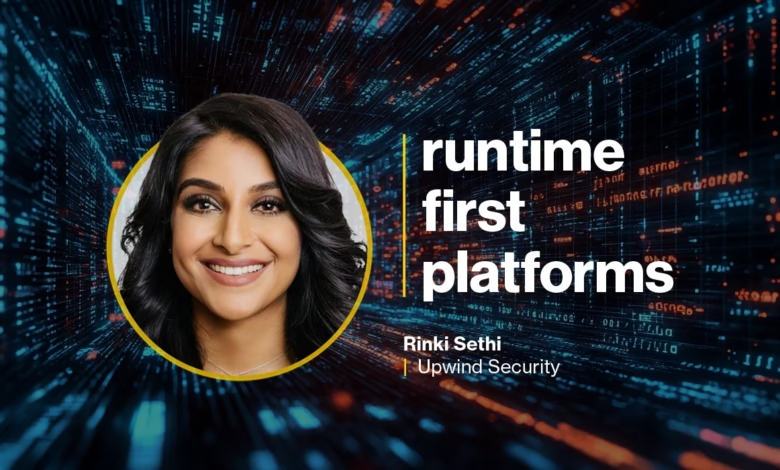
Unified Runtime Platforms: The Future of Posture & Prioritization
▼ Summary
– Rinki Sethi advises CISOs to adopt runtime-first platforms by framing them as tools for real-time risk reduction, complementing rather than replacing legacy systems.
– Future cloud security leaders need strategic skills in automation, identity architectures, and AI, along with adaptable mindsets to navigate rapid changes.
– Converging CSPM, CWPP, and other tools into unified runtime platforms allows CISOs to shift from siloed teams to integrated, risk-focused workflows.
– Lockstep Ventures identifies disruptive cybersecurity trends by bridging insights from practitioners and visionary founders solving real-world problems.
– In five years, cloud security will be autonomous and identity-driven, requiring CISOs to shape infrastructure, AI governance, and real-time risk management.
The future of cloud security lies in unified runtime platforms that shift focus from tool management to real-time risk reduction. In a recent discussion with a leading Chief Security Officer, the conversation centered on how these platforms empower CISOs to move beyond legacy constraints and prioritize actionable insights over theoretical threats.
For security leaders hesitant about adopting runtime-first approaches due to existing tooling or internal resistance, the key is framing the transition as a strategic enhancement rather than a complete overhaul. By starting with targeted pilots in high-risk areas, CISOs can demonstrate immediate value, bridging detection gaps while maintaining legacy systems. Runtime platforms excel by providing real-time visibility into active threats, allowing teams to prioritize risks dynamically rather than relying on static configurations.
The next wave of cloud security professionals will need a blend of technical depth and strategic thinking. Expertise in automation, identity management, and AI-driven security is essential, but adaptability and problem-solving skills are equally critical. Mentorship programs, hands-on exposure to emerging tools, and cross-functional collaboration help cultivate these competencies, ensuring the next generation is prepared for an evolving threat landscape.
As cloud security posture management (CSPM) and workload protection (CWPP) converge into unified runtime solutions, team structures must evolve. Siloed security functions are giving way to integrated workflows where context dictates action. This shift enables closer alignment with DevOps, reducing friction and accelerating response times. CISOs are no longer just tool administrators, they’re orchestrators of risk strategy, embedding security into every layer of infrastructure.
Identifying disruptive cybersecurity innovations requires deep engagement with both practitioners and visionary founders. By fostering dialogue between those on the front lines and those building the next wave of solutions, investors can spot emerging trends before they hit the mainstream. The most impactful technologies often arise from real-world pain points overlooked by traditional vendors.
Looking ahead, cloud security will become increasingly autonomous and identity-centric. AI-driven threats and ephemeral infrastructure demand continuous, context-aware protection. Security leaders must transition from gatekeepers to strategic enablers, influencing how infrastructure is designed and ensuring innovation doesn’t compromise safety. The most successful CISOs will integrate security into engineering processes, shaping the future of cloud-native development while maintaining robust defenses.
(Source: HELPNETSECURITY)