Commonwealth Fusion builds physics case for 400 MW reactor
▼ Summary
– The scientific community’s plan for fusion power relies on ITER (mid-2030s) and DEMO, but Commonwealth Fusion aims to accelerate this timeline with its SPARC tokamak, which is over 70% complete and planned to operate next year.
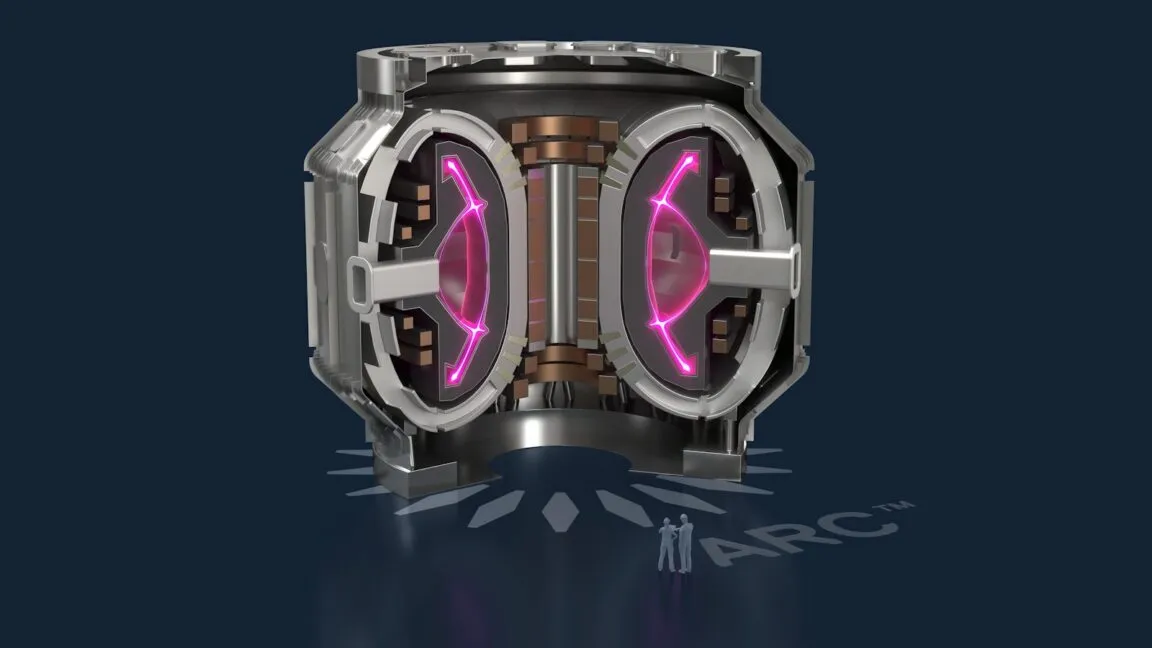
– Commonwealth Fusion uses high-temperature superconductors to create a powerful magnetic field, enabling a smaller, faster reactor design for SPARC and its power-generating follow-up, ARC.
– The company has secured a site and customers for ARC, and its scientists, with academic partners, have published five peer-reviewed papers detailing ARC’s plans.
– The papers, available in the Journal of Plasma Physics, outline what current models predict for ARC and what must still be learned from SPARC to finalize the production plant design.
– Years of tokamak experiments confirm the basic plans are sound, but many detailed challenges remain, necessitating experimental reactors like SPARC to address them.
The global fusion roadmap has long relied on a methodical, step-by-step approach: first, prove plasma control with the massive ITER reactor, then apply those lessons to build DEMO-style power plants. But ITER won’t see its first hot plasmas until the mid-2030s. By then, solar power may be so cheap that panels practically come free with breakfast cereal.
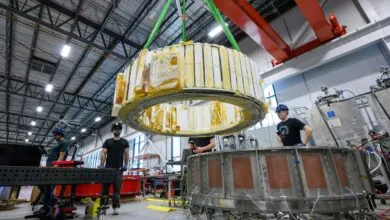
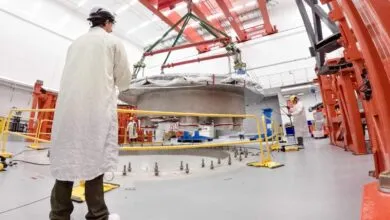
Commonwealth Fusion Systems is challenging that timeline with a direct question: why wait? Its SPARC tokamak, an ITER-scale testbed using high-temperature superconductors, is already over 70 percent complete and expected to operate as early as next year. The company has even secured a site and customers for its follow-on power plant, ARC. The core innovation is a dramatically stronger magnetic field, enabling a smaller, faster-to-build reactor design.
Decades of tokamak experiments have validated the basic physics behind these plans. But the devil, as always, is in the details. That’s why Commonwealth’s scientists, working with academic partners, have released five peer-reviewed papers in the Journal of Plasma Physics. These open-access studies lay out the current best models for ARC’s 400 MW reactor design and identify exactly what SPARC must teach them before they can finalize a commercial fusion plant.
The papers are dense, each running 30 to 40 pages of highly technical analysis. But several key findings stand out. The team has modeled plasma stability, heat exhaust, and neutron shielding with unprecedented precision. They’ve also pinpointed critical unknowns, such as how the reactor’s extreme magnetic fields interact with turbulent plasma at the edge of the confinement zone. These are the questions SPARC is built to answer.
What’s clear is that Commonwealth is not skipping steps. It’s compressing them. By running advanced simulations in parallel with construction, the company aims to move from physics validation to power generation in under a decade. If the models hold, ARC could become the first fusion plant to deliver net electricity to the grid, bypassing the multi-decade wait for ITER and DEMO entirely.
(Source: Ars Technica)