5 May highlights: Why cats prefer silver vine to catnip
▼ Summary
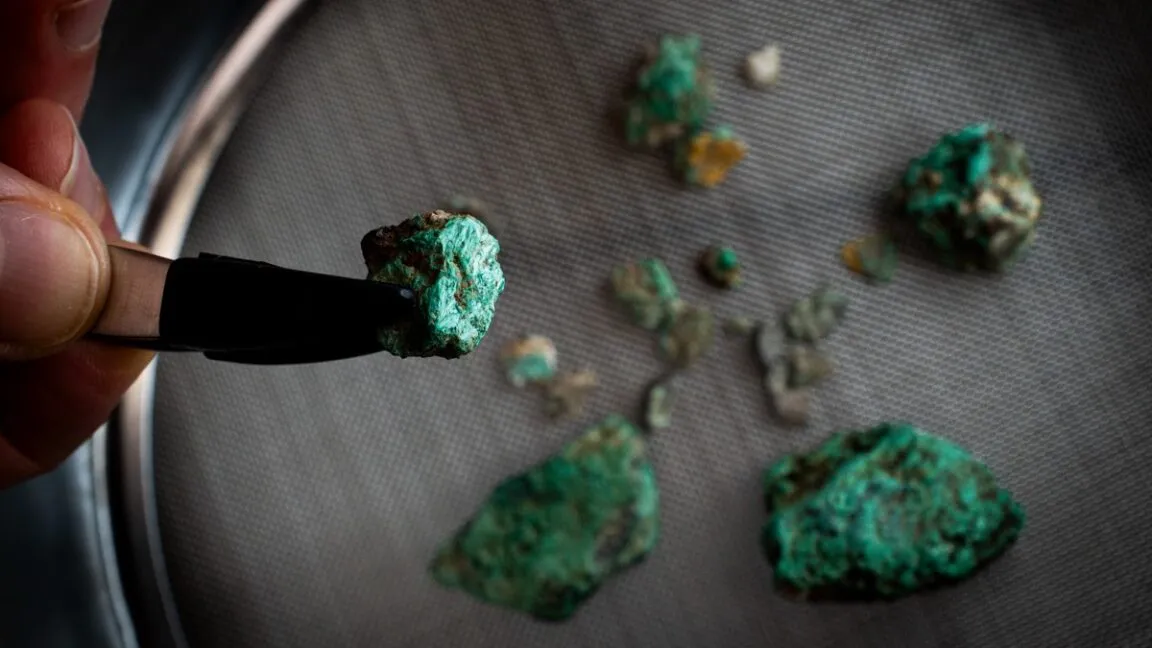
– A possible prehistoric copper smelting site was discovered in a Pyrenees cave, with 23 hearths containing crushed green mineral fragments resembling malachite, dated between 4,000 and 5,500 years old.
– Spanish archaeologists found artifacts like pendants, a human finger bone, and a baby tooth, suggesting more frequent human occupation than previously thought.
– Singing mice in Costa Rica engage in chirping duets, and scientists at Cold Spring Harbor Laboratory found this ability requires only targeted changes to existing brain wiring, not a major evolutionary leap.
– May’s list of overlooked scientific stories includes a new species of tiny blue octopus, cats’ preference for silver vine over catnip, and political polarization behaving like a phase transition.
– The prehistoric mining findings were published in Frontiers in Environmental Archaeology, while the singing mice brain circuit research was published in Nature.
It’s an unfortunate truth that there’s never enough space to cover every fascinating scientific breakthrough that crosses our desks. That’s why, each month, we shine a spotlight on a selection of the most compelling stories that almost escaped notice. This May, our roundup includes evidence of a potential prehistoric mining operation high in the Pyrenees, the discovery of a minuscule blue octopus species, new insights into why cats often favor silver vine over catnip, and a surprising theory that political polarization may behave like a phase transition, among other highlights.
Prehistoric mining in the Pyrenees
Deep in the eastern Pyrenees, a prehistoric cave excavated between 2021 and 2023 is yielding remarkable clues. A team of Spanish archaeologists, analyzing artifacts from the site, believes this location may have served as an ancient copper smelting workshop, indicating far more frequent human occupation than previously assumed. The researchers published their preliminary findings in the journal Frontiers in Environmental Archaeology.
What caught their attention most were 23 hearths uncovered in the second and third excavation layers. These fire pits were packed with crushed green mineral fragments that showed clear evidence of burning, while other nearby materials remained thermally untouched. The team is still running tests to definitively identify the green substance, but the fragments strongly resemble malachite. That matters because malachite can be heated to extract copper. Most of these hearths date back between 4,000 and 5,500 years. The dig also turned up two prehistoric pendants, a human finger bone, and a baby tooth from an 11-year-old child. As excavations continue, deeper layers may reveal burial sites.
Singing mice
High in the cloud forests of Costa Rica, singing mice engage in chirping call-and-response duets, subtly altering their tunes based on the replies they receive. In 2019, scientists identified the specific brain circuit driving this behavior. Now, researchers at Cold Spring Harbor Laboratory (CSHL) have discovered that this vocal ability does not require a major evolutionary leap in brain complexity. Instead, according to a paper published in Nature, it relies on just a few targeted modifications to existing neural wiring patterns.
(Source: Ars Technica)