Beluga whales pass the mirror test, but what does it mean?
▼ Summary
– A new study published in PLOS One reports that beluga whales Natasha and Maris exhibited behaviors like head shaking and pirouetting in front of a mirror, which are hallmarks of mirror self-recognition.
– Mirror self-recognition (MSR) is a cognitive ability considered a marker of self-awareness that had never before been documented in beluga whales.
– If confirmed, belugas join a short list of species that have passed the MSR test, including humans, great apes, Asian elephants, bottlenose dolphins, magpies, possibly orcas, and a cleaner wrasse.
– Many species assumed to be self-aware, such as dogs, cats, and monkeys, have been tested for MSR and failed.
– The article questions what the mirror test is and what it is supposed to reveal about self-awareness.
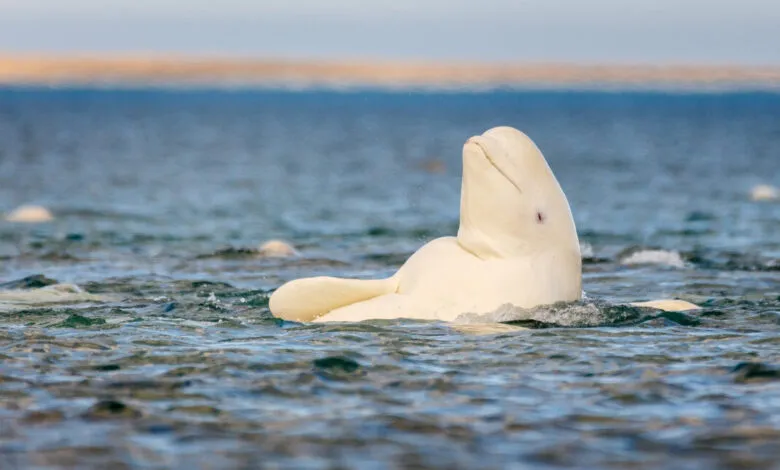
In hours of underwater video footage from a New York aquarium, a beluga whale named Natasha repeatedly stretches her neck, pirouettes, nods, and shakes her head in front of a two-way mirror. Her daughter Maris displays nearly identical behavior. According to a new study published in PLOS One, both animals exhibit the behavioral hallmarks of mirror self-recognition (MSR), a cognitive milestone long regarded as a sign of self-awareness. This marks the first time such an ability has been documented in beluga whales.
If the findings hold up, belugas join an exceptionally exclusive club. The mirror self-recognition test has been passed, with varying degrees of certainty, by humans (typically starting around age two), several great apes (chimpanzees, bonobos, orangutans, and, controversially, gorillas), Asian elephants, bottlenose dolphins, and probably magpies. There is also evidence for orcas and, surprisingly, a cleaner wrasse. That is the entire list. No dogs, no cats, no monkeys. Many species that researchers assumed were self-aware have been tested and failed the test.
So what exactly is the mirror test, and what is it supposed to reveal? The test itself is deceptively simple: an animal is exposed to a mirror and, after some initial social or exploratory responses, begins to use the reflection to inspect parts of its own body it cannot normally see. In the beluga study, researchers marked the whales with a harmless dye on their skin. The whales then oriented their bodies to view the mark in the mirror, a behavior that strongly suggests they recognize the reflection as themselves, not another animal.
But the meaning of passing the mirror test remains hotly debated. Critics argue that the test may be too anthropocentric, favoring species with certain visual or motor abilities. For instance, a cleaner wrasse, a small fish, passed the test by scraping its body against a surface after seeing a mark in a mirror, a behavior that some scientists say is more about contingency than self-awareness. The beluga results add fuel to this ongoing debate, raising questions about whether the mirror test truly measures a universal concept of self or simply identifies species with the right combination of curiosity and dexterity.
(Source: Ars Technica)